Our Blog
Dental health guides, clinic news, and straight talk from our team.
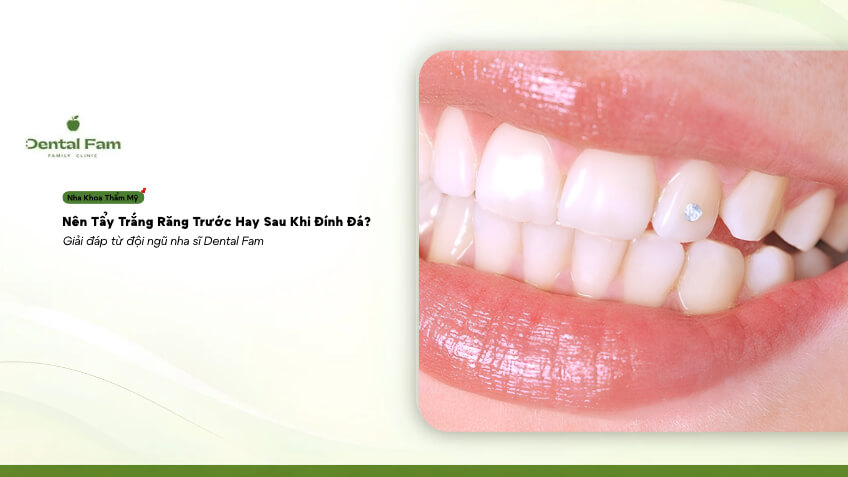
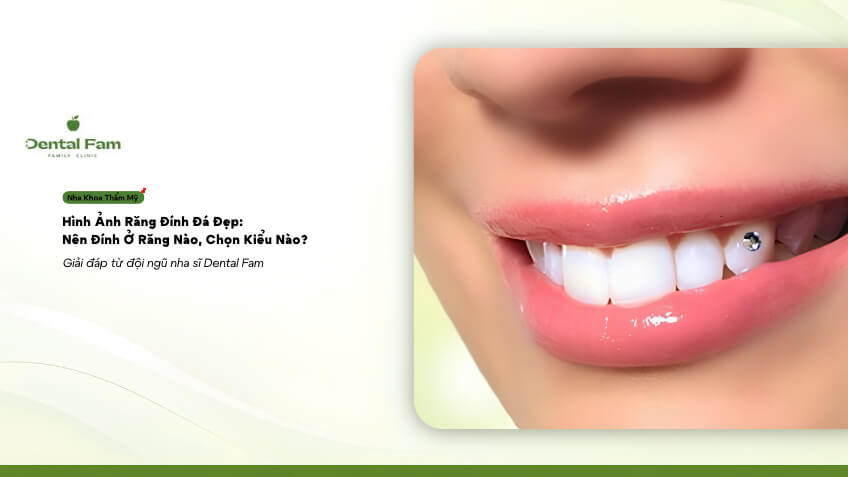
It's best to whiten your teeth first, then get dental rhinestones. These two procedures can be done in the same session at Dental Fam, and if you already have rhinestones and want to whiten them, you should have them removed beforehand. You might be in a familiar situation: you've chosen your favorite style of rhinestone, but when you look in the mirror, your teeth are a little yellow, and you wonder if the sparkling stone will look out of place next to your dull teeth. That makes sense, because a rhinestone only truly stands out when it's on a set of bright, beautiful teeth. Dental Fam will help you understand the best order, why, and what you need to prepare to ensure everything goes smoothly.
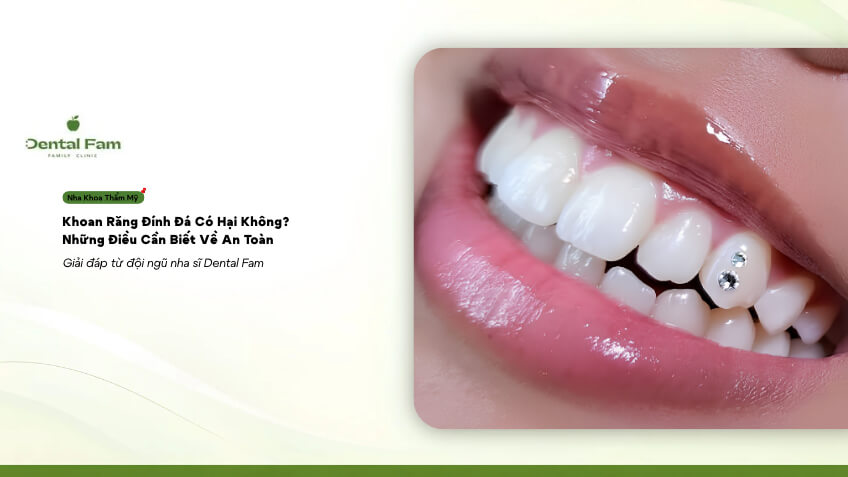
According to dentists at Dental Fam, attaching dental gems does not significantly harm tooth enamel, cause cavities, or cause allergies when the teeth are suitable and thoroughly examined beforehand. The real risk lies in the possibility of the gem falling out, or the gem itself falling out, not in the process of attaching the gem. You might be in a familiar situation: you like the idea, you've seen many pictures, but the mere thought of ""drilling"" makes you hesitant. You're worried, wanting to try it but also fearing regret if it affects your teeth. If so, you shouldn't worry too much, because your teeth are something you use every day. Dental Fam will address each of those concerns, so you know what is safe and what needs careful consideration.
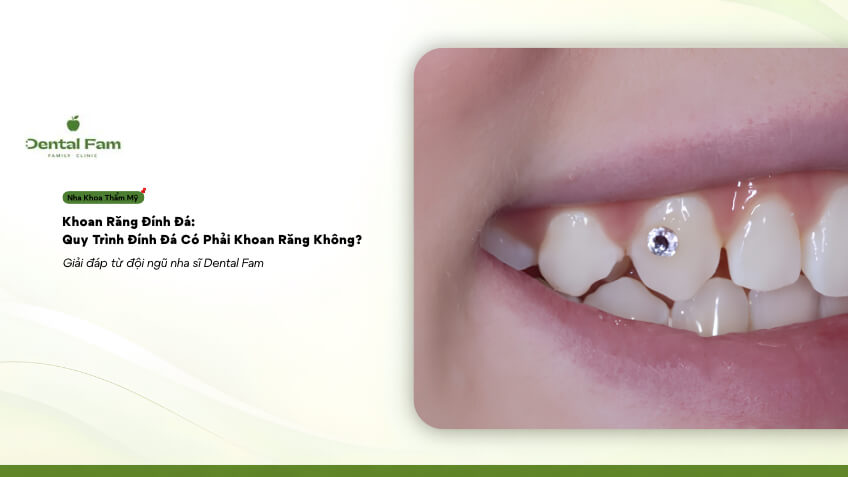
Not every case requires drilling. Depending on the type of stone and the method chosen by the dentist after examination, some cases only require bonding, while others require surface preparation. According to dentists, this doesn't significantly harm the enamel. Dental Fam will guide you through each step so you understand what you'll be going through. Many people, upon seeing pictures of sparkling teeth adorned with stones, often have the same worry: ""Do they really have to drill into my teeth?"" If you're thinking that, you're probably the type who wants to understand everything before trying, and that's a very good habit. Your teeth are something you use every day, so asking questions before deciding is perfectly reasonable.
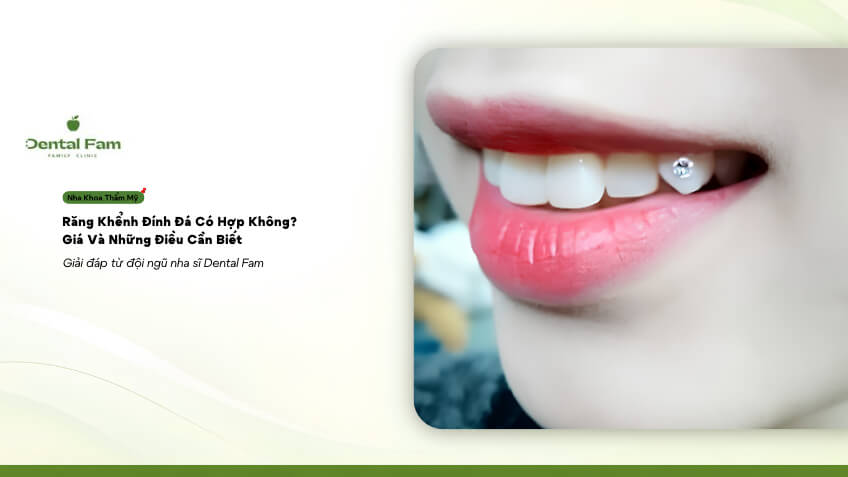
If your canine tooth is healthy, it's perfectly possible to have a gemstone attached, and this is one of the two most popular locations at Dental Fam. The price is 2,000,000 VND per stone. However, canine teeth have some unique characteristics, so you need to consider them more carefully than other teeth. Perhaps you've stood in front of the mirror, smiling brightly, and noticed your protruding canine tooth. It's already a charming feature, and you've wondered: ""What if I added a small gemstone there?"" Then you worry: will the gemstone fall off easily, will it suit you, and how much will it cost? Dental Fam will answer each of these questions in turn, so you have enough information before making a decision.
If this is your first time, a small gem on your canine or front tooth is the easiest and most suitable option, as it's discreet, natural, and still adds a touch of flair to your smile. If you prefer something more striking, a few small gems on your front teeth or several placed side-by-side are also worth considering. You may have dozens of photos of gem-studded teeth saved on your phone, and each time you open them, you see a different style. A small gem on a canine tooth looks cute, a gem on a front tooth stands out more, and several placed side-by-side look very bold. Then you wonder: which one should I choose for my smile? Dental Fam will help you look at common styles and tooth placements, and suggest how to choose based on your circumstances.
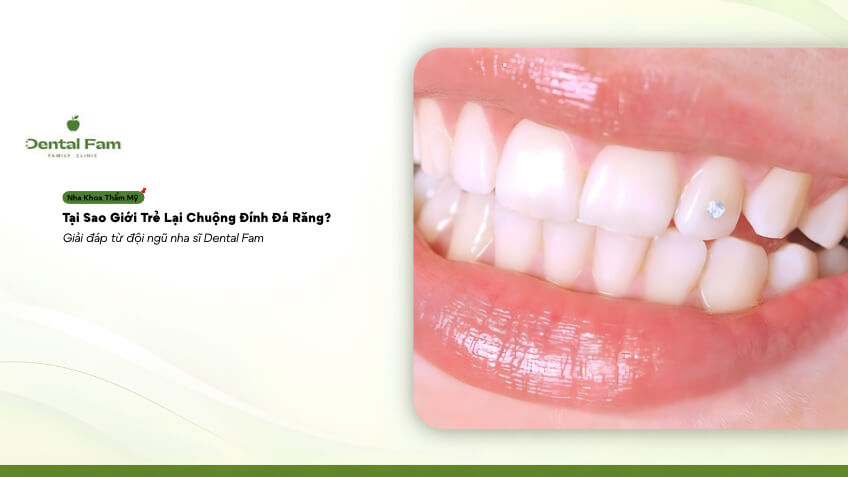
Young people favor tooth gems primarily because it's a way to personalize their smile with a small, quick, and removable change, and it's also seen by celebrities and on social media. It sounds simple, but behind it lies a whole story about how young people want to be seen. You may have experienced this: scrolling through your phone, suddenly seeing someone laugh and a small gem sparkling on their canine tooth. You pause for a moment, find it interesting, and wonder, ""Could I do it?"" If you're between 18 and 35, enjoy new things but are also a little hesitant because you're afraid of damaging your teeth or not being able to look back, then this article is for you. Dental Fam will guide you through four reasons why this trend is spreading, then clarify whether it's right for you and what you should know before deciding.
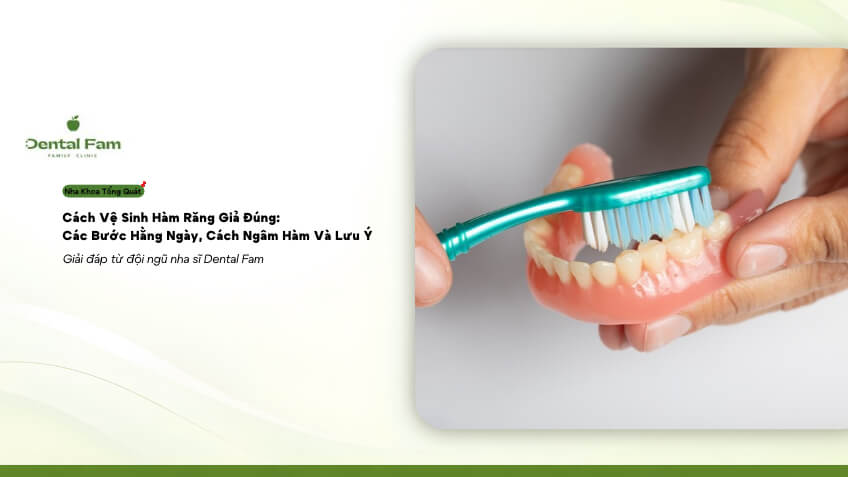
You need to remove your dentures for cleaning after each meal and before bed, brushing gently with a soft-bristled toothbrush, soaking them in a suitable solution, and avoiding regular toothpaste. The reason is that the nature of plastic dentures is completely different from real teeth and gums. Proper cleaning isn't just about keeping the dentures clean; with partial dentures, plaque around the metal clasps can weaken the adjacent natural teeth. If the dentures become loose, cracked, or broken, you should go to a dental clinic instead of trying to fix them yourself. This article covers the key points for removing dentures, 5 steps for daily cleaning, soaking solutions, do's and don'ts, and how to handle loose dentures. First, let's look at the two points for removing dentures each day.
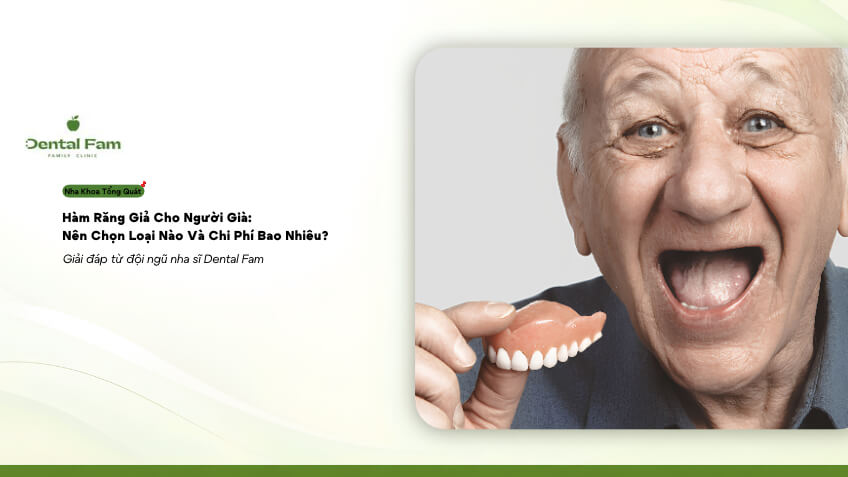
Elderly people who have lost teeth are often advised to get removable dentures because they don't require invasive surgery or grinding down of natural teeth, and age doesn't affect the denture fabrication technique. The deciding factor is cost, bone loss, and the condition of remaining teeth. At Dental Fam, a full 12-tooth denture costs between 6,000,000 VND and 19,000,000 VND. If there is significant lower jaw bone loss making dentures difficult to attach, you can consider implant-supported removable dentures at 60,000,000 VND. Fixed dentures are always preferred when conditions allow. This article helps you and your family choose the right option based on your situation, estimate costs, and understand what support you might need after getting dentures. First, consider whether age truly affects denture selection.
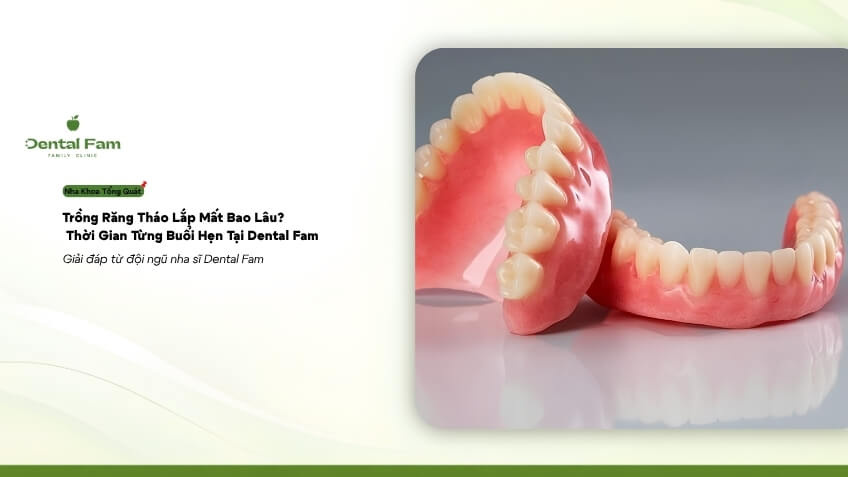
Removable dentures at Dental Fam typically require about 3 appointments per week, each lasting approximately 30 to 45 minutes, and the fabrication of the dentures in the lab can be as quick as 2 hours in urgent cases. Many other dental clinics often take much longer, up to a week, due to the time spent transporting models back and forth between the clinic and the lab. The actual time depends on the extent of tooth loss, the type of denture, and whether any prior oral treatment is needed. The cost of the dentures is all-inclusive and does not increase with the number of appointments. This article explains what each appointment involves, why denture fabrication can be so quick, and what might cause it to take longer than expected. First, let's look at the schedule for the 3 appointments.
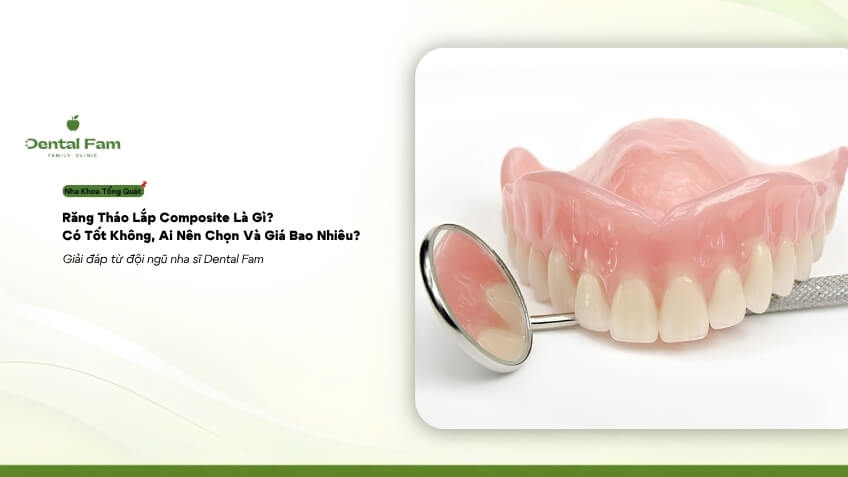
Composite removable dentures are the highest-end type of removable dentures at Dental Fam, priced at 1,500,000 VND per tooth, with a 3-year warranty, extremely high durability, and a color that closely resembles natural teeth. The teeth are chosen specifically for the denture base, so the total cost is the base price plus the number of teeth multiplied by 1,500,000 VND. For example, if you lose 3 teeth and choose a hard resin base (free of charge), the cost starts from 4,500,000 VND. This article will tell you about the advantages and disadvantages of composite dentures, who should choose them, and the price based on the number of teeth, so you can consider your options before seeing a dentist.
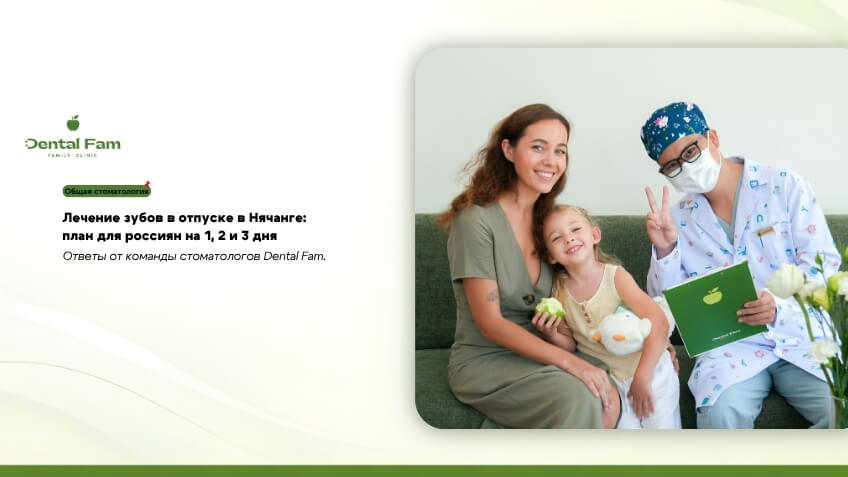
Vacations are short, and teeth often take their toll on us. At Dental Fam, we help Russians schedule a dentist appointment during their trip, and the main question is always the same: "What can I do in my time?" Below, we've broken this down into 1-, 2-, and 3-day scenarios, including real-life cases from our Russian patients. Let's be honest: the exact scope of work is determined by the dentist after an examination, so all timelines here are approximate. Here's what you typically get done, depending on how many days you have: 1 day: examination, x-ray, cleaning, and, if necessary, initial fillings 2 days: cleaning on the first day, dental treatment on the second 3 days or more: you can add wisdom tooth extraction, several fillings, crowns, or whitening What can't be done in 1-3 days, and how to divide treatment between "now" and "on your next visit"
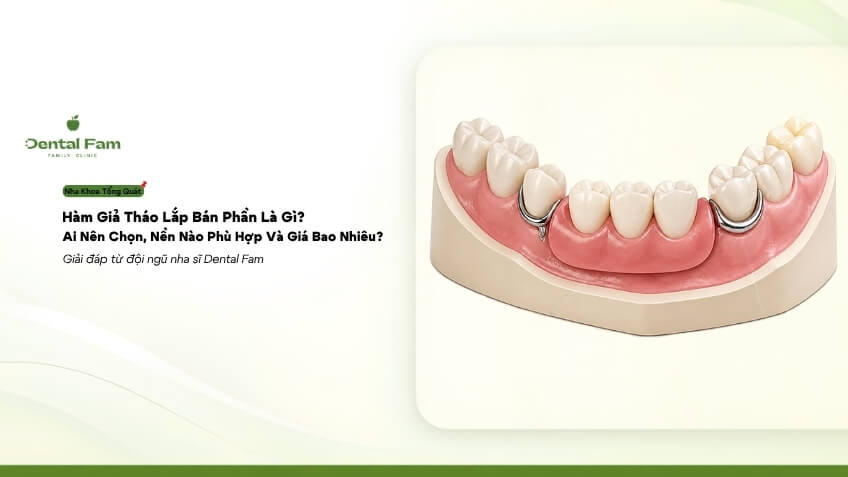
Partial removable dentures are dentures for people who have lost nearly or about half of their teeth in one jaw but still have healthy natural teeth, and you remove and reinsert them yourself daily. Unlike full dentures for people who have lost all their teeth, partial dentures have the remaining natural teeth as a support. At Dental Fam, you choose the denture base (hard resin - free, reinforced resin - 1,000,000 VND, flexible resin - 2,000,000 VND, or titanium frame - 2,500,000 VND) and the type of denture teeth. For example, if you have lost 3 teeth and choose American-made dentures, the total cost ranges from 2,400,000 VND to 4,900,000 VND depending on the base. This article will help you understand the difference between partial dentures and those for losing one tooth or all teeth, which base to choose, and how the metal clasps affect your natural teeth.
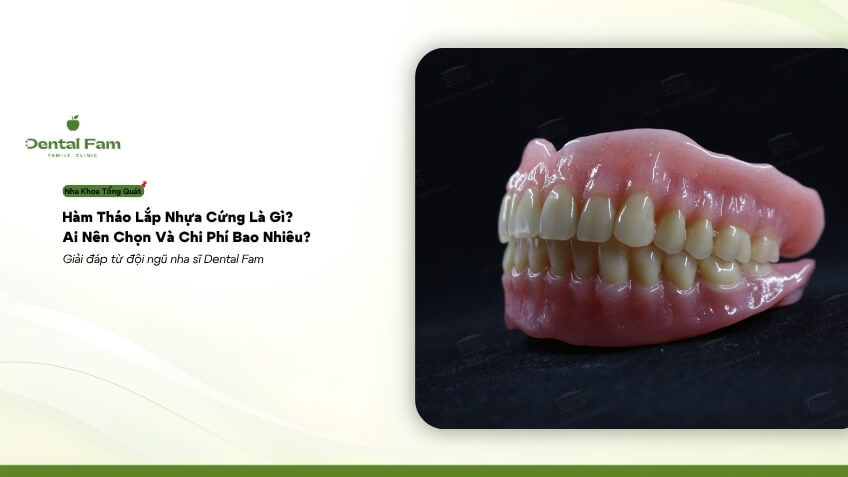
Removable rigid dentures are dentures with a rigid plastic base, to which the artificial teeth are attached, and which you can remove and reinsert yourself. They are suitable for those who have lost many teeth or all of their teeth and need a simple, cost-effective solution. At Dental Fam, the rigid plastic base is free; you only pay for the artificial teeth, ranging from 500,000 VND to 1,500,000 VND per tooth, so a 12-tooth Japanese denture costs from 6,000,000 VND. If you need a stronger base, you can choose reinforced plastic for an additional 1,000,000 VND. This article will tell you what parts the denture consists of, who should choose it, its advantages and disadvantages, and a detailed price list, so you have a basis for consideration before seeing a dentist.
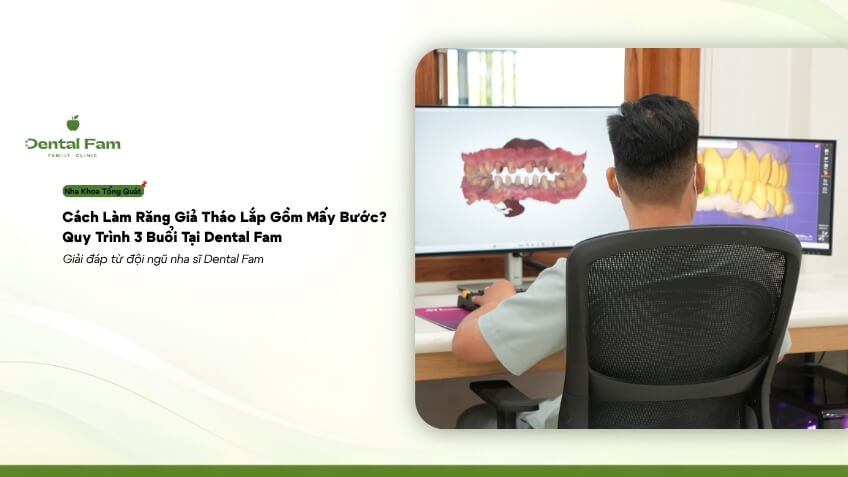
Making removable dentures involves 6 steps, typically completed in 3 appointments: 1st appointment: initial examination and impression taking; 2nd appointment: fitting and final impression taking; 3rd appointment: delivery and adjustments. Dental Fam uses digital impression taking with the TRIOS intraoral scanner, and thanks to our in-house lab, the fastest denture making time is only 2 hours, while many other dental clinics take 2 to 3 days. The cost of making the denture is all-inclusive; there are no additional charges for adjustments after fitting. This article goes through the 6 steps, comparing digital impression taking with the traditional method, explaining why denture making is faster, and outlining the content of each appointment. First, the entire process.
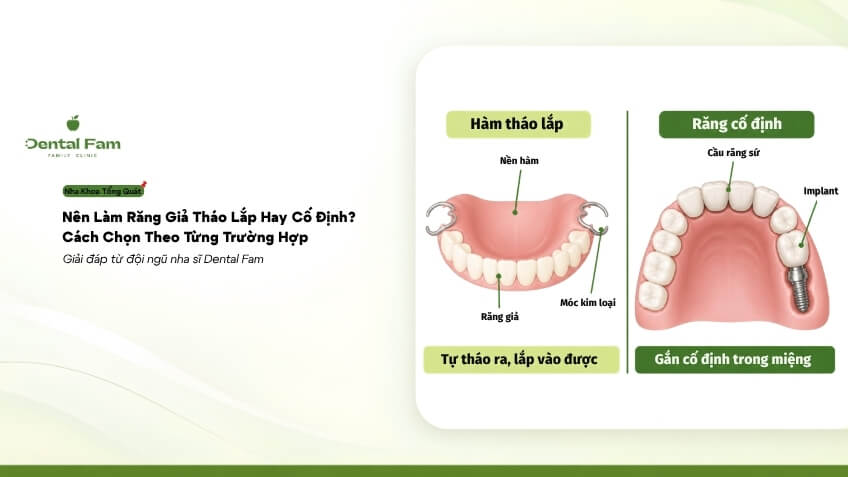
You should prioritize fixed teeth (porcelain bridges or implants) when conditions permit, as this is always the best option when you lose teeth. Removable dentures are a last resort when cost, jawbone structure, or adjacent teeth don't allow for fixed dentures. The core difference is that fixed teeth are permanently attached to the mouth, while removable dentures are prosthetics that you can take out and put back in yourself. This article compares the two groups based on 6 criteria, along with estimated costs from Dental Fam, and then points out when to choose which type. First, let's look at the specific differences between these two groups.
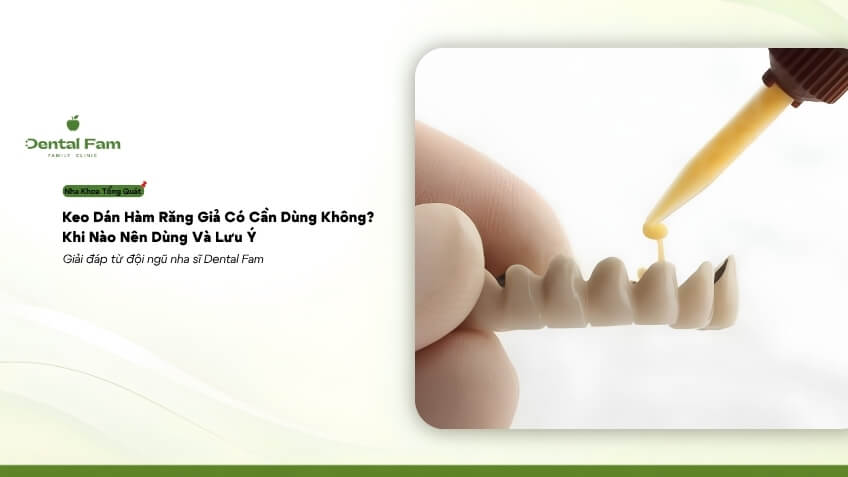
Most removable dentures adhere naturally and don't require adhesive; only when there is significant bone loss causing the dentures to lose their grip will supplemental adhesive be needed. Dental Fam doesn't recommend a specific type of adhesive; you can research and purchase your own. It's important to note that adhesive only provides support, not addresses the underlying cause. If the dentures are loose due to changes in bone and gums over time, the correct solution is to re-bond the dentures or make new ones. This article explains when adhesive is needed, how to clean them, and the solutions and costs involved. First, determine if your dentures truly need adhesive.
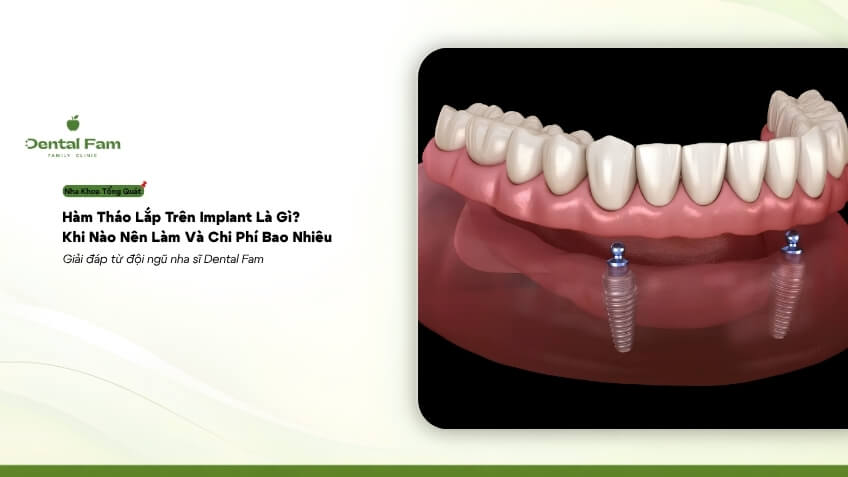
Implant-supported removable dentures are dentures with a reinforced resin base that attaches to two implant posts embedded in the jawbone, instead of attaching directly to the jawbone like conventional removable dentures. The dentures can still be removed and reinserted, but are more secure thanks to the anchor points. At Dental Fam, the cost is 60,000,000 VND per denture (upper or lower), including two Dentium implants and the reinforced resin base. This article explains the denture's structure, compares it to conventional removable dentures, points out three cases to consider, and clarifies potential additional costs. First, let's look at what this denture consists of.
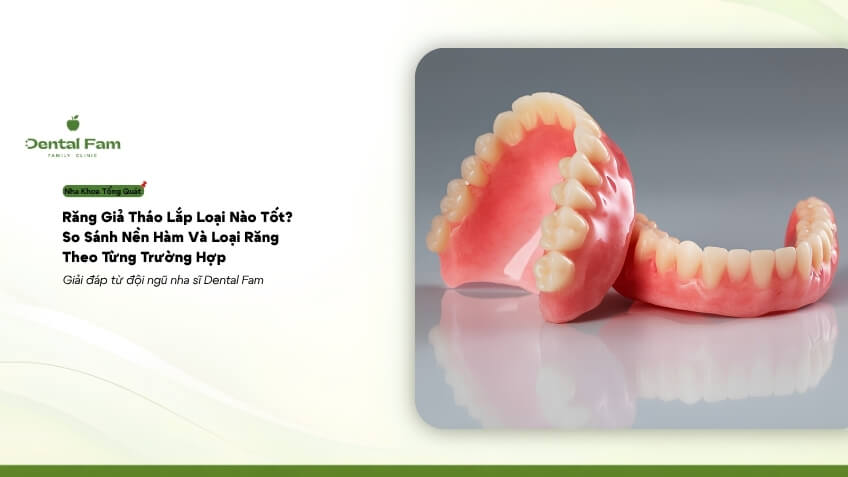
There is no single best type of removable denture for everyone, as dentures are custom-made for each individual, and no two people are alike. The best type is one that suits your tooth loss situation and budget. You will choose two things separately: the denture base (hard resin, reinforced resin, flexible resin, or titanium framework) and the type of teeth (Japanese, American, or composite). This article compares the options side-by-side using a comparison table with current prices from Dental Fam, then combines them into specific combinations for each case, such as complete tooth loss, single tooth loss, or needing to save costs. First, let's understand why you need to choose twice.
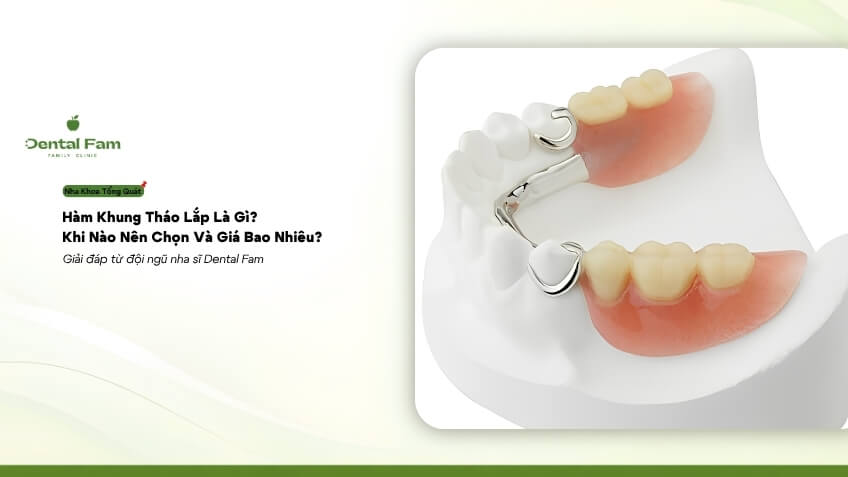
Removable framework dentures are a type of denture with a metal (titanium) framework and artificial teeth, using the remaining natural teeth as anchors to hold the denture securely in the mouth. Thanks to this anchor, framework dentures are generally more stable and less uncomfortable than plastic-based dentures. According to Dental Fam's current price list, a titanium framework costs 2,500,000 VND per denture, plus the price of each artificial tooth ranging from 500,000 VND to 1,500,000 VND. Framed dentures are only suitable if you still have strong supporting teeth and are not for cases of complete tooth loss in an entire jaw. This article will cover the structure, who should choose them, and how to calculate the total cost. First, let's look at what framework dentures are made of.
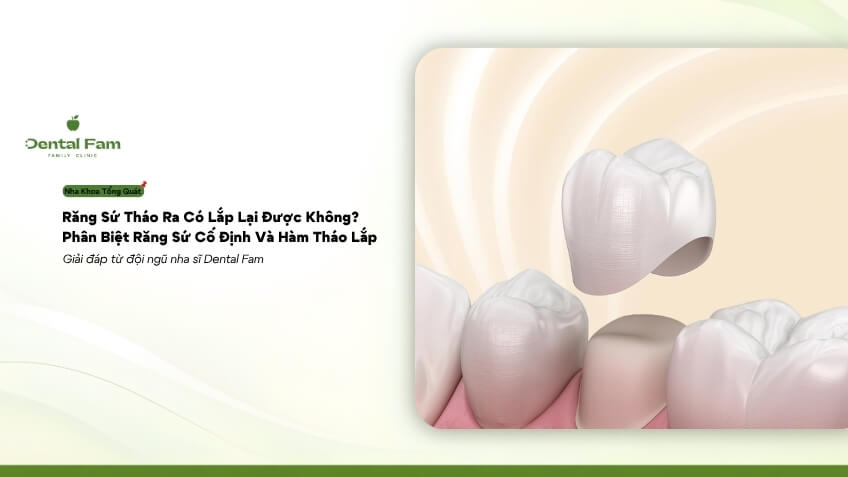
You need to know there are two types of dental crowns: one is fixed crowns (porcelain crowns, porcelain bridges) which are removable but almost impossible to reattach, and the other is removable dentures, which are essentially dentures that you remove and reinsert yourself daily. These two terms are easily confused because they both contain the words ""porcelain"" and ""removable."" Fixed crowns are firmly attached to prepared teeth, so when they need to be removed, the dentist usually has to process the crown, and you should have a new crown made instead of reattaching the old one. One thing you should know early on: removable dentures at Dental Fam use Japanese, American, or composite materials. This article will discuss each term in turn, starting with the case if you currently have fixed crowns in your mouth.
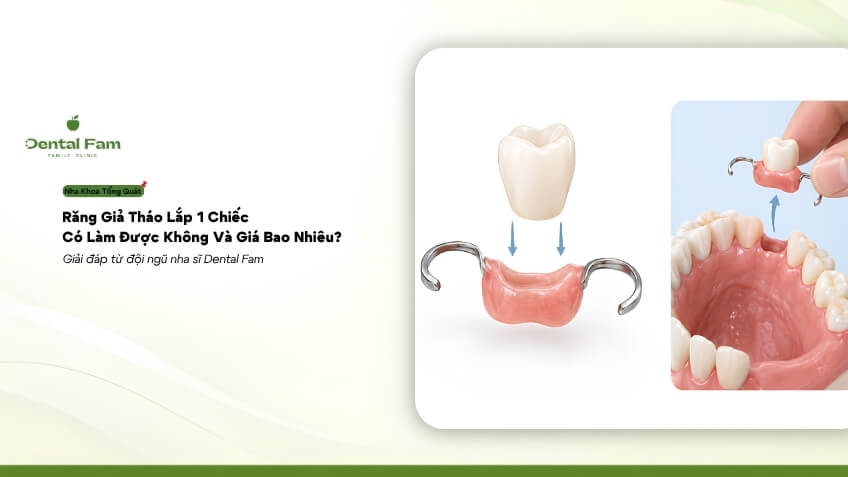
Losing one tooth doesn't prevent the need for removable dentures, with costs at Dental Fam ranging from 500,000 VND to 4,000,000 VND depending on the type of tooth and the base material. This figure includes the price of one tooth (500,000 VND to 1,500,000 VND) plus the cost of the base (from free to 2,500,000 VND). The base is included even if you only have one tooth, as a base is necessary for the tooth to stay in place. One thing you should know from the start: single removable dentures are often less aesthetically pleasing, the plastic base can easily press against adjacent teeth, and clinics usually don't accept single molars for this procedure. This article will go through the details to help you make your own decision. First, let's understand what a single removable denture consists of.
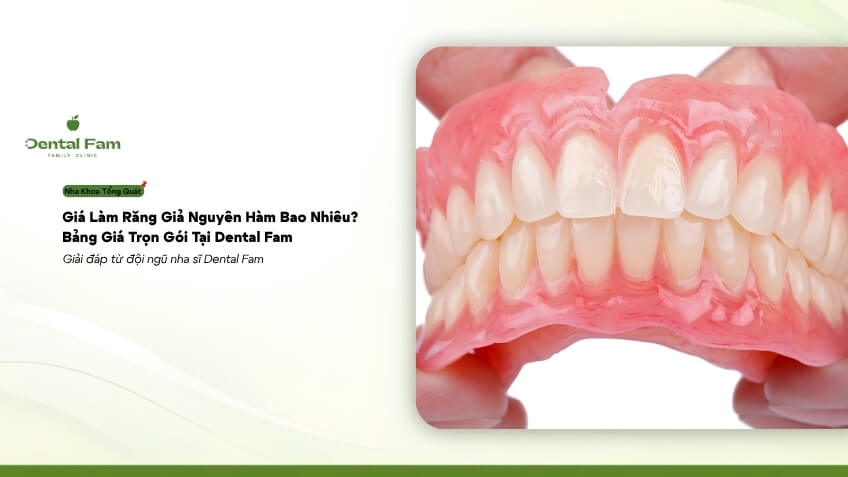
Full dentures at Dental Fam cost between 6,000,000 VND and 22,000,000 VND per arch, depending on the type of dentures, the number of teeth, and the base material you choose. This figure is the sum of the cost of the base material (hard resin is free, high-strength resin costs 1,000,000 VND) and the cost of each individual denture tooth, ranging from 500,000 VND to 1,500,000 VND, multiplied by the number of 12 to 14 teeth in a arch. For example, 12 American-made dentures on a high-strength resin base cost 10,600,000 VND, including follow-up appointments for adjustments. Why do many places quote such wide prices for full dentures? This article will break down each item so you can calculate your own cost, then compare it to a fixed price option to give you more basis for consideration. First, let's look at the price list.
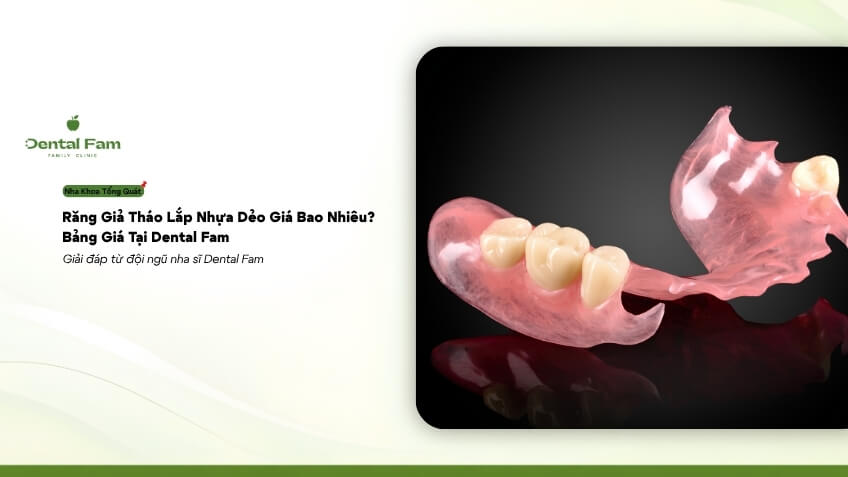
The cost of a flexible resin denture base at Dental Fam is 2,000,000 VND per set, plus 500,000 VND to 1,500,000 VND for each denture tooth, depending on the type you choose. In other words, the total cost isn't a fixed number but the sum of two parts: the denture base and the number of teeth needed. For example, if you've lost 3 teeth and choose American-style dentures, the cost is 4,400,000 VND, including follow-up appointments for adjustments to ensure a perfect fit. This article will help you break down each part to estimate your own cost, and also examine who is suitable for flexible resin dentures and what limitations you should be aware of before making a decision. First, let's start with the detailed price list.
Periodontal disease is associated with several chronic diseases, most notably diabetes and cardiovascular disease, but current evidence only allows us to say ""associated,"" not that one disease causes the other. Poorly controlled diabetes is a risk factor for periodontal disease, and it also affects chewing and quality of life. This article briefly explains the association with diabetes, with cardiovascular disease, the impact on chewing, and what you should do if you have these underlying conditions. Don't panic: the important thing is to manage both conditions.
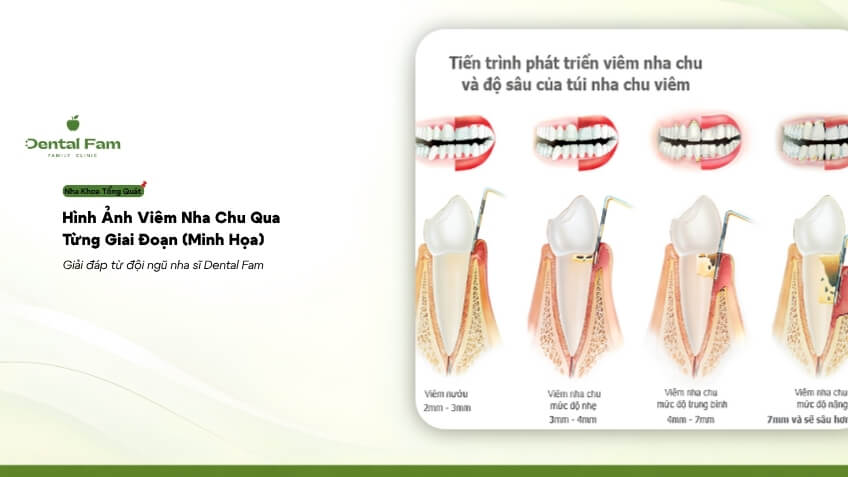
The images of periodontal disease illustrate how gums and teeth change from healthy, gingivitis, to stage I to IV of periodontal disease, including swollen and red gums, receding gums, exposed tooth roots, and gradually spaced teeth. This article uses illustrations with written descriptions to help you compare the images without feeling intimidated. The content progresses through healthy gums, gingivitis, the four stages of periodontal disease, and then explains why images cannot replace a physical examination. You can also visit the periodontal disease treatment page at Dental Fam for the next steps.
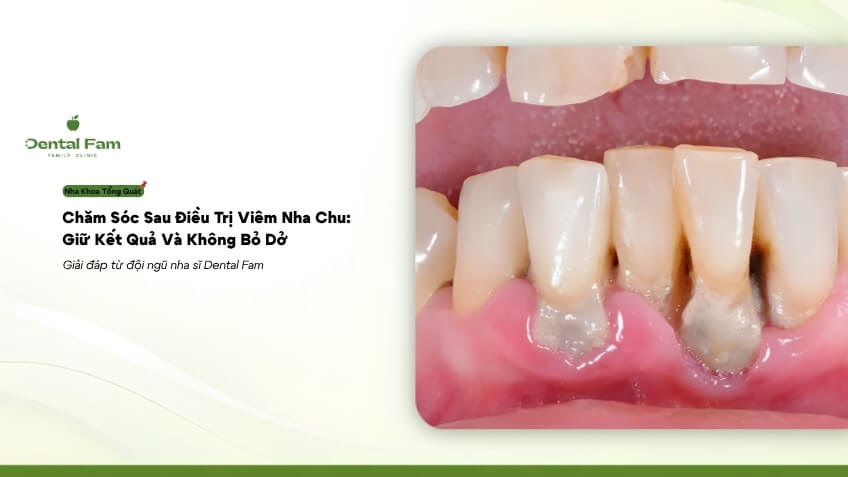
Post-treatment care for periodontal disease involves keeping your gums clean, avoiding injury to the treated area, and attending follow-up appointments as scheduled by your dentist to prevent recurrence. Home care helps maintain the results, not create them, so it's a crucial continuation of the treatment at the clinic. This article outlines the goals of this phase, how to clean the sensitive gum area, dietary recommendations during the initial period, supportive products, follow-up appointments, signs to call your dentist, and how Dental Fam supports you. If you haven't had treatment yet, check out Dental Fam's periodontal disease treatment services.
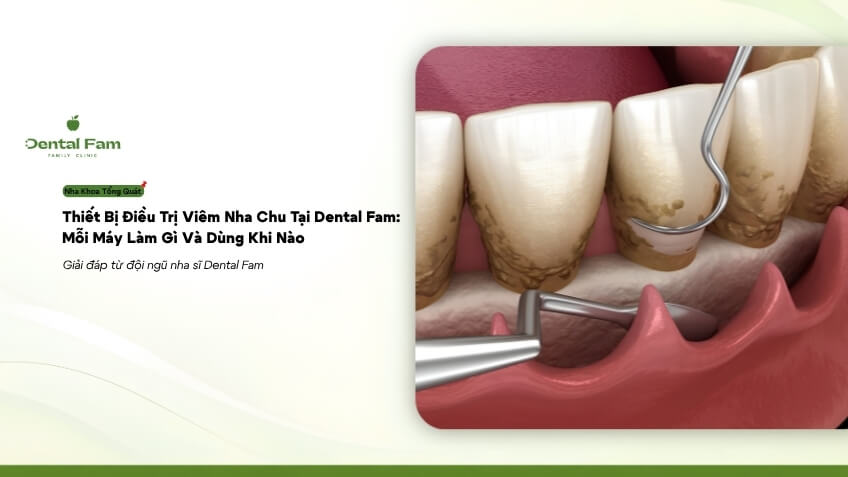
Dental Fam's periodontal treatment equipment is divided into two groups: diagnostic equipment that helps dentists clearly visualize the condition of the gums and bone, and treatment or supportive treatment equipment used when prescribed by the dentist. The diagnostic group includes Planmeca ProMax 3D Plus, DEXIS Scan eXam One, and DEXIS NOMAD Pro 2. The treatment group includes BIOLASE Epic X, ATP38, AquaCare Twin, DUO Centrifuge, and MINIUNIKO PZ. Each machine has its own function, and not all cases require the use of all three. This article will sequentially discuss the diagnostic and treatment machines, how to match the machine to the treatment indication, and the true role of each device in treatment.
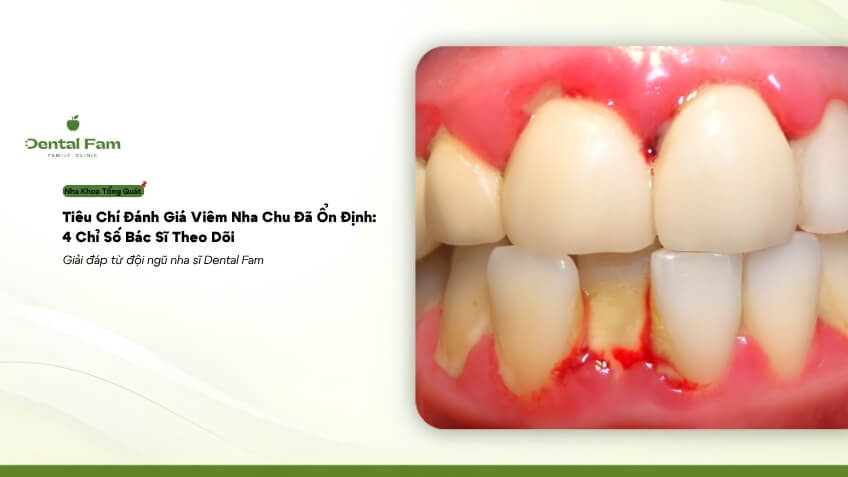
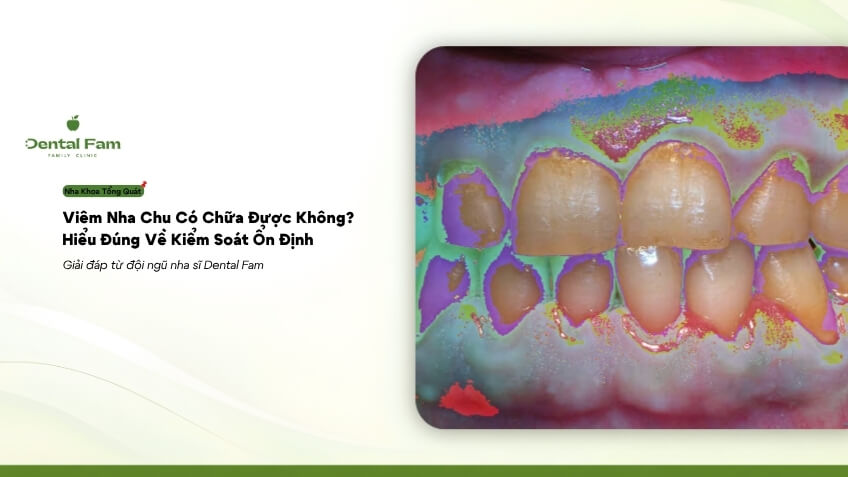
Periodontitis is considered stable when the disease stops progressing: inflammation subsides, clinic measurements do not worsen, and the gums have healed, not when bone loss has regrown. This is the benchmark doctors use to answer the question ""Is it really finished?"" using measurements rather than sensation. This article explains what stability means, signs you can recognize at home, the four indicators doctors monitor (BOP, PPD, CAL, and X-ray), how to read a sample periodontal chart, why lost tissue often doesn't fully recover, post-treatment maintenance, and how Dental Fam monitors. If you are considering treatment, please see more about periodontitis treatment services at Dental Fam.
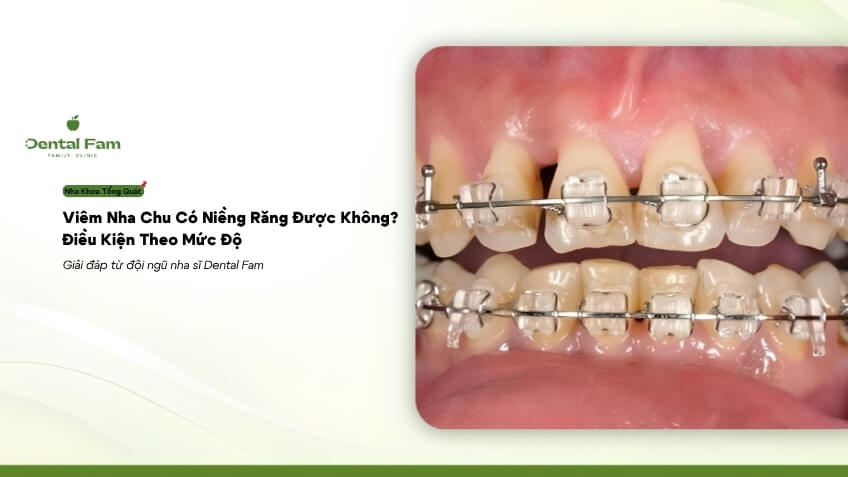
Periodontal disease should only be treated with braces after the condition is under control, as the correct order is periodontal treatment first, followed by orthodontics. Individuals with mild periodontal disease and good supporting tissues may consider braces after the disease is controlled, while those with significant bone loss may not be candidates for orthodontics. This article explains why braces shouldn't be used when the disease isn't controlled, the different disease groups and treatment approaches, how your dentist will assess your situation, the correct order of combining periodontal treatment and orthodontics, and how to manage periodontal disease discovered during orthodontic treatment. If you suspect you have periodontal disease, check out Dental Fam's periodontal treatment services.
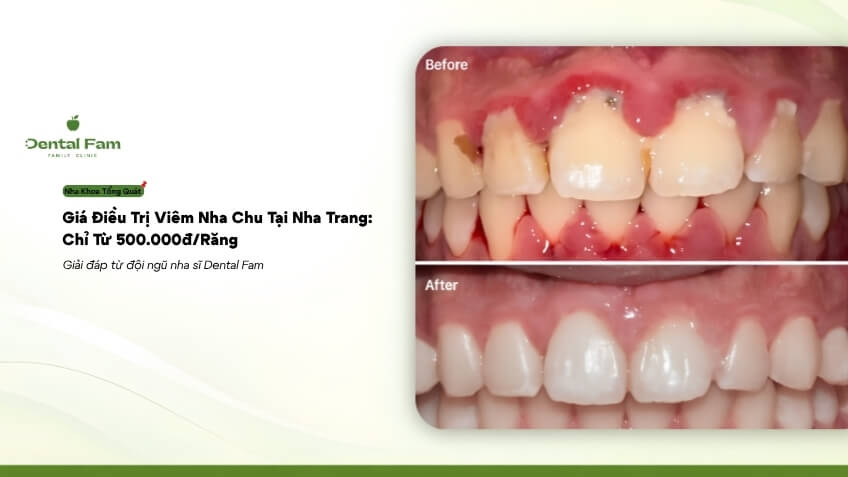
The cost of periodontal disease treatment at Dental Fam starts from 500,000 VND per tooth, including examination and consultation, and your total cost is calculated using a fixed formula. This article presents three treatment categories and their prices, the formula for calculating the total cost, additional charges that the doctor may prescribe with conditions, five illustrative examples with specific additions, how Dental Fam advises on costs, and frequently asked questions. The examples are for illustrative purposes only and are not price quotes, as the actual cost depends on the number of teeth and the doctor's recommendations after examination. If you need to understand the disease and treatment process beforehand, please see Dental Fam's periodontal disease treatment page.
Periodontal disease is not directly contagious like other common infectious diseases, but the bacteria associated with it can be transmitted through saliva. This doesn't mean you should distance yourself from family or blame yourself when diagnosed. This article answers the following questions in order: Is periodontal disease contagious? In what situations can bacteria be transmitted through saliva? Why can multiple people in the same household get the disease? How to protect family members through daily habits without distancing yourself? And when should you see a dentist? Finally, the article discusses how Dental Fam supports you and your family in treating periodontal disease in Nha Trang.
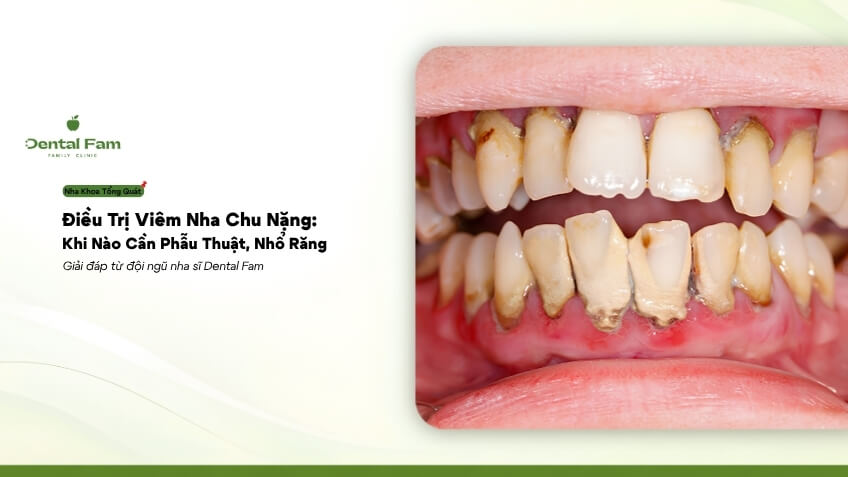
Treating severe periodontitis involves the dentist assessing the extent of tissue loss, bone resorption, and tooth loosening in each tooth, then choosing the appropriate preservation or restoration approach for each tooth. Even in severe cases, there's a clear path forward: many teeth can be treated intensively to be saved, and teeth that cannot be preserved will be planned for restoration. This article describes how dentists assess severe cases, the intensive treatment approaches, when teeth cannot be preserved, the role of supporting equipment, and reference costs. If you need an in-person assessment, Dental Fam offers periodontitis treatment services in Nha Trang.
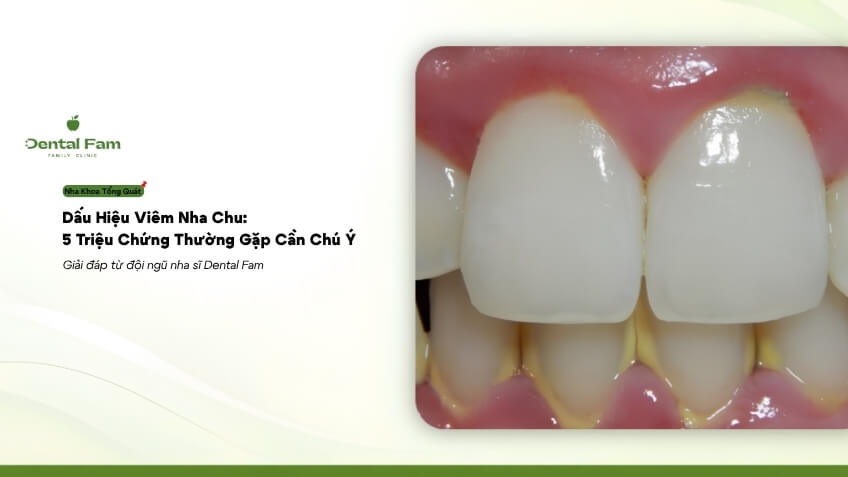
Signs of periodontal disease include changes in the gums and teeth indicating inflammation has spread beyond the gum line, such as swollen, red, and bleeding gums, persistent bad breath, receding gums, loose or spaced teeth, and pus between the teeth and gums. Many signs appear subtly and are easily overlooked until teeth become loose. This article describes five signs, the reasons why the disease is easily missed, complications from not checking early, when to seek medical attention, and how Dental Fam assesses the condition at the clinic.
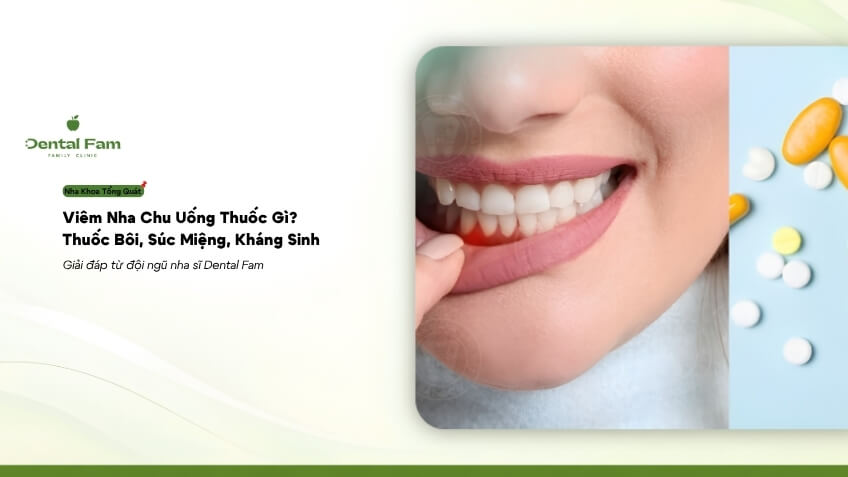
There is no single oral medication for all periodontal disease patients; the treatment framework focuses on controlling bacterial plaque and mechanical treatment of the subgingival area. Systemic antibiotics are only considered in select cases, topical medications or gels are prescribed by a doctor, and over-the-counter toothpastes and mouthwashes only provide support and do not offer a definitive cure. This article explains why there is no single medication, the role of each group of drugs and products, why you shouldn't self-medicate with antibiotics, signs that warrant a doctor's visit instead of seeking medication, how Dental Fam treats periodontal disease, and frequently asked questions.
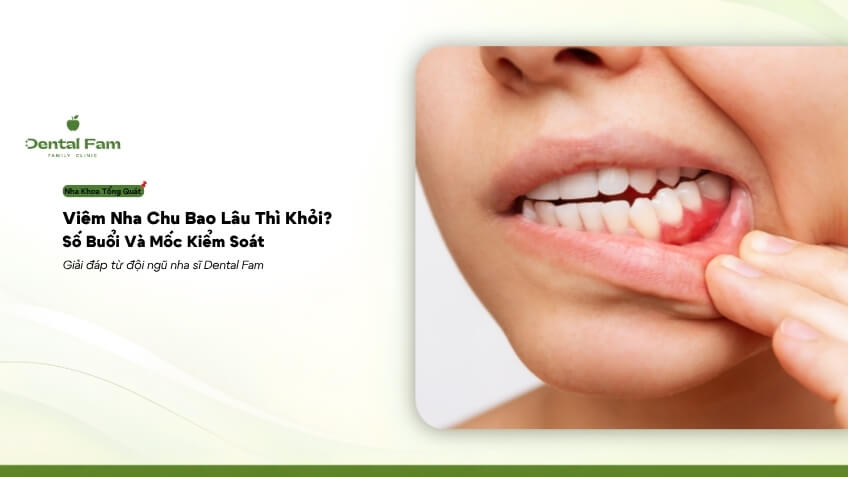
Periodontal disease is considered "cured" when the condition is stably controlled and stops progressing, not when lost tissue regrows to its original state. Each treatment session typically lasts about 30 minutes, but can be longer depending on the individual, and usually requires 1 to 4 intensive treatment sessions depending on the treatment plan; complex cases may require more. This article explains what "cured" means, how long each session lasts, how many sessions are needed for each category, what determines the number of sessions, how to know if the disease is under control, the maintenance phase after treatment, and the cost at Dental Fam.
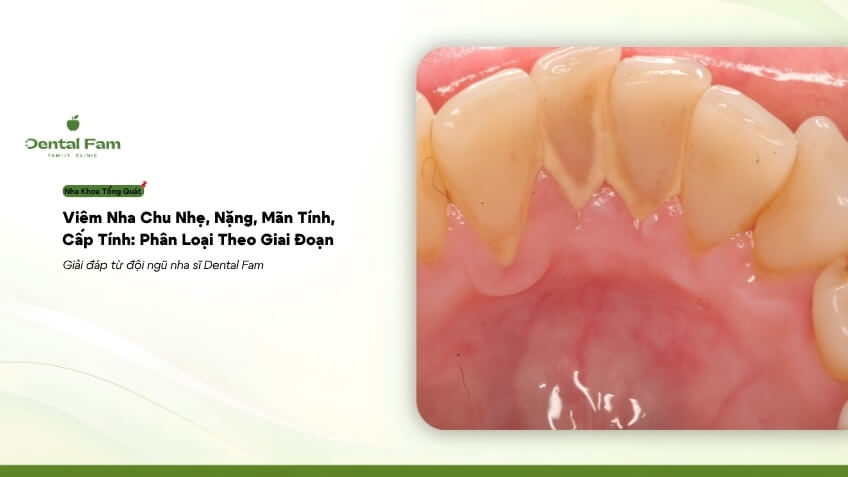
"The terms mild, severe, chronic, and acute periodontitis are common terms, but dentists classify the disease into Stages (stages I to IV, indicating severity and complexity) and Grades (grades A to C, indicating the rate of progression). Therefore, your ""mild"" or ""severe"" condition may correspond to a specific Stage, but only if measured and assessed by a dentist. This article presents how dentists classify periodontitis, how to interpret ""Stage II, Grade B"" results, a table comparing common terms with Stages and Grades, the difference between chronic and acute, why self-classification is not advisable, and the impact of severity on treatment. You can find more information on periodontitis treatment at Dental Fam.
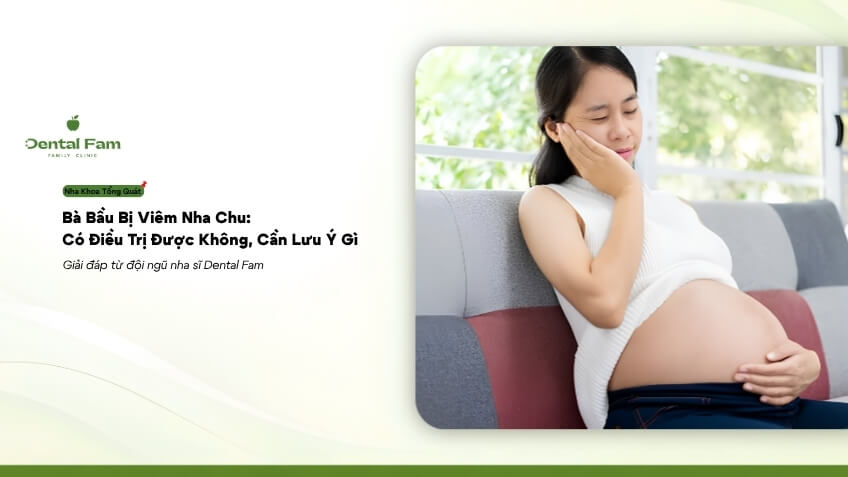
Periodontal disease in pregnant women can still be treated, regardless of the trimester (first, second, or third trimester), and non-surgical methods are performed when indicated by a doctor. Increased gum sensitivity during pregnancy is common and not unique to any one woman. This article helps you understand why gums are prone to swelling during pregnancy, what treatment options are available, why medications are chosen by a doctor based on gestational age, how to care for your gums at home, when to schedule appointments, and frequently asked questions. Dental Fam is always ready to support you.
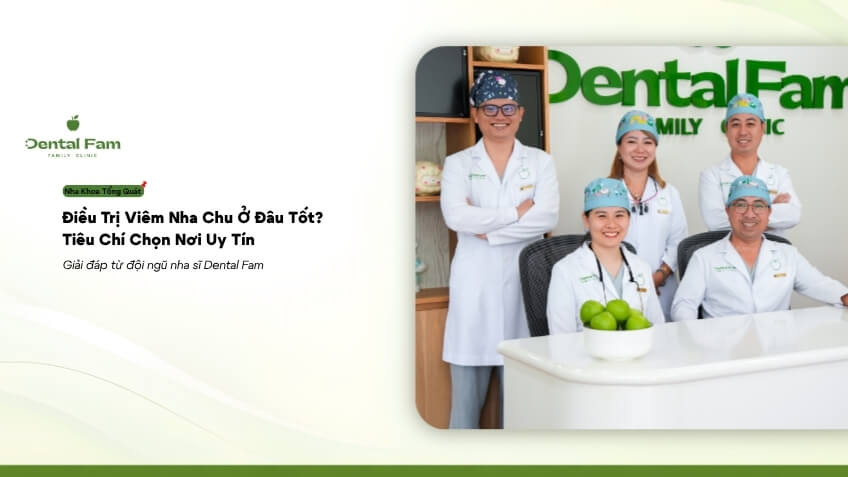
A good periodontal treatment center is one that provides verifiable evidence: diagnosis using measurements and X-rays, clearly labeled and functional equipment, transparent pricing, and results measured using indicators. This article helps you evaluate any clinic in Nha Trang by answering five frequently asked questions: diagnosis and results, equipment, pricing, treatment staff, how to verify results without prior experience, and understanding when a clinic doesn't provide complete answers. The article concludes with a section on how Dental Fam meets these criteria. For details on their services, please visit their periodontal treatment page.
Periodontal disease can be treated in the sense of achieving long-term stable control, but lost tissue and bone often do not fully recover. With proper treatment and regular check-ups, disease progression can be halted, but the risk of recurrence remains high if plaque and risk factors are not controlled. This article briefly answers four questions in order: how treatable the disease is, what parts recover and what do not, why the disease may return, and what expectations are appropriate. Treatment duration is discussed in a separate article. You can find information on treatment at periodontal disease treatment Dental Fam.
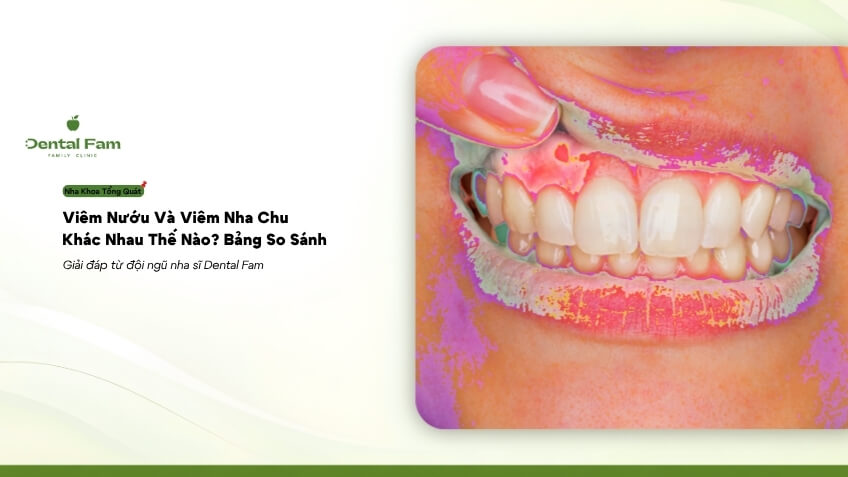
Gingivitis is inflammation confined to the gum tissue and can be completely reversible if detected early, while periodontitis is inflammation that has spread to the periodontal ligaments and alveolar bone. Both conditions share a common cause: bacterial plaque, and periodontitis often develops from untreated gingivitis. This article compares the two conditions based on three criteria: extent of damage, reversibility, and treatment, and explains how to determine which stage you are in. You can find more information on periodontitis treatment at Dental Fam.
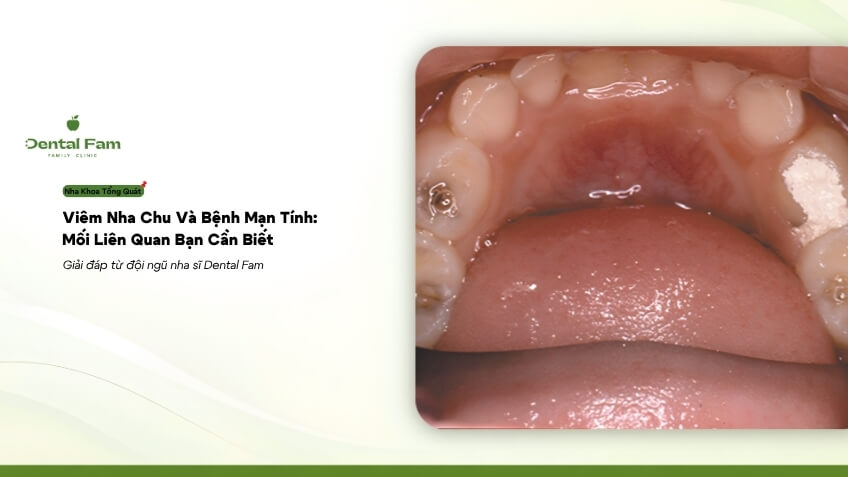
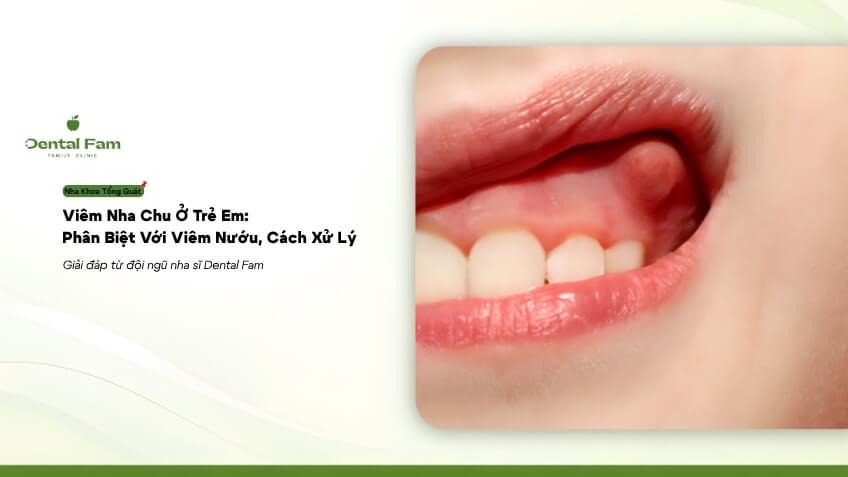
Periodontitis in children is inflammation that spreads to the tissues supporting the teeth (ligaments and alveolar bone), but in children, swollen and red gums are often due to plaque-induced gingivitis and are much more common. Therefore, parents shouldn't worry too much when they see their child's gums bleeding, but should understand the situation and what needs to be done. This article helps you differentiate between gingivitis and periodontitis, understand why children's gums swell easily, know when to take your child to the dentist, how to handle it, and answers frequently asked questions such as ""my 2-year-old has periodontitis."" Dental Fam will help you assess the specific condition and develop a treatment plan for your child's periodontal disease.
People with periodontal disease should prioritize green vegetables, fruits, protein, vitamins, and minerals, limit sweets, and choose soft foods when gums are swollen and painful or after treatment. Diet only supports gum health and does not replace dental treatment. This article briefly answers four questions: can diet cure periodontal disease? What should be prioritized and limited? How should you eat when gums are painful or after treatment? And what should you be aware of while wearing braces or dentures? If you want to know the condition of your gums, Dental Fam can directly assess and create a periodontal treatment plan for you.
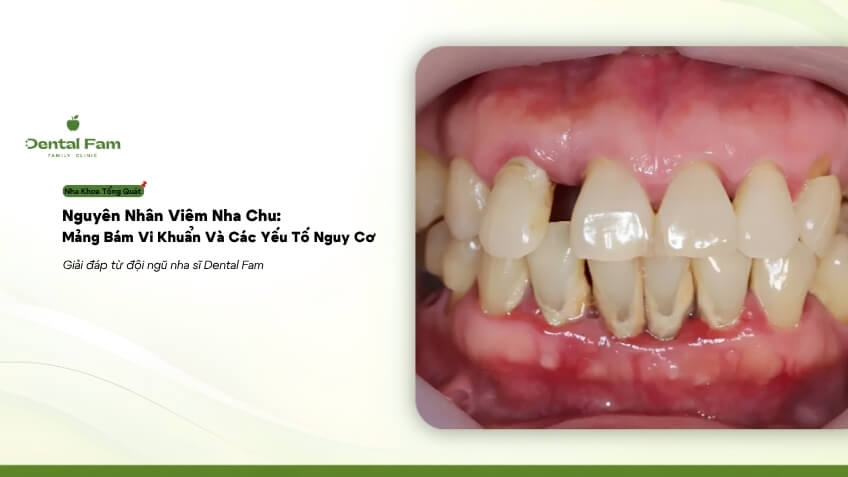
The central cause of periodontal disease is bacterial plaque (a film of bacteria that adheres to the surface of teeth and gums) that accumulates over time without being cleaned. Many people refer to swollen, red gums as ""internal heat,"" but in dentistry, the explanation and control lie in plaque. Smoking, poorly controlled diabetes, and several other factors can make the disease more likely to occur or worsen it, although they don't always directly cause it. This article explains the mechanism from plaque to bone loss, the role of tartar, risk factors, control methods, and how Dental Fam can help you with periodontal treatment in Nha Trang.
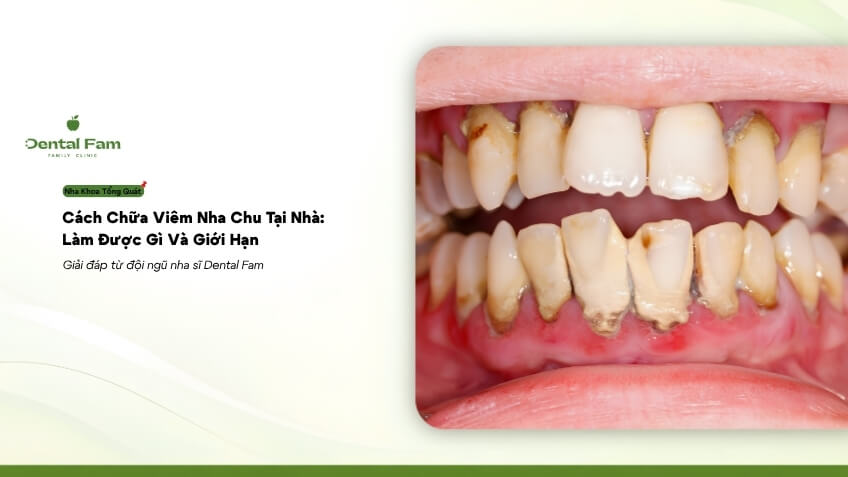
Treating periodontal disease at home means maintaining daily oral hygiene to support and preserve results, not removing bacterial plaque that has settled deep beneath the gums. The cause of the disease is bacterial plaque, and tartar is where the plaque adheres firmly, preventing toothbrushes and mouthwash from reaching the periodontal pockets (the space between the teeth and gums). This article answers what can be done at home, why there are limitations, four proper supportive measures, signs that home care has ceased, how to seek treatment at a clinic, and when to stop self-monitoring. If you want to see professional treatment options, please read the periodontal disease treatment page at Dental Fam.
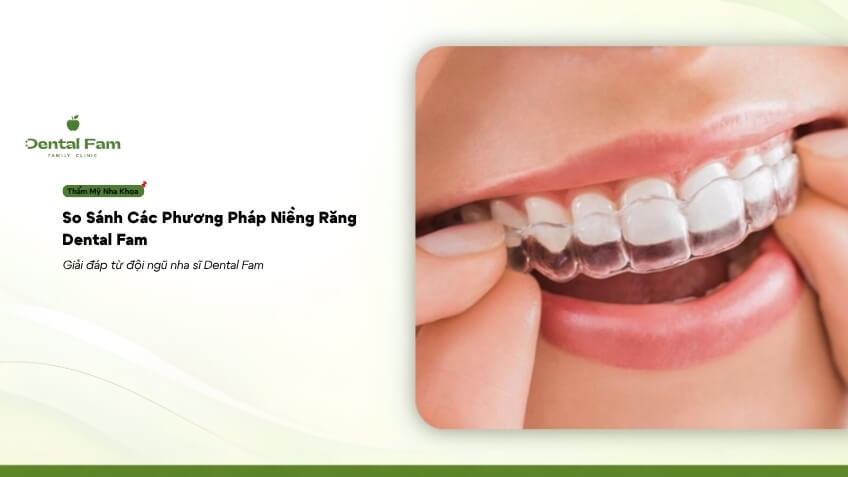
Dental Fam currently offers five orthodontic methods: three types of braces (metal, self-ligating metal, ceramic) and two brands of clear aligners (SMILER, Invisalign), with prices ranging from 30 to 150 million VND. The difference between the methods is not just in price: braces create direct and fixed mechanical force throughout the treatment, while clear aligners are removable but require the patient to wear them for the required number of hours each day to be effective. Most people are hesitant between these two groups not because of a lack of price information, but because they are unsure which method is truly suitable for their dental condition and lifestyle. This article directly compares the five orthodontic methods available at Dental Fam in terms of price, treatment time, and pain level.
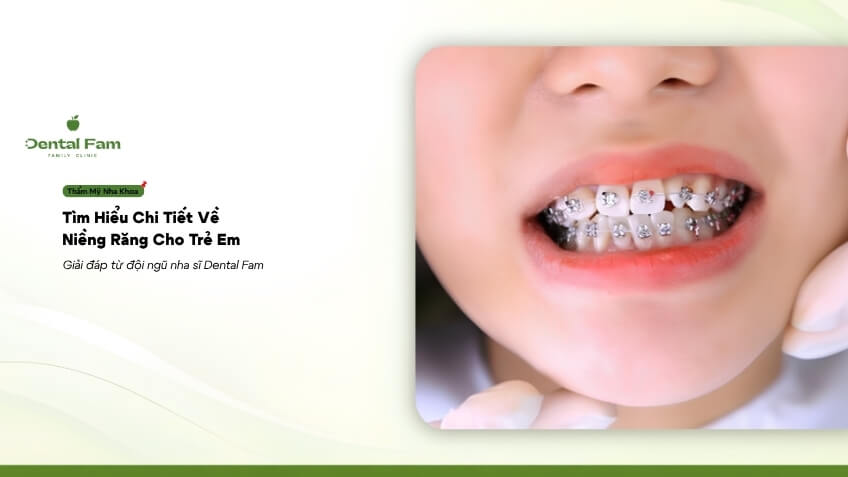
Children don't have a fixed age for braces; the decision depends on the stage of tooth replacement, jaw bone development, and the actual condition of each child's teeth, not a single number applied to all children. At Dental Fam, interventions for children are divided into two different approaches: growth orthodontics for children who are still developing and haven't yet had all their permanent teeth replaced, and conventional braces or clear aligners when the teeth and jawbone are ready, almost like adults. Many parents only know about conventional braces and miss the early intervention stage, while developed countries have considered growth orthodontics a normal part of a child's tooth replacement journey. This article explains when to take your child for a check-up, the differences between the two approaches, and the cost of braces for children at Dental Fam.
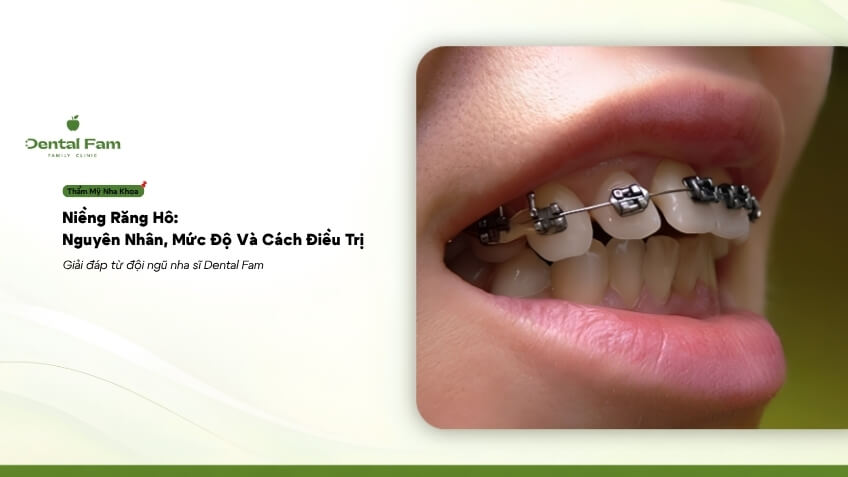
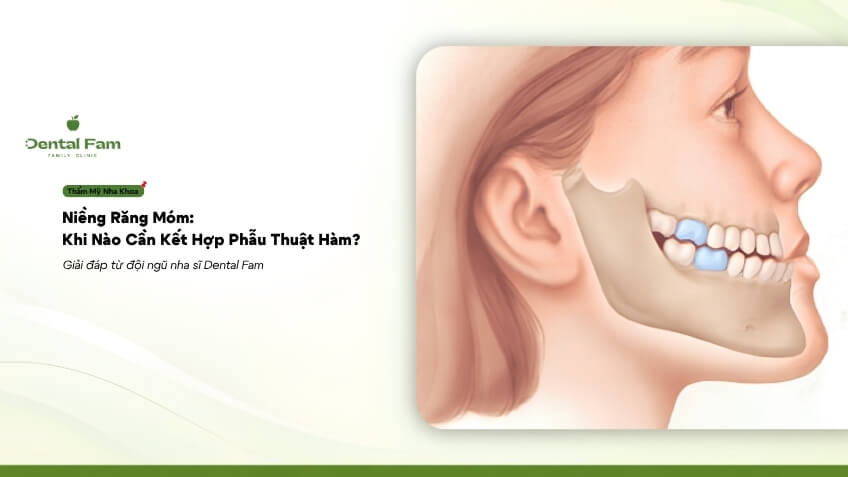
Protruding teeth can be treated with orthodontics if the primary cause is dental, but if the protrusion is due to jaw bone structure and is severe, orthodontics alone will not address the root cause of the problem; in such cases, other treatment methods or combined jaw surgery are needed. This is a point many people overlook when researching protruding teeth: not all cases of protruding teeth have the same cause or severity, and misdiagnosis can lead to false expectations regarding the results and scope of treatment. This article explains how to differentiate between dental and skeletal protrusion, what criteria are used to assess the degree of protrusion, whether braces can completely correct protrusion, and the factors affecting the orthodontic treatment process for this case at Dental Fam.
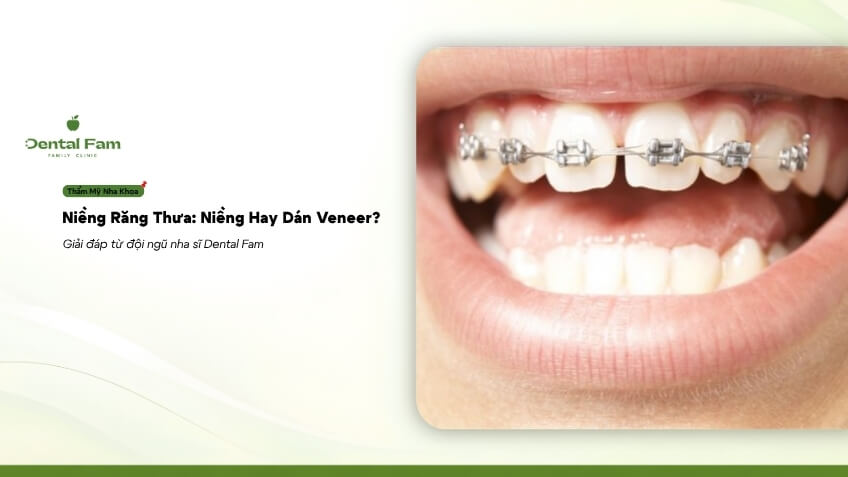
Gapped teeth, a condition where there are gaps between teeth, can often be effectively closed with orthodontic treatment. However, not all gaps require braces: some small gaps can be treated with veneers (thin porcelain veneers) instead of wearing braces for months. This is the point that many people are confused about when learning about gapped teeth: although it's still a ""gap between two teeth,"" the treatment approach can be completely different depending on the location, size of the gap, and the cause of the gap. This article explains when orthodontic treatment is necessary, when veneers are a more suitable option, and the cost of braces for gapped teeth at Dental Fam.
Installment payment options for braces at Dental Fam only apply to traditional braces; clear aligners (SMILER and Invisalign) require 100% upfront payment and do not offer installment plans. This is the most common misunderstanding when researching orthodontic financing, as many people only know ""installment payments"" as a general policy for all methods without realizing it's limited by the type of appliance. Unlike bank installment plans, which often involve interest and appraisal procedures, installment payments for braces at Dental Fam are an internal plan, interest-free and fee-free, simply dividing the remaining cost after the deposit. This article explains the conditions for application, how to calculate the monthly payment, and the specific registration process for installment payments for braces at Dental Fam.
Underbites can be treated with orthodontics if the primary cause is dental, but if the underbite is due to the jawbone, especially in adults and at a severe level, jaw surgery is necessary because orthodontics alone cannot change the bone structure. This is a point many people overlook when researching underbites through online images: outwardly, underbites caused by teeth and underbites caused by bone may look quite similar, but the treatment approaches are completely different. This article explains the signs of an underbite, how to distinguish between the two types of causes, whether braces can completely correct an underbite, and the factors affecting the orthodontic treatment process for underbites at Dental Fam.
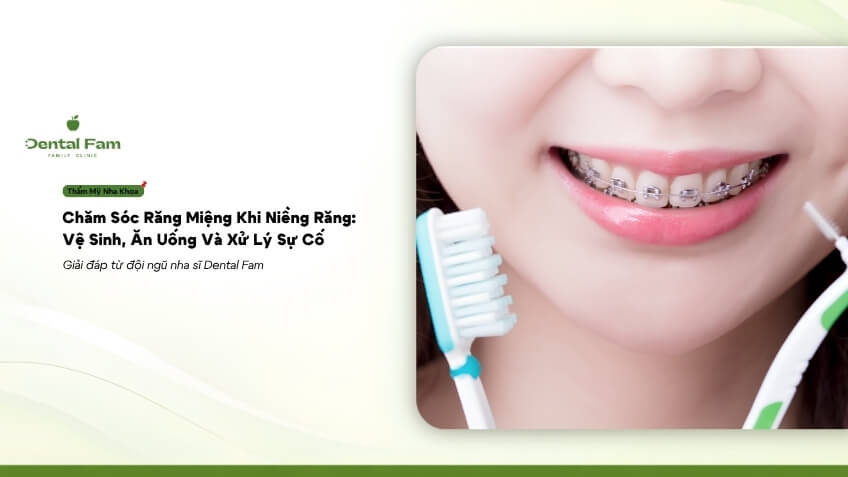
Oral care while wearing braces requires a stricter hygiene routine than usual because brackets, wires, and clear aligners create many nooks and crannies where food and plaque can get trapped, which a regular toothbrush can't reach. Those wearing braces need to master three main groups of things: proper cleaning of the appliances and in the correct order, knowing which foods to avoid to prevent damaging the appliances, and knowing how to temporarily handle situations when brackets come loose or wires poke into the cheek before visiting the dentist. Neglecting any of these groups increases the risk of cavities, gum inflammation, or prolongs treatment beyond the expected timeframe. The content below addresses each specific situation, from daily brushing techniques to how to handle appliance malfunctions, so that those undergoing orthodontic treatment at Dental Fam or anywhere else can apply this immediately.
Orthodontic treatment for adults is not limited by a specific maximum age, as adult teeth can still be moved as long as the alveolar bone and gums are healthy enough to withstand the forces of orthodontic manipulation. The difference compared to children is not about whether or not braces are suitable, but rather the treatment mechanism: children have developing jawbones, so bone growth orientation can be incorporated, while adults have fixed jawbones, so the entire treatment plan revolves around moving the teeth within the existing bone structure. This difference leads to differences in treatment duration, the likelihood of needing tooth extraction, and the need for more thorough examination of certain oral health conditions in older adults. The content below directly analyzes each of the most common questions adults are asking when considering orthodontic treatment (braces), from age limits and differences compared to children, to the health conditions that need to be met before starting.
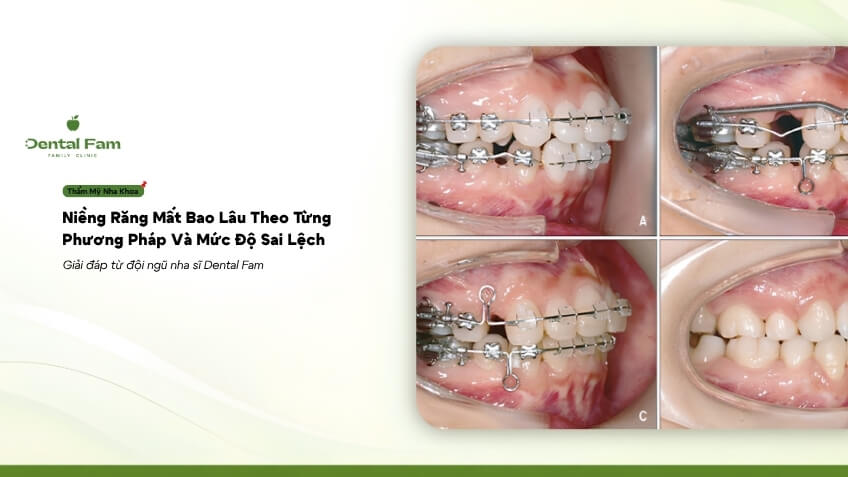
There isn't a fixed number for how long orthodontic treatment takes, as the treatment time depends directly on three factors: the initial degree of misalignment, the chosen orthodontic method, and the patient's compliance (especially with clear aligners). On average, orthodontic treatment lasts 24-36 months, but complex cases can take up to 45-48 months, while simpler cases (mild misalignment, no tooth extraction required) can be completed sooner than average. This variable duration also means that regular follow-up appointments are crucial for the dentist to adjust the force applied to ensure the treatment progresses as needed, rather than waiting until the final appointment. The content below specifically analyzes the time required for each method and the degree of deviation, so that those considering orthodontic treatment can estimate the actual timeframe for their case.
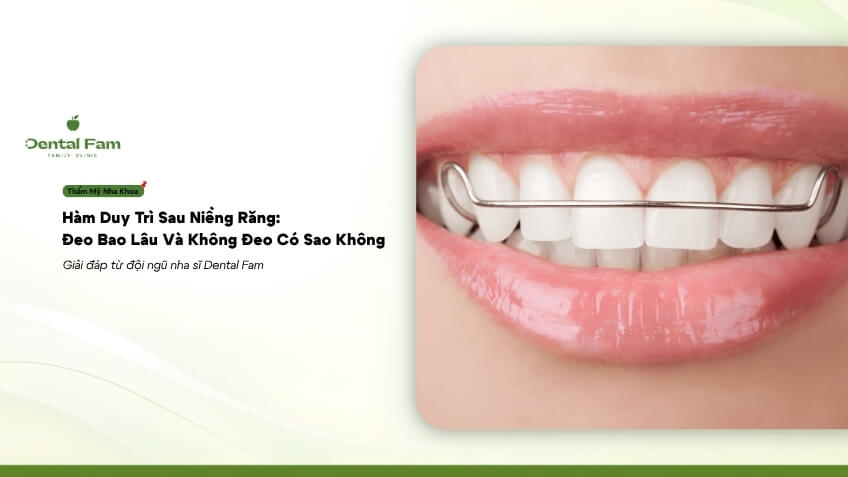
A retainer is a mandatory appliance that must be worn immediately after removing braces or completing a clear aligner treatment. This is because the teeth, having just moved to their new positions, haven't fully anchored themselves to the alveolar bone and tend to shift back to their original positions without stable support. This isn't an optional step or something you should only do if you have time, but an integral part of the entire orthodontic process, already included in the treatment cost. The duration of wearing a retainer is usually much longer than the actual braces treatment, and the level of adherence during this period directly determines whether the orthodontic results will be maintained long-term. The content below specifically analyzes the wearing time, common types of retainers, and the consequences of stopping wearing them midway after completing orthodontic treatment.
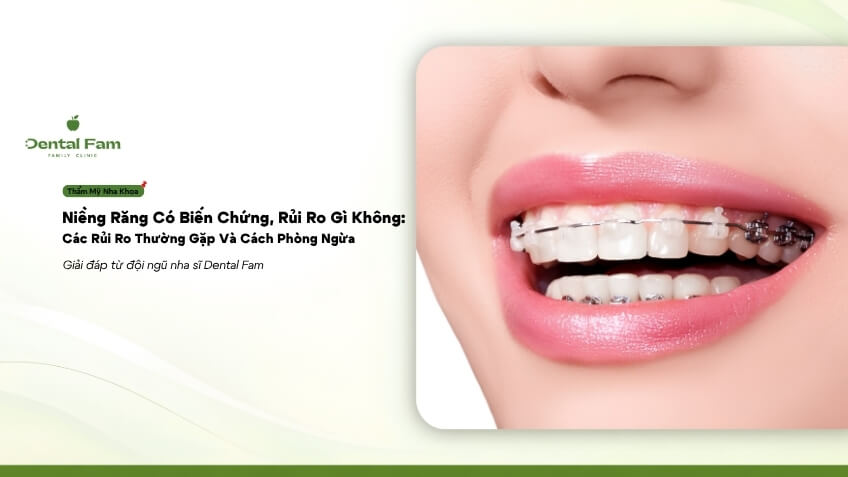
What are the complications and risks of orthodontic treatment? This is a common question for those considering treatment, as it's a 24-48 month procedure with appliances directly affecting the teeth and gum tissue throughout that time. The most common risks include gingivitis, cavities, root resorption, and gum recession, mostly related to improper hygiene while wearing braces or clear aligners, rather than being an inevitable consequence of orthodontic treatment. It's important to distinguish that a risk that could occur doesn't necessarily mean it will occur, and most of these complications are preventable with proper hygiene and scheduled check-ups. The following content specifically analyzes each type of risk, its causes, severity, and treatment options when undergoing orthodontic treatment.
Whether braces cause sunken cheeks and facial changes is a common concern for those considering orthodontic treatment, especially those needing tooth extraction to create space for tooth movement. Sunken cheeks can occur in some cases, but it's not an inevitable outcome of braces, and the degree of impact depends heavily on the number of teeth extracted, age, and the individual's natural cheek fat structure. This is a highly emotional concern, unlike oral health risks such as gingivitis or cavities, as it directly relates to facial appearance and many fear it will have long-term effects. The following content analyzes the mechanism, timing of appearance, and how to distinguish normal sunken cheeks from abnormal signs requiring dental intervention, so that those considering orthodontic treatment can have the right expectations from the start.
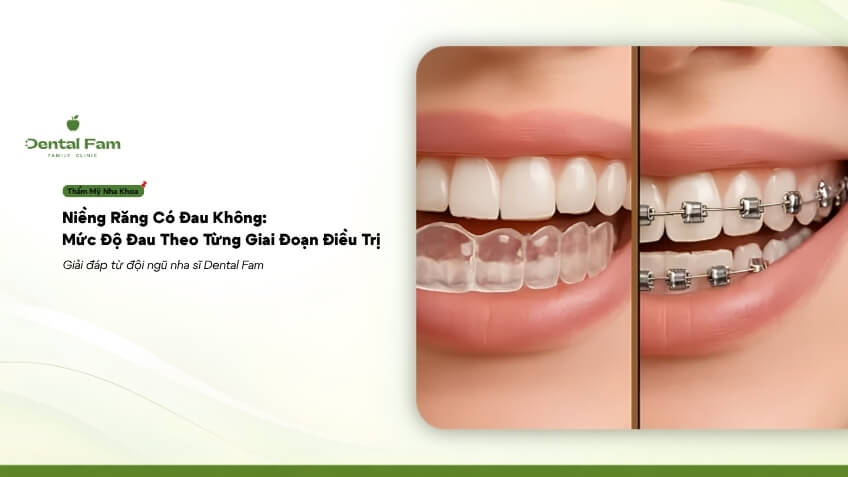
Is getting braces painful? This is a question almost everyone asks before deciding on treatment, and the short answer is yes, there is some discomfort, but it's not constant pain throughout the 24-48 months of treatment. The soreness and tightness are concentrated at specific times: right after the first bracket placement, after each regular tightening of the wires, and during the first few days of wearing the new clear aligners. Aside from these times, the majority of the treatment is not significantly uncomfortable, and the level of pain varies from person to person depending on their pain tolerance and the initial degree of tooth misalignment. The content below specifically analyzes the level of pain at each stage of the orthodontic treatment process, so that those considering treatment can have a realistic picture instead of vague anxieties.
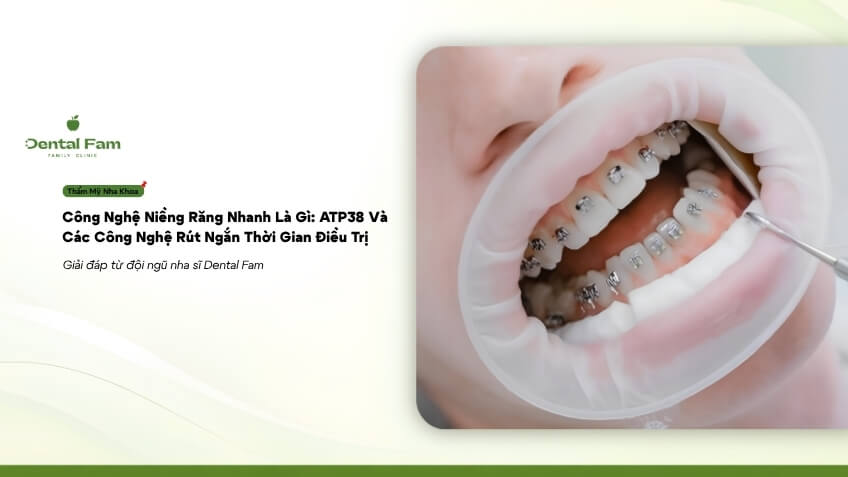
Fast-acting orthodontic technologies are a group of techniques designed to accelerate tooth movement during orthodontic treatment, with ATP38 being one of the most commonly discussed technologies today. It's important to understand from the outset that these technologies are not independent orthodontic methods replacing traditional braces or clear aligners, but rather supplementary techniques that influence the biological mechanisms of the alveolar bone to move teeth faster under the same pulling force. In other words, patients still need to choose their primary method (metal braces, ceramic braces, or clear aligners) as usual; the fast-acting technology is simply an additional option to shorten the overall treatment time. The following content analyzes the mechanism of action, usage, the actual extent of treatment time reduction, and who is suitable for applying this technology during orthodontic treatment.
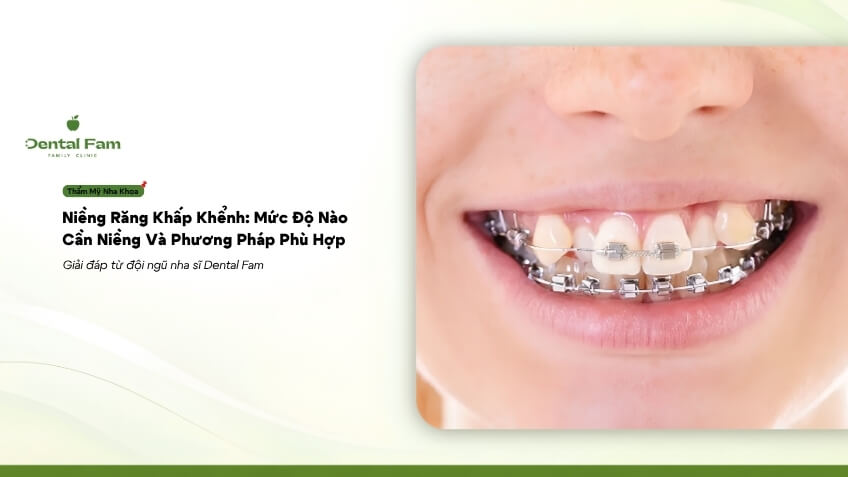
Orthodontic treatment for crooked teeth is a common need for people with crowded, rotated, or overlapping teeth due to insufficient space in the dental arch to accommodate all teeth in their correct positions. Unlike overbite or underbite (which relate to the relationship between the two jaws), crooked teeth are primarily a matter of space within the dental arch, so the level of intervention depends directly on how much space is missing from the arch compared to the total size of the teeth. Mild crooked teeth may only require palatal expansion or light interdental grinding to create space, while severe cases often require tooth extraction to create enough space for the entire dental arch to be realigned. The following content analyzes the causes, how to self-assess the severity, and the appropriate orthodontic methods for each specific case of crooked teeth.
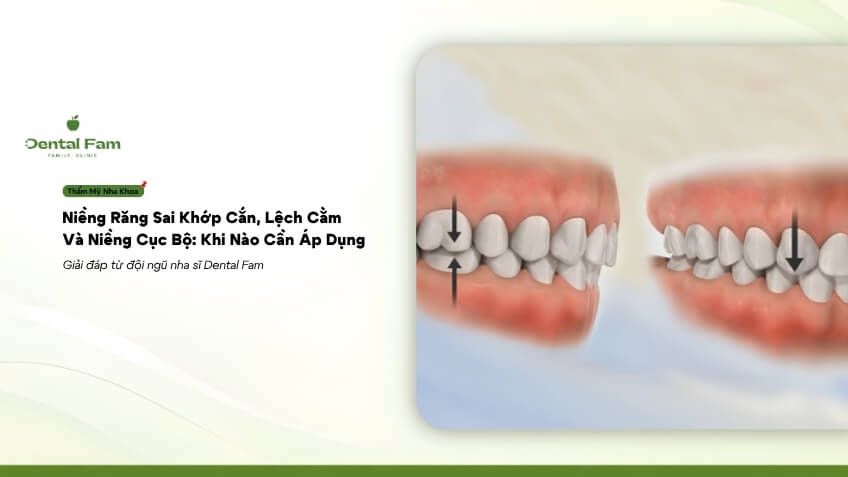
Orthodontic treatment for malocclusion, chin misalignment, and localized orthodontics are three related but distinct concepts, often confused with each other because they fall outside the scope of common conditions like overbite, underbite, underbite, or crooked teeth. Malocclusion is a condition where the two jaws do not align correctly when biting; chin misalignment is a manifestation of asymmetry of the lower jaw relative to the central axis of the face; and localized orthodontics is a treatment approach that only affects specific teeth instead of the entire dental arch. All three share the commonality that the level of intervention depends heavily on whether the cause is dental or skeletal, and this is the determining factor in whether orthodontic treatment alone is sufficient or requires additional surgery. The content below analyzes each case separately to help those considering orthodontic treatment clearly distinguish which group they belong to.
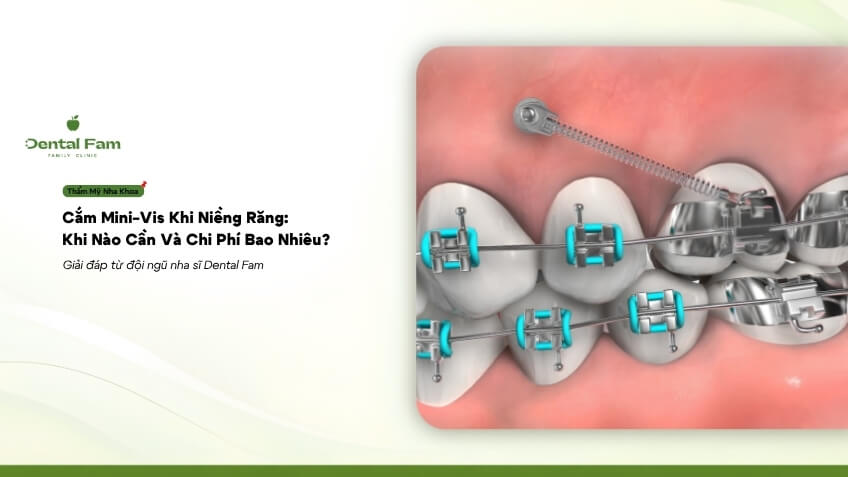
Mini-screw placement during orthodontic treatment is an additional procedure used in certain cases requiring fixed anchor points to create a stronger pulling force than braces or clear aligners can provide. This is not a mandatory step for all orthodontic cases, but is only necessary when the treatment plan requires moving multiple teeth simultaneously in a specific direction, most commonly in severe cases requiring the entire front teeth to be moved backward. Essentially, mini-screws are small titanium screws temporarily implanted into the jawbone, acting as a fixed anchor point for elastic bands or archwires to pull teeth into, without affecting other teeth in the jaw. The following content analyzes specifically when mini-screw placement is needed, the procedure, the level of pain, and the associated costs of orthodontic treatment.
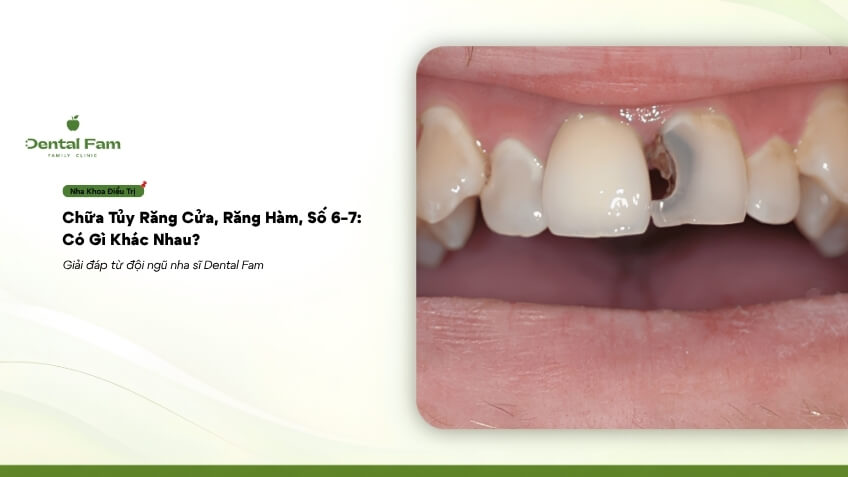
Root canal treatment for incisors and molars (numbers 6-7) differs primarily in the number of root canals and root tubes, directly impacting the complexity, treatment time, and cost. However, at Dental Fam, the pricing of a tooth is not based solely on its location (incisor, molar, number 6, number 7), but rather on the actual number of roots and root canals of that tooth as seen in X-ray images, because even teeth in the same location can vary from person to person. This article explains the differences between tooth groups, why prices aren't fixed by tooth name, and frequently asked questions about root canal treatment.
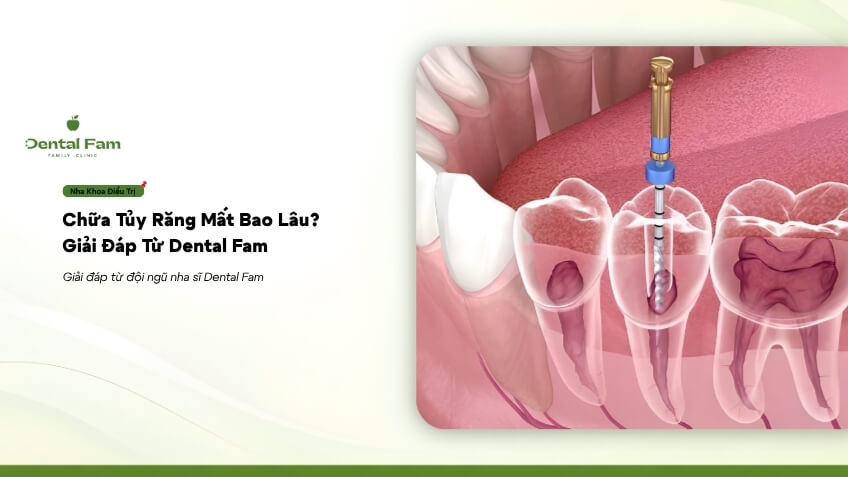
Root canal treatment typically requires one to two appointments or more, each lasting approximately 45 to 120 minutes depending on the tooth's location and the extent of infection. There is no fixed number that applies to all cases. Specifically, simple cases can be completed in one appointment, while cases with more complex infections or damage may require two or more appointments. The duration of each appointment also varies depending on the tooth's location: front teeth (single root) usually take about 45-90 minutes, while molars (multiple roots, more root canals) usually take about 60-120 minutes. This article explains the number of appointments required, the duration of each appointment for different types of teeth, and the factors affecting treatment time.
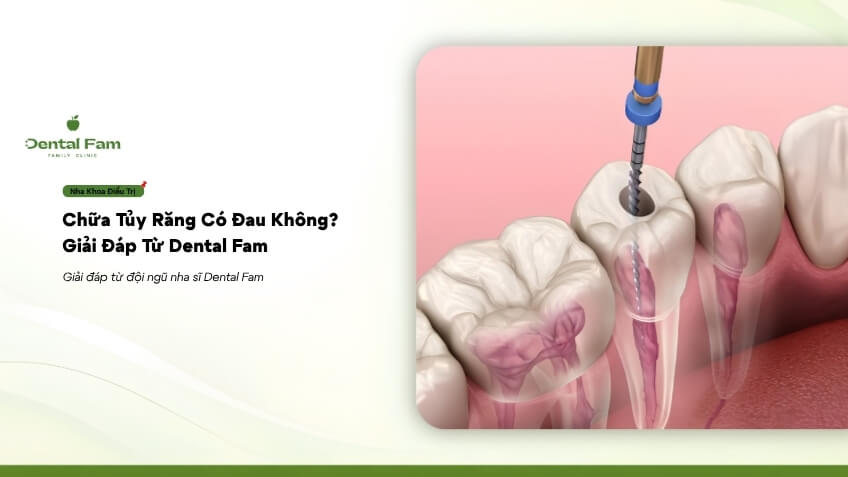
Root canal treatment is usually painless during the procedure because you receive local anesthesia beforehand. This is the most common fear that causes many people to delay treatment, although delaying actually worsens the condition of the tooth. In some cases of acute pulpitis that respond poorly to anesthesia, you may still feel a slight stinging sensation when the dentist approaches the root tip, but this sensation does not last long. After treatment, mild sensitivity for the first few days is a normal reaction of the tissues around the root tip, unlike any abnormal signs that require a follow-up examination. The article below clearly explains each stage: during the procedure, after treatment, how to distinguish between normal and abnormal pain, and how to properly reduce sensitivity.
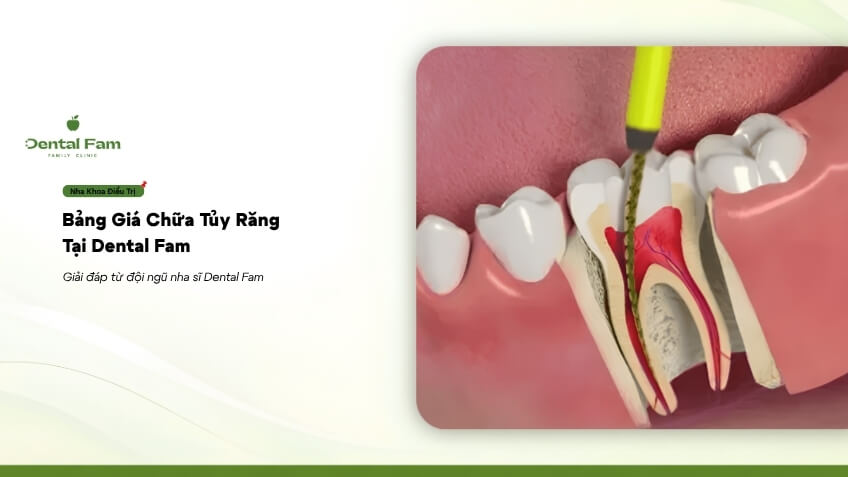
Root canal treatment at Dental Fam has a fixed price based on the type of tooth and the condition being treated, ranging from 2,000,000 VND to 5,000,000 VND per tooth, with no additional charges depending on the severity of pulp inflammation. Many places quote a wide range (e.g., 1.5 to 4 million VND), making it difficult to know exactly how much you'll pay until the actual examination. At Dental Fam, the price is fixed based on two clear criteria: the type of tooth (number of roots, root canals) and whether the tooth has undergone root canal treatment before. This article provides a complete price list, including all costs, potential additional expenses, and answers to frequently asked questions about the cost of root canal treatment.
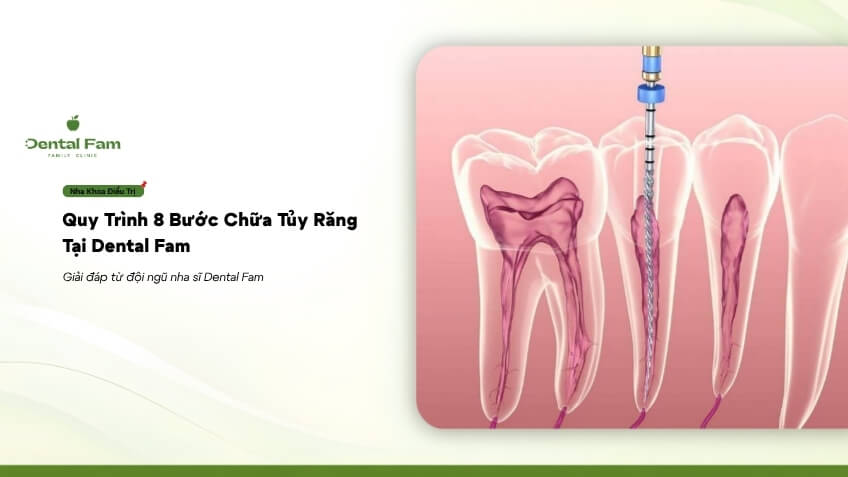
Root canal treatment is a procedure that removes the inflamed or necrotic pulp inside the root canal, then cleans and seals it to preserve the natural tooth. The root canal treatment process at Dental Fam consists of 8 steps, performed sequentially from diagnosis to follow-up, adhering to the technical principles of dental and maxillofacial examination and treatment issued by the Ministry of Health. Each step is supported by specialized equipment to ensure treatment effectiveness and infection control. This article details each step, the equipment used in each stage, the number of appointments required, and answers frequently asked questions about root canal treatment.
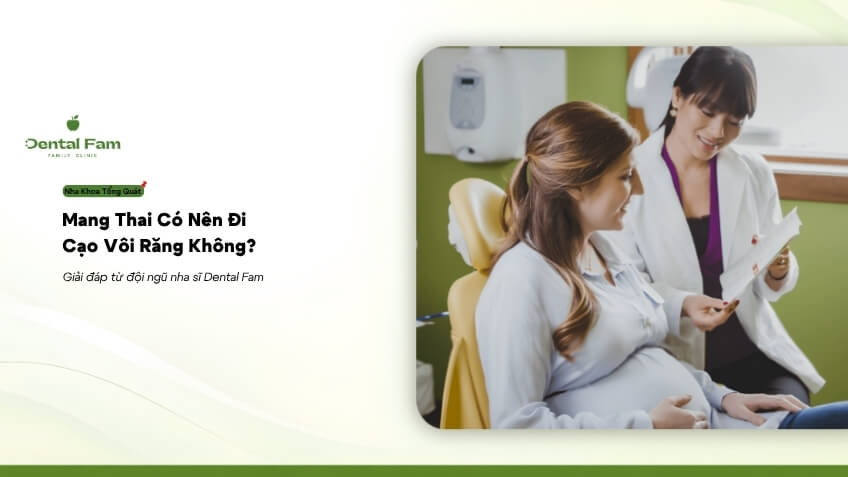
It is perfectly safe to have a dental cleaning during pregnancy, at any stage. This directly answers a common concern among expectant mothers who worry about potential harm to their unborn child. In fact, it is one of the safest dental procedures, minimally invasive, and usually does not require anesthesia or sedation. This article explains why pregnant women should pay extra attention to regular dental cleanings, which stages are most suitable if given the choice, and when it is advisable to consult an obstetrician before undergoing the procedure.
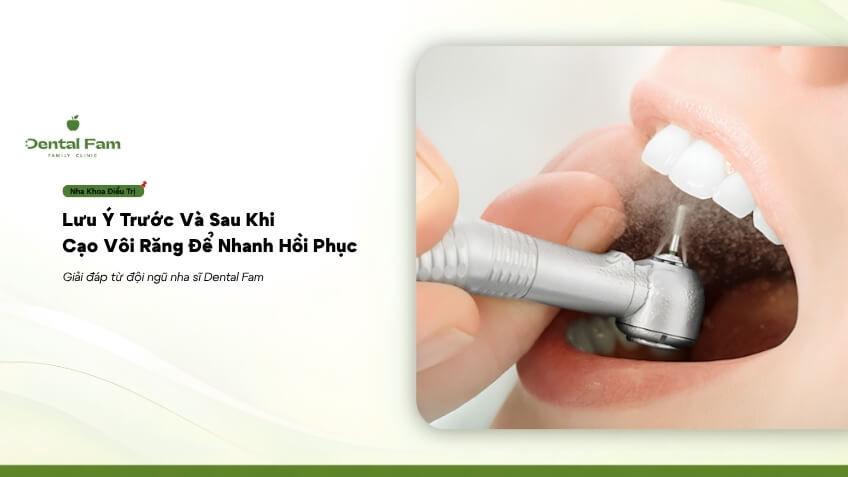
After a regular teeth cleaning, you can eat and drink normally immediately, without needing to wait a certain amount of time as many people think. This is the direct answer to the most common question in this topic. However, to ensure quick recovery and long-lasting cleaning results, there are a few things to keep in mind before and after the procedure. This article summarizes everything you need to prepare beforehand, eating times, food groups to limit, and proper oral care in the first few days.
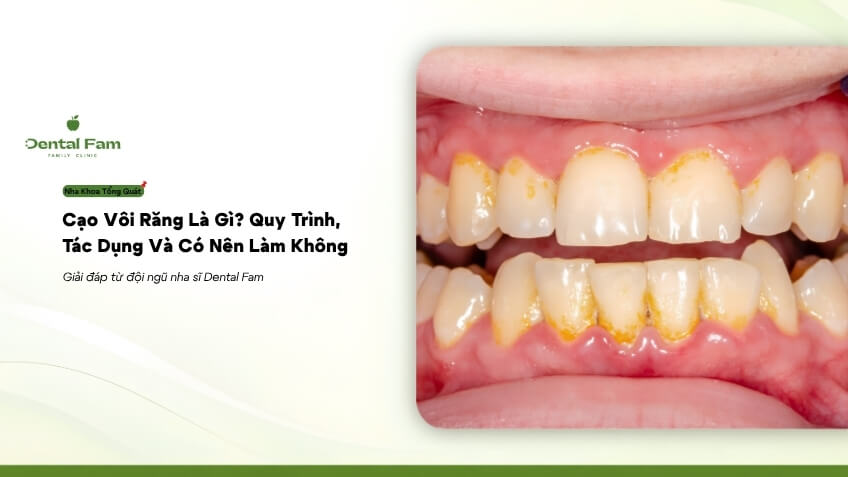
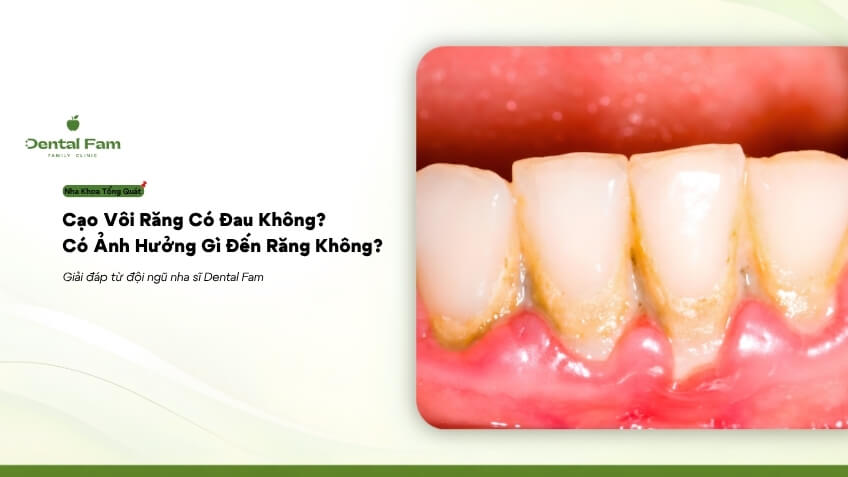
Dental scaling is a dental procedure that uses specialized instruments or equipment to remove tartar, which is hardened, mineralized plaque that adheres tightly to the surface of teeth and below the gum line. This is the short answer to a question many people search for before deciding whether or not to have it done. Unlike soft plaque that forms daily, tartar cannot be removed by brushing or flossing alone, so it requires proper equipment and trained professionals. This article explains the mechanism of tartar formation, the procedure, its actual effects, and the most frequently asked questions on this topic.
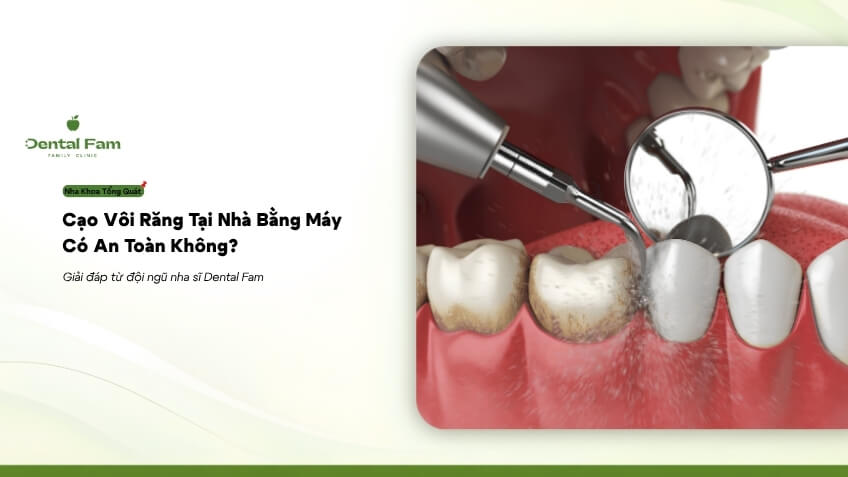
At-home scaling, whether using a mini scaler purchased online or home remedies like salt, lemon, or baking soda, cannot remove tartar that has already formed. This is the short answer to a question many people are searching for, especially when busy and reluctant to schedule a visit to the dentist. Tartar calculus (tartar) is completely different from everyday plaque: once it hardens and adheres firmly to the teeth, even below the gum line, only specialized dental instruments and trained professionals can safely remove it. This article explains why at-home scalers and home remedies are ineffective, the real risks of self-treatment, and when you should visit a dentist.
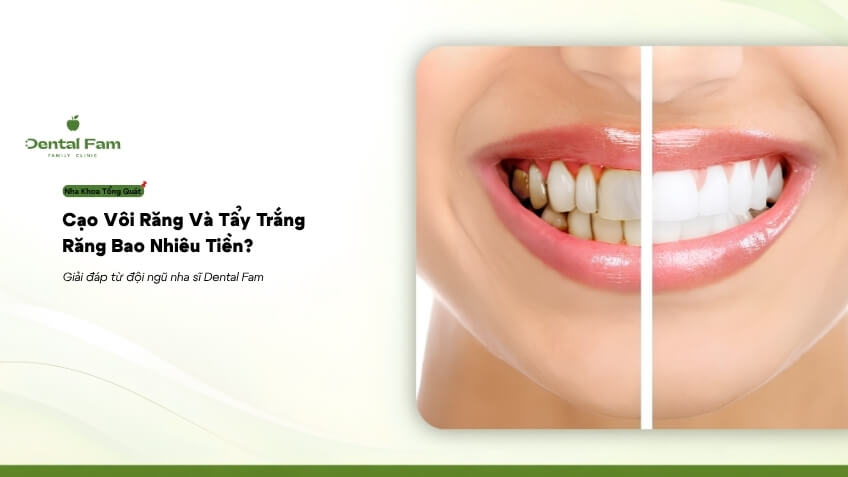
Teeth cleaning and whitening are two different services, but they are often done together to achieve cleaner and brighter teeth. At Dental Fam, teeth cleaning costs 300,000 VND or 1,500,000 VND depending on the technology, while teeth whitening costs 1,500,000 VND for at-home treatment and 3,000,000 VND for in-office treatment, calculated as a package deal rather than per arch. If you have your teeth whitened at the clinic, the ultrasonic cleaning step is included free of charge.
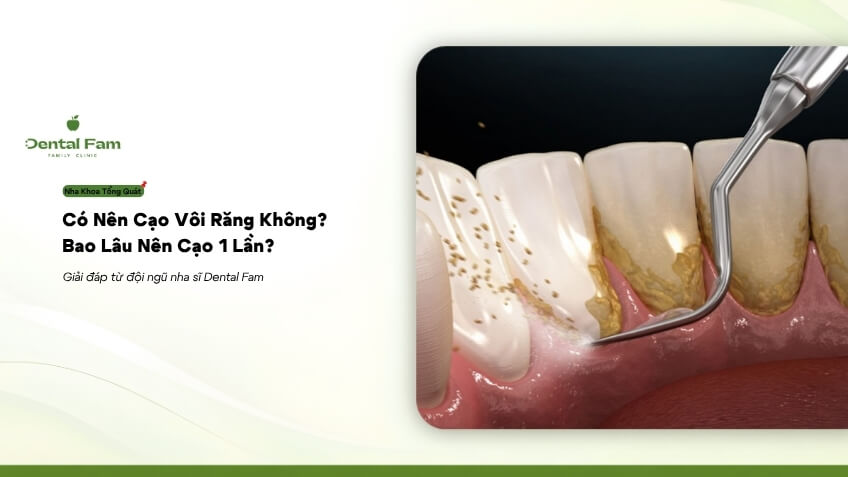
Yes, you should have your teeth professionally cleaned regularly because it's the only way to remove hardened plaque that a toothbrush can't handle. The common frequency is every six months, but for heavy smokers or those with poor oral hygiene, it should be reduced to every three months. Each session takes about 30 minutes and won't wear down your enamel if done correctly. The article below explains why regular cleanings are necessary, which package is right for you, and whether doing it too frequently is harmful.
Regular dental scaling is usually painless, with only mild discomfort depending on individual sensitivity and the severity of gum inflammation. Some people may experience slight bleeding if their gums are inflamed; this is a normal reaction and not a sign of anything abnormal. If performed correctly using ultrasonic technology, scaling will not wear down or damage tooth enamel. The article below explains each case in detail, along with who should be aware of the precautions before undergoing the procedure.
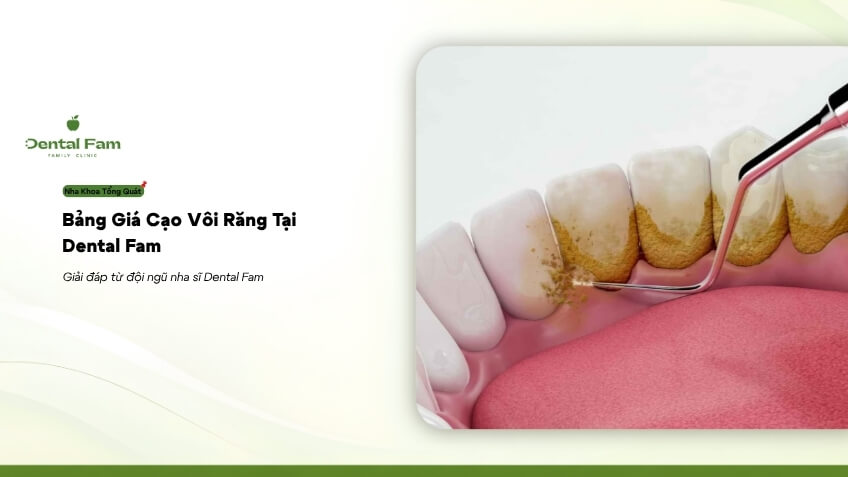
Dental Fam offers two fixed price points for tartar removal: 300,000 VND for the ultrasonic scaling package and 1,500,000 VND for the Aquacare package; both options cover both the upper and lower arches and include polishing. Unlike the "condition-based" pricing models used by many other clinics, these rates remain constant regardless of the amount of tartar buildup. The article below details what is included in these two packages, the procedure involved, and the specific cases where additional costs may apply.
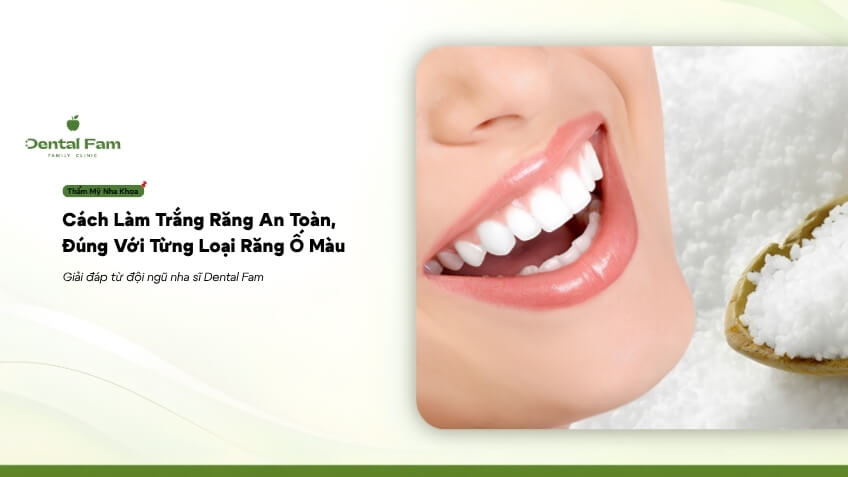
Not all cases of tooth discoloration can be successfully treated with whitening. While teeth stained by coffee, tea, or tobacco often respond well to common whitening methods, the situation differs if you have yellow or brown spots caused by enamel hypomineralization or are under the age of 20; in these cases, attempting to whiten your teeth on your own may prove ineffective or even make white spots more noticeable. This article helps you identify your specific type of discoloration, distinguish between scientifically grounded remedies and mere hearsay, and determine when to consult a dentist about teeth whitening before getting started.
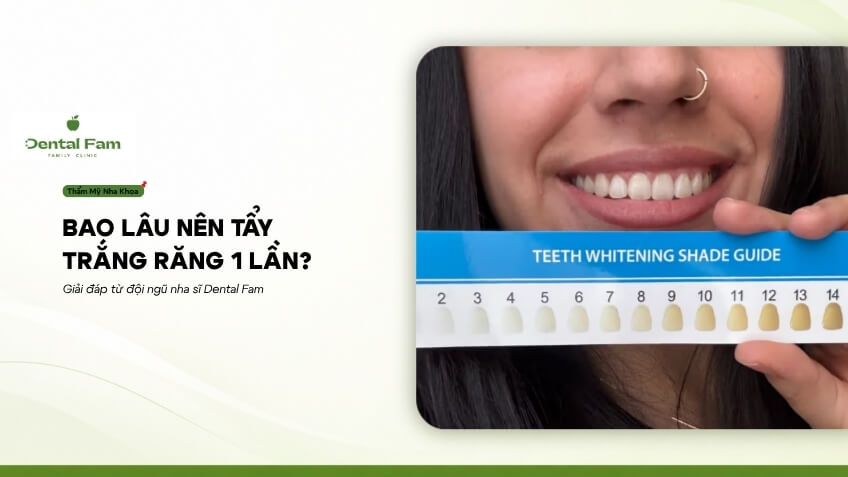
You had your teeth whitened a few months ago and are wondering if it is time for another treatment, or if doing so too soon might damage your enamel. There is no universal frequency for teeth whitening that applies to everyone, but there is a clear timeframe you can use as a guideline: whitening results typically last 1–2 years. Whether this period is shorter or longer depends almost entirely on your lifestyle habits rather than a rigid number you need to memorize. Many people seek a specific timeframe for peace of mind, yet applying a generic figure to your own situation is precisely what often leads to incorrect whitening frequency. The following article will help you properly understand this 1–2 year benchmark, distinguish it from routine dental check-ups, and learn how to identify the right moment for a touch-up based on your specific needs.
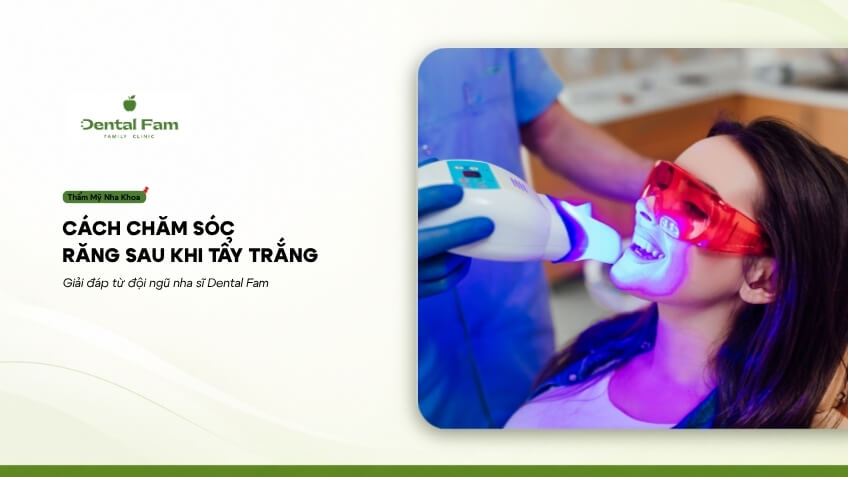
Tooth sensitivity after teeth whitening is a normal reaction of the dentin to the whitening agent and is not a sign of enamel damage. This sensation usually subsides on its own within the first 1 to 3 days. The important thing isn't how to never experience sensitivity, but how to properly care for your teeth during the most sensitive period, so you feel better faster and maintain the whiteness for longer. Many people start worrying as soon as they feel the first sensitivity, with the most common question not being "how to stop the sensitivity" but "am I doing something wrong?". This article goes straight to what you need to do: what to eat, how to brush your teeth, and when you should really be worried.
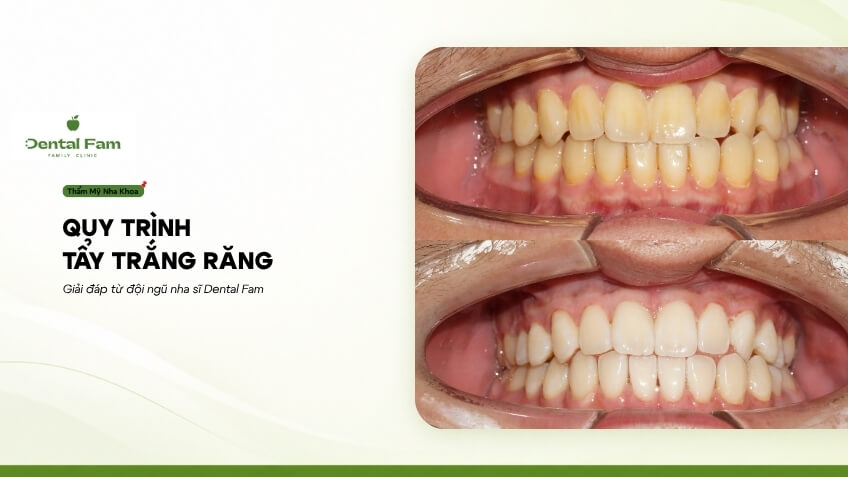
Many people experience prolonged sensitivity after teeth whitening, and some even have uneven whitening results. This is quite common, and the main reason isn't usually low-quality whitening agents, but rather that a step in the process is omitted without the person's knowledge. The teeth whitening procedure at Dental Fam includes the following steps: cleaning teeth, protecting gums, applying desensitizing gel, applying the whitening agent and using a light to activate the whitening process, and then providing post-whitening care instructions. Each step has its own professional purpose and isn't just a formality. If you're unsure what teeth whitening is and whether you belong to the group that should undergo it, you can read more in the two related articles before following the detailed procedure below.
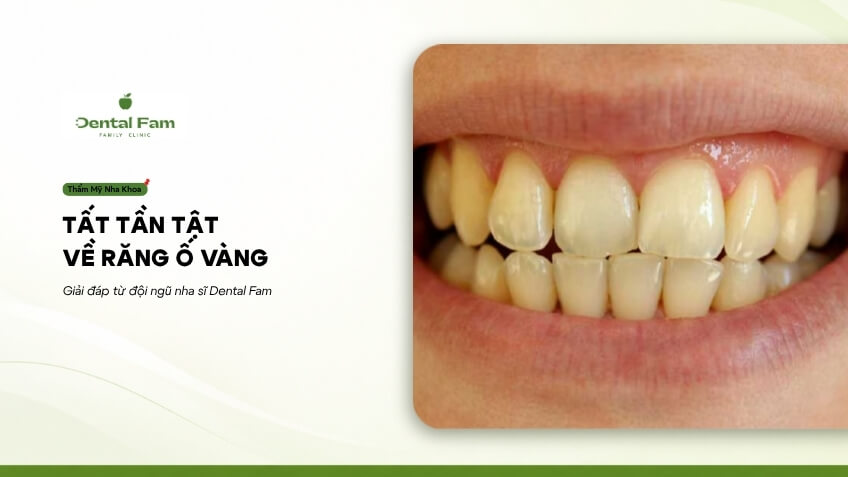
Tooth discoloration stems from two completely different categories of causes: one originating on the surface of the enamel and the other from within the tooth structure itself; consequently, they do not respond to the same treatment methods. When people notice their teeth are no longer as white as they used to be, they often immediately consider teeth whitening or turn to home remedies like lemon or baking soda for a quick fix. However, without identifying the specific type of discoloration, professional whitening can be a costly yet ineffective endeavor, while home remedies risk causing permanent damage to tooth enamel. This article helps you accurately identify the type of discoloration based on observable signs, enabling you to determine whether to manage it with home care or seek professional dental attention.
Yes, and this is a normal occurrence not a sign that you have wasted your money. Virtually no teeth-whitening method, including the most advanced in-office treatments, can maintain the white shade permanently. The reason lies in the natural characteristics of teeth: tooth enamel remains exposed to food and beverages daily and gradually discolors over time much like a white shirt that eventually loses its brightness despite careful washing. Whitening treatments remove existing discoloration at a specific point in time; they do not create a permanent, stain-proof coating. Understanding this can give you peace of mind and help you effectively prolong the whitening results.
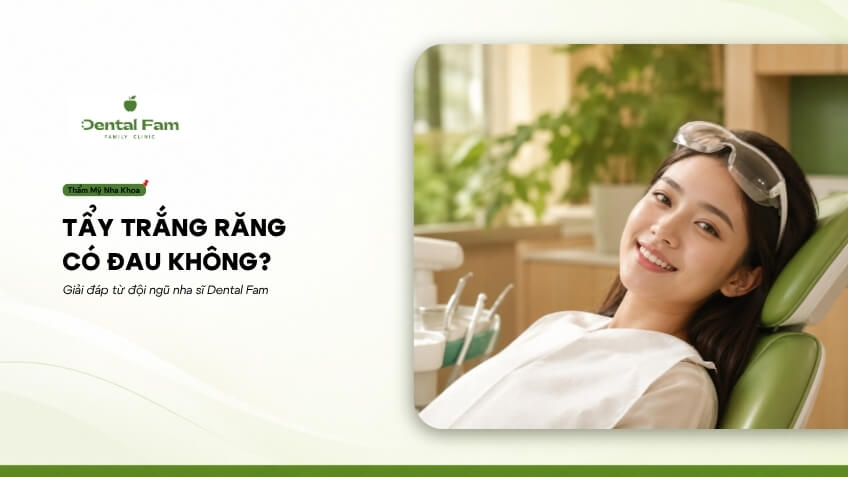
Teeth whitening does not cause pain when performed correctly at a reputable clinic. What you may experience is mild, fleeting sensitivity — not "pain" in the sense of actual tissue damage. This is a distinction many people miss, and it's the reason so many delay whitening based on unverified rumors. This article will help you understand how sensitivity differs from pain, what factors influence the degree of sensitivity you feel, when during the process sensitivity is most likely to occur, how long it normally lasts, when you should follow up with your dentist, and how to manage the feeling from the very start.
Many people are considering teeth whitening but hesitate after coming across sensationalist articles like "teeth whitening permanently erodes enamel" on social media — turning what should be a simple cosmetic procedure into a fear of causing irreversible damage to their bodies. The truth is, teeth whitening performed with the correct technique and proper indication at a reputable clinic does not harm tooth enamel. Any sensitivity felt after whitening is simply a temporary reaction that resolves on its own within 24 to 48 hours. The risk of permanent enamel damage only occurs in two specific situations: using unregulated products without professional guidance, or overusing whitening treatments in terms of frequency and concentration. The article below will help you clearly distinguish between these two scenarios, so you never again confuse "a few days of mild discomfort" with "actual harm."
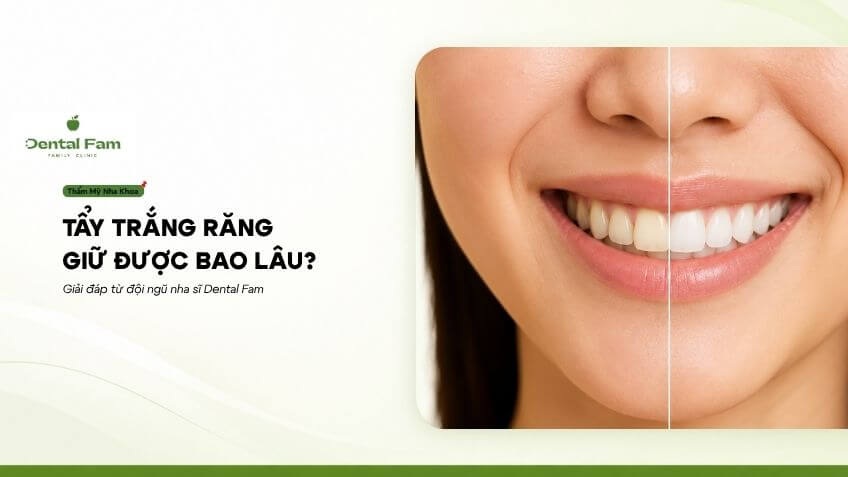
Professional teeth whitening typically maintains its results for an average of 1–2 years, and at-home treatments can yield comparable outcomes with proper care. Slight discoloration occurring after a few months is a normal physiological phenomenon documented in numerous clinical studies; it does not imply that the procedure was performed incorrectly or that you were misled. This article explains the reasons behind this and offers tips on how you and anyone else with similar concerns can proactively maintain a bright, white smile for longer.
Does teeth whitening hurt? How much does it cost? Which method suits you best? Get clear answers — from the causes of yellowing to how to choose a safe, trusted whitening provider.
Teeth whitening at Dental Fam comes in just 2 fixed prices: 1,500,000 VND for at-home treatment and 3,000,000 VND for in-clinic treatment. No surprise costs. View the full price breakdown now!
Those chalky white marks left behind after braces are not permanent. A modern resin infiltration treatment fixes them in about an hour — no anesthesia, no drilling, no damage to enamel.
A calm first visit sets the tone for a lifetime of healthy teeth. Here's how we — and you — can make it feel safe, simple, and even fun.
A comfortable cleaning that reaches the places traditional tools can't — including under the gumline, around braces, and around implants. Here's when AQUA CARE is worth it.
Most clinics talk about quality. Very few have it independently certified at the operations level. Here's what ISO 13485 really verifies — and why it should matter to your family.
Pregnant patients often ask if dental imaging is safe. The short answer is yes — and here's the longer answer, with the precautions we take.