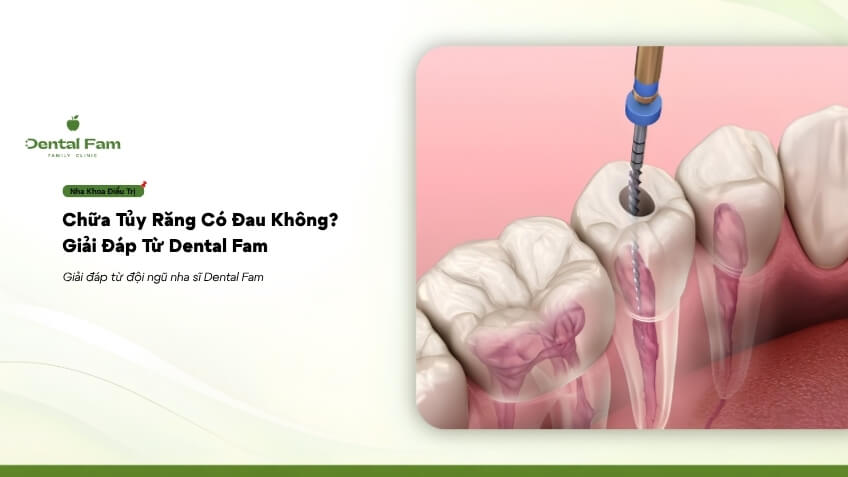
Is root canal treatment painful?
Normally, you won't feel any pain during the procedure because local anesthesia is administered beforehand. The dentist will wait for the anesthetic to take full effect before proceeding with the next steps of the procedure, so most patients don't experience the pain many people worry about before treatment.
Why do some people still feel a slight stinging sensation even after anesthesia?
Some cases of acute pulpitis that respond poorly to anesthesia may cause a slight stinging sensation when the dentist approaches the root tip, especially when the pulp is severely inflamed and the surrounding tissue has a stronger inflammatory reaction than normal. This sensation stops as soon as the procedure is complete and does not last after the treatment is finished. The dentist may adjust the anesthetic if needed during the procedure.
Will I experience pain or soreness after root canal treatment?
You may experience mild soreness for the first few days after treatment, due to the inflamed tissue around the root tip after the procedure. This feeling usually subsides gradually each day and requires no further intervention other than monitoring.
The degree of soreness varies from person to person and depends on the condition of the tooth before treatment: teeth with severe pulpitis or infection usually experience more soreness than teeth with mild pulpitis.
Distinguishing Normal Soreness from Abnormal Signs After Root Canal Treatment
Not all discomfort after root canal treatment is the same. You should distinguish between two groups:
-
Normal: mild soreness, a slight discomfort when biting or chewing in the first few days, gradually decreasing over time.
-
Abnormal, requiring a follow-up examination: pain that increases instead of decreasing, persistent pain that doesn't subside after a few days, accompanied by gum swelling or fever.
If you experience any unusual symptoms, you should contact your doctor for a check-up instead of enduring the pain or self-medicating.
How to Reduce Pain After Root Canal Treatment
Not all cases require medication after treatment. Your doctor will decide based on your specific situation:
-
Pain relievers or anti-inflammatory drugs may be prescribed if you experience significant pain or soreness after treatment.
-
Antibiotics are not routinely used; they should only be used when appropriate, such as in cases of infection with systemic symptoms.
You should not self-medicate with pain relievers or antibiotics without a prescription, as each case requires a specific dosage and type of medication tailored to your individual condition.
What Factors Affect the Level of Pain During Root Canal Treatment?
The level of pain or discomfort during root canal treatment depends on several factors:
-
The degree of pulp inflammation before treatment: acute or infected pulp inflammation usually causes more discomfort than mild pulp inflammation.
-
The individual's response to anesthesia, as mentioned above.
-
The technique and equipment used during the cleaning and shaping of the root canal.
Frequently Asked Questions: Is Root Canal Treatment Painful?
Does Root Canal Treatment Have Any Side Effects?
No, if performed correctly. The purpose of root canal treatment is to preserve the natural tooth; you will then need restoration (filling or crown) to maintain long-term chewing function.
Is it abnormal to still have pain after root canal treatment?
Mild soreness for the first few days is normal, but if the pain gradually increases, persists, is accompanied by swollen gums or fever, this is an abnormal sign and you need to return for examination.
Is root canal treatment for incisors painful, and is it different from root canal treatment for molars?
The pain during root canal treatment does not depend on whether the tooth is an incisor or a molar, as both teeth are given local anesthesia before the procedure. The main difference between the two groups of teeth lies in the treatment time, as molars usually have more root canals.
What to do if you have toothache after root canal treatment?
Monitor the level of soreness for the first few days, and take medication as prescribed by your dentist if given. If the pain gradually increases or lasts unusually long, contact Dental Fam for a check-up instead of self-treating at home.
If I'm still very afraid of pain, can I discuss this with my doctor for reassurance?
Yes. Anesthesia is always administered fully before treatment begins, and the doctor will wait for the anesthetic to take full effect before proceeding with the next steps. If you still feel some numbness or anxiety during treatment, please inform your doctor immediately so they can check and administer additional anesthetic if needed.
Root canal treatment is usually painless during the procedure thanks to local anesthesia. In a few cases of acute pulpitis, there may be a slight stinging sensation, but it doesn't last long. After treatment, mild soreness for the first few days is normal; increasing or prolonged pain is a sign that you need to return for a check-up.