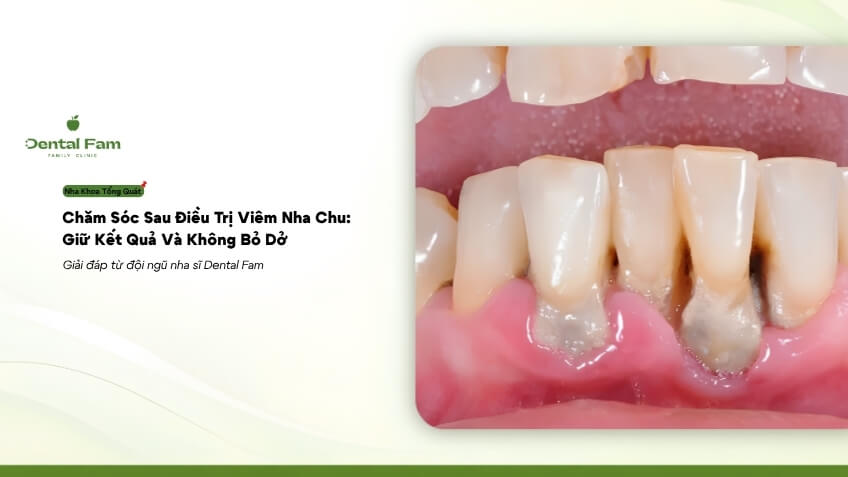
What are the goals of post-treatment care for periodontal disease?
The goal is to keep the disease stable: the gums heal, bacterial plaque is controlled, and the teeth don't lose any more surface area. Bacterial plaque is the central cause of the disease, while tartar is what helps it adhere. Clinic treatment addresses the area below the gum line, and what you do each day determines the rest.
For example, thorough brushing helps clean the gums after treatment, but it doesn't clean the periodontal pockets that have formed, so the two complement each other.
The disease can return if maintenance care isn't consistent or risk factors aren't controlled. The next step starts with cleaning the sensitive gum area.
How to clean the sensitive gum area after treatment?
Use a soft toothbrush, apply gentle pressure, and maintain consistent cleaning, rather than brushing hard to try to clean quickly. After treatment, gums may still be sensitive, so brushing too hard or brushing horizontally can easily cause further damage. Your dentist will guide you on the appropriate brushing techniques and interdental cleaning tools for your specific condition, rather than a general formula. Regular daily cleaning is more important than brushing too hard all at once. Dental floss or water flossers are still necessary for interdental cleaning, but in the treated area, they should be used gently and according to your dentist's instructions.
Mouthwash is a common question, and there are two main points below.
Saline solution and specialized mouthwash
Saline solution is usually sufficient after a regular dental cleaning, while specialized mouthwash is used when prescribed by a dentist. Saline solution is a salt solution with a concentration similar to body fluids; it's gentle and soothes the gums.
After periodontal treatment, which type to use depends on the method and the condition of your gums, so follow your dentist's instructions. You should not self-medicate, including with antibiotics.
Toothbrush and Toothpaste
A soft toothbrush and toothpaste for sensitive gums are suitable choices during this period, but they only serve as supplementary products. You can find specific products in the supplementary products section below. You should consult your dentist to choose the best option based on your oral condition.
After cleaning, the next step is what you put in your mouth – your diet.
What to eat and drink in the initial period after treatment?
Prioritize soft foods and avoid hard, chewy foods that can easily injure the treated gum area. Sensitive gums should also limit very hot, very cold, and spicy foods in the initial period. The healing gum area is more sensitive than usual, so soft foods allow for more comfortable chewing and minimize contact with this area.
The length of time you need to maintain this eating habit depends on the treatment method, and your doctor will give specific instructions.
Products to support gum care after treatment
These products only support care and do not replace treatment at the clinic. The products mentioned in the Dental Fam document include mouthwash, gel, toothpaste, and toothbrushes specifically for gums, divided into three groups below.
| Group | Product | Notes on use |
| Mouthwash and Gel | PERIO•AID Intensive Care Mouthwash and Gel; PERIO•AID Active Control | Use only as advised by a doctor |
| Daily toothpaste and mouthwash | Vitis Healthy Gums Toothpaste and Mouthwash | Supports plaque control, does not treat disease |
| Toothbrush | VITIS Surgical, VITIS Special Care, VITIS Gentle Care | Choose the appropriate type for your gum condition after consultation |
Why are follow-up appointments necessary after periodontal treatment?
Follow-up appointments are necessary because periodontal disease has a risk of recurrence, and only regular check-ups can determine if the condition is stable. At each follow-up appointment, the dentist will remeasure various indicators to assess the current state, rather than relying solely on subjective feelings.
Many professional guidelines recommend scheduling follow-up appointments every few months; the specific schedule is determined by the Dental Fam dentist based on each individual's condition. You should attend on time, even if your gums feel better. The cost of follow-up appointments will be clearly explained beforehand; you can contact the hotline for advice. Discontinuing care is a major reason why treatment results are difficult to maintain.
When should you contact your doctor again?
You should contact your doctor early if discomfort increases instead of decreasing, gum swelling worsens, or if pus or bleeding persists. Gum sensitivity usually decreases in the days following treatment, and the specific sensation after the treatment will be discussed individually with your doctor.
If discomfort increases instead of decreasing, or if bleeding or swelling persists, contact your doctor; these increasing symptoms need to be checked instead of waiting or self-medicating. If you are unsure, contact your doctor for an assessment. The above is also how Dental Fam supports you after treatment.
How does Dental Fam support you after treatment?
Dental Fam provides guidance on appropriate aftercare based on the treatment method you received and schedules follow-up appointments as per your doctor's instructions. Periodontal treatment at Dental Fam costs from 500,000 VND per tooth, including examination and consultation. The doctor will clearly explain the cost before treatment. After treatment, you will be guided on oral hygiene, choose supporting products if needed, and monitor your progress using measured indicators.
See more on the periodontal treatment page at Dental Fam. The frequently asked questions below quickly answer the remaining questions.
Frequently Asked Questions
This section answers five short questions: How long does post-treatment sensitivity last? Are follow-up visits free? Do products replace treatment? Is a specialized mouthwash necessary? And can I skip follow-up visits once I'm feeling better?
How long does post-treatment sensitivity last before it's considered normal?
Sensitivity usually decreases gradually in the days following treatment. If discomfort increases instead of decreasing, or if bleeding or swelling persists, you should contact your doctor instead of waiting.
Is there a fee for follow-up visits at Dental Fam?
The cost of follow-up visits will be clearly explained before the procedure. You can contact the hotline +84 582 582 345 or +84 983 001 768 for advice.
Can gum care products replace treatment?
No, the products only help control plaque. Periodontal pockets and subgingival calculus need to be cleaned at the clinic.
Do I need to use specialized mouthwash after periodontal treatment?
Not everyone needs it; only use it when prescribed by your dentist. For regular scaling, saline solution is usually sufficient. After periodontal treatment, your dentist will advise you on the appropriate type.
Can I skip follow-up appointments if my gums feel comfortable?
You should not skip follow-up appointments. A feeling of comfort alone is not enough to conclude that the condition is stable, so your dentist will re-measure the indicators at each appointment.
After periodontal treatment, maintain the results with gentle, regular hygiene, eat soft foods while your gums are still sensitive, and attend follow-up appointments as scheduled by your dentist. Mouthwash, toothpaste, and specialized toothbrushes are only supportive, not a replacement for treatment.
If you experience increasing discomfort, significant swelling, or pus, contact your dentist as soon as possible. For appropriate care instructions, you can schedule an appointment at Dental Fam.
Dental Fam - Family Clinic
- Address: NOTT 28, 29, 30, Phuoc Long A Urban Area, Nha Trang, Khanh Hoa
- Hotline: +84 582 582 345 / +84 983 001 768
- Email: info@dentalfam.vn