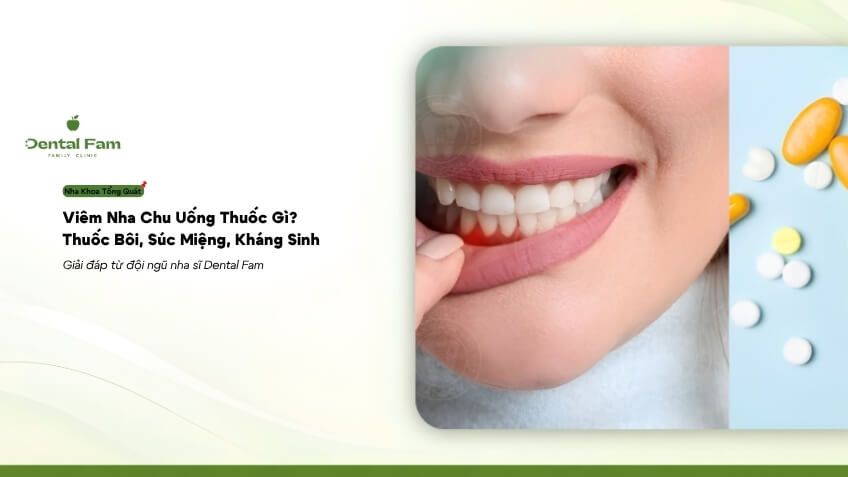
Is there a single oral medication for periodontitis that works for everyone?
No, there isn't a single, all-purpose oral medication for periodontitis. The central cause of the disease is bacterial plaque buildup in the gum area, while tartar is merely the place where the plaque adheres. Therefore, the root of treatment is plaque removal and mechanical cleaning of the subgingival area, something that medication alone cannot replace.
Any medication, if used, is only supplementary and will be considered by the doctor after examination, depending on the severity of the disease, underlying conditions, and individual circumstances. The following section describes the role of each group of medications and products.
The Role of Each Group of Medications and Products in Periodontitis
Three groups are commonly mentioned: systemic antibiotics, topical medications or gels, and over-the-counter care products; all three are supportive, not replacements for treatment. Systemic and topical antibiotics require a doctor's prescription, while toothpaste and mouthwash are products you buy yourself and play only a secondary role.
| Group | Role | Who decides | Limitations |
| Systemic antibiotics | Consideration in selected cases | Doctor, after examination | Does not replace cleaning under the gums |
| Topical medications or gels | Support in the designated area | Doctor | Only when there is Prescription |
| Toothpaste, Mouthwash | Daily Plaque Control Support | Your Choice, Ask Your Doctor | Not a Complete Cure |
Systemic antibiotics are only considered in select cases and are decided by a doctor after examination. This is not a default step in the treatment of periodontitis, and not everyone with the disease needs them. The doctor will consider the condition of your gums, underlying disease, and medications you are taking before making a decision. For that reason, this article does not list drug names or dosages.
Topical Medications or Gels
Topical medications or gels are applied to the affected area and should only be used as directed by a doctor. Their role is to supplement cleaning after the gum tissue has been cleaned; they do not replace that cleaning step. The method of use, duration of use, and appropriate type vary depending on the individual case, so you should ask your doctor directly.
Over-the-Counter Toothpastes and Mouthwashes
Over-the-counter toothpastes and mouthwashes only help control plaque; they do not treat periodontal disease. Some gum care products like PERIO•AID or Vitis are used in this supportive role. They do not reach the periodontal pockets (the deep space between the teeth and gums), so they do not treat plaque located inside.
If you need information on what to use after treatment, please see the article on Post-Treatment Care for Periodontal Disease. Before a check-up, the reasons why you should be most cautious with antibiotics will be explained later.
Why shouldn't you self-medicate with antibiotics without a check-up?
Antibiotics do not replace cleaning plaque under the gums, and only a doctor can determine if you are in the group that needs them. There are three main reasons:
-
The underlying cause remains. Bacterial plaque in periodontal pockets needs to be mechanically cleaned; using medication without cleaning the root of the problem doesn't address it.
-
The severity of the condition is unknown. Only an examination, measurements, and X-rays can determine which teeth are affected and what treatment is needed.
-
Each person's circumstances are different. Underlying conditions, pregnancy, allergies, and medications all affect whether or not antibiotics are used, so this decision requires a doctor's opinion.
Similarly, you shouldn't self-medicate with painkillers for extended periods to ""wait for the discomfort to subside."" Reducing discomfort doesn't mean the plaque has been treated. When medication isn't your first choice, the real question is when you should see a dentist.
When should you see a dentist instead of self-medicating?
You should see a dentist when you have signs of periodontal disease, instead of self-medicating. Signs include swollen, red, and easily bleeding gums, persistent bad breath, receding gums, loose or spaced teeth, and pus between the teeth and gums. Pus should be checked by a dentist as soon as possible.
So, once you've seen a dentist, how does treatment proceed if it's not just medication?
How does Dental Fam treat periodontal disease besides medication?
Dental Fam treats by diagnosing with measurements and X-rays, cleaning under the gums, and then selecting the appropriate treatment for each tooth. The dentist examines the gums, measures the depth of the periodontal pockets, assesses the degree of attachment loss, checks for looseness, and takes X-rays.
Afterward, the doctor will prescribe one of three options: non-surgical treatment (500,000 VND/tooth), LASER (laser technology) (1,000,000 VND/tooth), or surgical treatment (2,000,000 VND/tooth), including examination and consultation. LASER treatment differs in technology, it's not an upgrade, and it doesn't necessarily mean the condition is worse.
If medication or supportive products are needed, the doctor will explain the reason and how to use them appropriately for you. Each treatment session usually lasts about 30 minutes, for a total of 2 hours. If you have any further specific questions, the frequently asked questions below may help.
Frequently Asked Questions about Periodontal Disease Medication
This section answers 7 short questions: underlying medications being used, additional medications used after cleaning under the gums, prescribed antibiotics, pain relievers, feeling of relief after taking medication, pregnancy, and mouthwash purchased from the pharmacy.
If I'm taking daily medication for an underlying condition, do I need to inform my doctor before periodontal treatment?
Yes, you should proactively disclose your underlying condition, allergies, and medications you are currently taking before treatment. This information affects whether and which antibiotics will be used. Do not stop your underlying medication on your own; if you have any concerns, ask your doctor treating your underlying condition and your dentist.
After cleaning under the gums, do I need to use additional medication at home, and for how long?
There is no fixed prescription for everyone; if your doctor prescribes a supplementary product, use it as directed. The duration of use varies depending on the case and is determined by your doctor.
If your doctor has prescribed antibiotics, do I need to take the full course even if symptoms disappear early?
You must take exactly as directed by your doctor; do not stop or add more medication on your own. Feeling better early is not enough reason to decide to stop the medication. If you have any questions or experience unusual discomfort, ask your doctor who prescribed the medication.
Can painkillers cure periodontitis?
No, painkillers only relieve discomfort; they don't treat the bacterial plaque that causes the disease. If you experience pain or swelling in your gums, see a dentist to find the cause instead of self-medicating for an extended period. The appropriate medication should be recommended by your doctor.
Does the pain or bleeding stop after taking medication mean the disease is cured?
Not necessarily, as symptom reduction doesn't indicate the disease is under control. Doctors assess this using measurements and X-rays, not just sensations.
Can pregnant women self-medicate for periodontal disease?
No, pregnant women should not self-medicate, including with painkillers or antibiotics. Periodontal disease can still be treated during pregnancy when prescribed, and the doctor will choose the method and medication according to the pregnancy.
Can mouthwash bought at the pharmacy replace treatment?
No, mouthwash only helps control plaque in the oral cavity and does not replace treatment at the clinic. You should ask your doctor about the appropriate type for your condition instead of choosing based on advertisements.
There is no fixed medication for everyone with periodontal disease, and medications or products on the market only play a supportive role. The foundation of treatment is plaque control and mechanical cleaning under the gums, while antibiotics are only considered in selected cases, so you should not buy them without a consultation.**
If you experience bleeding gums, persistent bad breath, or loose teeth, schedule an appointment at Dental Fam so our dentist can take measurements and advise on the appropriate treatment plan, including medication if needed.
Dental Fam - Family Clinic
- Address: NOTT 28, 29, 30, Phuoc Long A Urban Area, Nha Trang, Khanh Hoa
- Hotline: +84 582 582 345 / +84 983 001 768
- Email: info@dentalfam.vn