Is it painful when braces are first fitted?
Immediately after the first braces are fitted, the most common sensation is mild soreness and tightness in the teeth, usually appearing for the first 2-3 days and then gradually decreasing. It's not a sharp or intense pain. This sensation comes from the teeth beginning to experience the first pulling force, and the body needs a few days to adapt to the new pressure on the periodontal ligaments around the tooth roots.
Besides tooth soreness, some people also feel discomfort in the cheeks, lips, and tongue during the first week due to friction with the newly fitted metal or ceramic braces. This is a reaction to getting used to the foreign object in the oral cavity and is not related to the pulling force on the teeth. This friction usually decreases as the mucous membranes of the cheeks, lips, and tongue get used to the presence of the braces, and can be temporarily relieved with orthodontic wax if it causes significant discomfort, similar to how braces come loose as instructed in the article on caring for braces.
Does the aching or tightness affect eating, talking, or sleeping?
The aching or tightness in the first few days mainly affects chewing hard or chewy foods, and does not significantly hinder talking or sleeping in most cases. Specifically, chewing is the most noticeably affected activity because the biting force directly impacts the aching teeth, so people with braces usually naturally adjust to eating soft foods during these few days, similar to the reflex when experiencing a normal toothache.
Talking may feel slightly awkward in the first week due to not being used to the presence of brackets in the mouth, but this is a mechanical obstruction, not pain, and usually improves quickly within a few days as the tongue and lips get used to the appliance. Sleep is hardly affected because the aching or tightness is mild, not enough to cause discomfort when lying down like other acute pains.
In general, the level of soreness during these days is at the ""mild discomfort to be aware of when eating"" level, not ""pain that interferes with daily activities."" This is an important difference that helps those who have just had braces fitted not to worry too much during this period.
Does it hurt each time the archwire is tightened or replaced?
Each time the archwire is tightened or replaced (usually every 4-6 weeks), the teeth will feel sore and tight again for 1-2 days, milder than the first time the braces were fitted, because the teeth have gradually become accustomed to the force from previous times. This is a normal sign that the pulling force is continuing to move the teeth according to plan, and is not an abnormal sign to worry about.
Conversely, if after tightening the archwire you feel absolutely no soreness or tightness, this does not mean that the teeth are not moving or that the doctor did not tighten enough force. The level of discomfort depends largely on each person's pain tolerance and sensitivity. Some people feel a noticeable sensation each time the aligners tighten, while others experience almost no discomfort even though their teeth are moving normally according to the treatment plan.
The progress of tooth movement is monitored by the doctor through direct examination and comparison with the initial plan, not by whether the patient feels pain or not. Therefore, not feeling pain after tightening the aligners is not a cause for concern.
Do clear aligners hurt as much as braces?
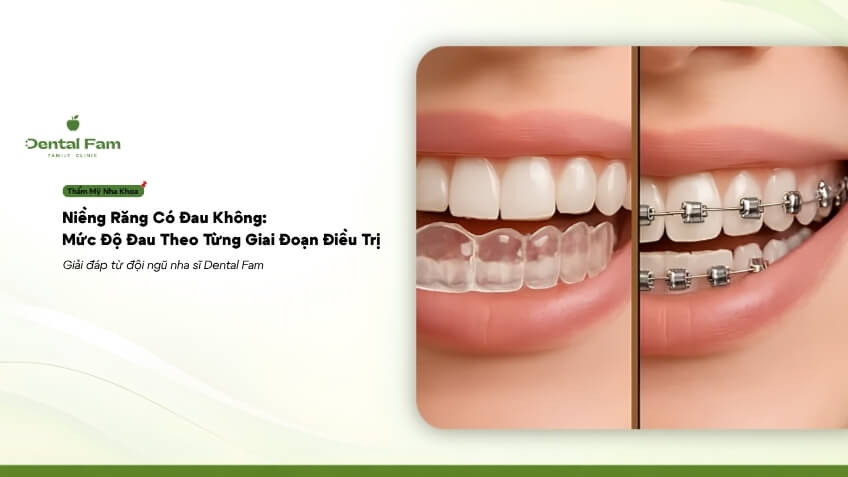
Clear aligners (Invisalign, SMILER) also cause a similar feeling of soreness and tightness as braces each time a new aligner is switched in the treatment set, usually for the first 1-2 days after each change. However, they do not cause friction between the cheek, lip, and tongue mucosa like metal braces because the aligner surface is smooth and fits snugly against the teeth. Because the aligners are changed more frequently (usually every 1-2 weeks) than the tightening cycle of the brackets, the feeling of tightness may recur more often, but each time it will be milder.
Those considering different methods can refer to the article comparing different orthodontic methods for more information on pain and comfort levels.
Is tooth extraction or mini-screw placement painful during orthodontic treatment?
Tooth extraction and mini-screw placement are both procedures performed under local anesthesia, so they are not painful during the procedure. Aching or soreness usually appears after the anesthesia wears off, within the first 1-2 days, similar to the feeling after other minor dental surgeries. This is an additional step only applied in some cases requiring space creation or additional anchor points; it is not a mandatory step for all orthodontic cases.
How to Reduce Pain and Discomfort During Braces Treatment?
Common and safe ways to reduce discomfort in the first few days after brackets are fitted or wires are tightened, such as eating soft foods, avoiding chewing on sensitive teeth, and using orthodontic wax if the brackets rub against the cheeks and lips. These measures only provide temporary relief for the first few days and don't need to be maintained long-term, as the discomfort will naturally lessen as the teeth adapt to the pulling force.
Individuals with low pain tolerance or who are very concerned about discomfort should inform their dentist during their first appointment or before each wire tightening to receive appropriate adjustments. Actively sharing your sensitivity level allows the dentist to assess and advise on the most suitable treatment approach, rather than silently enduring the discomfort and making the braces experience more difficult than necessary.
Frequently Asked Questions About Pain Levels During Braces
Is Braces Painful Throughout the Entire Treatment?
No. Aching or tightness only occurs for a few days after each bracket is attached, wire is tightened, or a new tray is changed; for the most part, it's not significantly uncomfortable.
Is Excessive Pain a Sign of Anomaly?
Possibly. Mild aching for a few days is normal, but persistent sharp pain, noticeable swelling, or fever are signs that require immediate dental attention and are not normal reactions to braces.
Does Pain During Braces Prolong Treatment Time?
Not directly. Pain doesn't directly affect the progress of tooth movement, but avoiding oral hygiene or follow-up appointments due to fear of pain can slow down progress, as discussed in detail in the article ""How Long Does Braces Take?"".
In summary, braces cause soreness and tightness mainly in the first few days after the brackets are first fitted, after each periodic tightening of the wires, or each time a new clear aligner is changed, not continuous pain throughout the entire treatment process. This level of pain mainly affects chewing hard foods and does not interfere with talking or sleeping, and can be reduced by eating soft foods, using orthodontic wax, or proactively informing your doctor if you have a low pain tolerance.