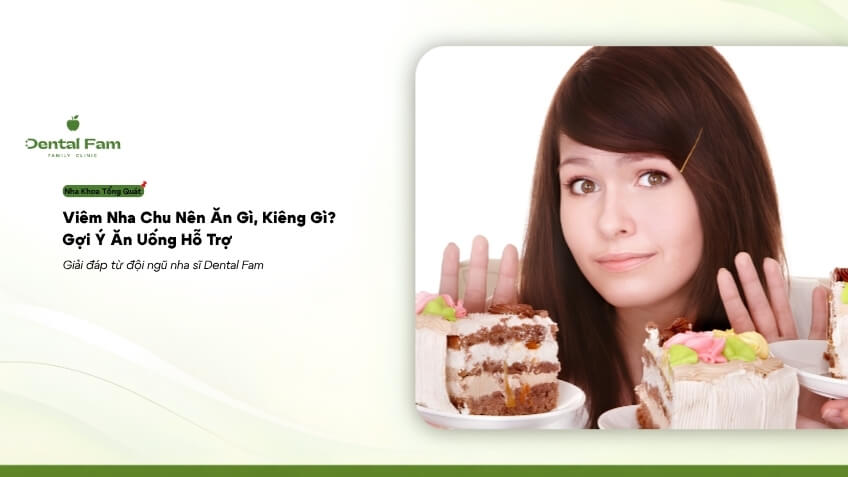
Can Diet Cure Periodontitis?
No, diet only supports and does not replace treatment for periodontitis. The central cause of the disease is bacterial plaque in the gum area, so controlling plaque and cleaning the area below the gums remains the main focus. A proper diet helps the body become healthier and reduces things that easily stick to the teeth, but it doesn't bring the disease under control for you.
In that supporting role, the following section outlines food groups that should be prioritized and those that should be limited.
What to Eat and Limit with Periodontitis?
You should prioritize green vegetables, fruits, protein, vitamins, and minerals, while limiting sweets. The table below summarizes these for easy application in your daily meals.
| Group | Suggestions | Brief Reason |
| Green vegetables and fruits | Priority in meals | Provides vitamins and minerals that support gum health |
| Protein | Ensure sufficient intake | Essential for the body, including gum tissue |
| Sweets | Limit | Sugary and sticky foods easily stick to teeth |
Rinsing with clean water after meals can be helpful, but thorough oral hygiene should still follow your regular brushing schedule. These suggestions are for general food groups, not personalized menus.
If you have underlying conditions such as diabetes, ask your doctor about appropriate dietary recommendations, as this condition is associated with periodontal disease. Your food choices will also differ slightly when your gums are swollen and painful or have just undergone treatment.
What to eat when your gums are swollen and painful or after treatment?
When your gums are swollen and painful or after treatment, you should choose soft foods and avoid hard, chewy, sharp, or very hot foods. These types of foods can further irritate sensitive gums.
| Things to choose | Things to avoid |
| Soft, easy-to-chew foods | Hard foods |
| Foods at moderate temperature | Foods that are too hot |
| Fish cut into small pieces | Tough or sharp foods |
The article does not specify the exact number of days for which soft foods should be eaten because this time depends on the treatment category and the individual's gum condition; the doctor will advise during treatment. The care instructions for the treated area, supporting products, and follow-up appointments are summarized in the article on post-treatment periodontal care. If you have orthodontic appliances, your eating habits will need further adjustment.
What should you pay attention to while wearing braces or dentures?
While wearing braces or dentures, you should choose soft, finely chopped foods and clean your mouth thoroughly after meals, as the appliances easily trap food. Food particles stuck around the appliances make plaque harder to clean, so extra attention to hygiene after each meal is needed. The correct order between periodontal control and orthodontic treatment is explained in the article ""Can I get braces if I have periodontal disease?"". After discussing diet, you should also know what Dental Fam can do to help.
How does Dental Fam support you beyond diet?
Dental Fam helps with what it cannot do with diet: measuring the severity of the disease and cleaning the area below the gum line. The dentist measures the depth of the periodontal pockets (the space between the teeth and gums), assesses attachment loss (the teeth gradually losing their attachment), takes X-rays for treatment purposes free of charge, and then prescribes appropriate treatment options, starting from 500,000 VND per tooth, including examination and consultation.
Dietary support for gum health is important but does not replace periodontal treatment. You should prioritize green vegetables, fruits, protein, vitamins, and minerals, limit sugary foods, and choose soft foods, avoiding hard, chewy, sharp, or excessively hot foods when gums are swollen and painful or after treatment.
If your gums bleed, swell, or you experience persistent bad breath, schedule an appointment at Dental Fam for a dentist to assess the severity and advise on appropriate treatment options, starting from 500,000 VND per tooth.
Dental Fam - Family Clinic
- Address: NOTT 28, 29, 30, Phuoc Long A Urban Area, Nha Trang, Khanh Hoa
- Hotline: +84 582 582 345 / +84 983 001 768
- Email: info@dentalfam.vn