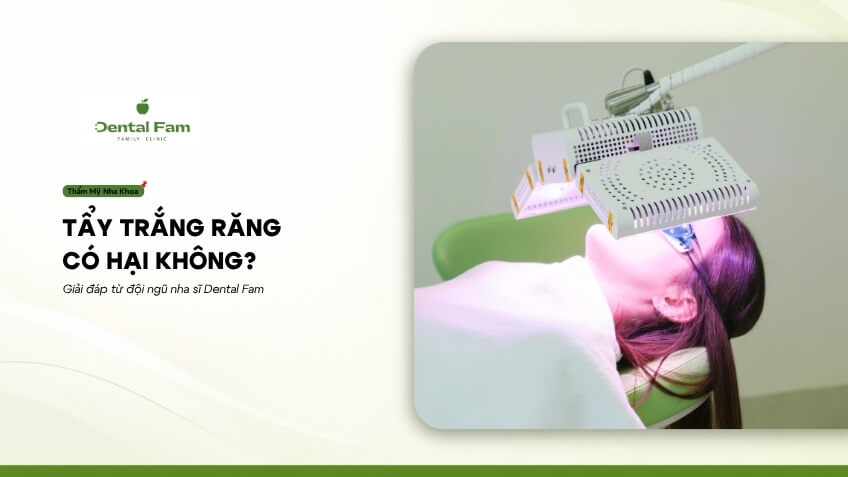
Is Teeth Whitening Harmful?
No. Teeth whitening does not cause harm when carried out with the correct indication at a reputable dental clinic, but it can be harmful if you use unregulated products on your own or abuse the frequency and concentration of treatments.
The line between these two situations is often lumped together into one vague fear. Many people spot the word "sensitivity" in a list of side effects in some article and immediately assume their teeth are about to become permanently weaker — even though sensitivity and enamel damage are fundamentally two different things. The four sections below will clarify each in turn: what sensitivity actually is, when you should genuinely be concerned, why correctly performed whitening does not affect tooth structure, and who should have a thorough check-up before proceeding.
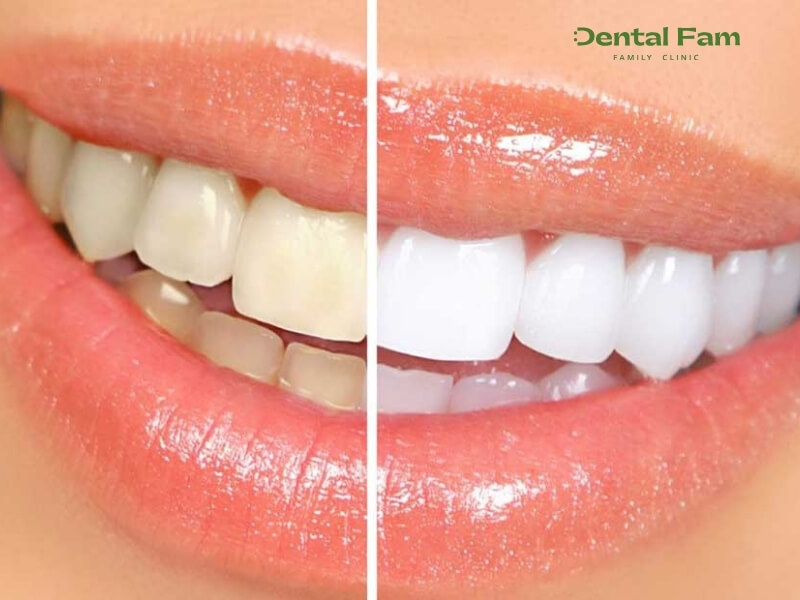
Post-Whitening Sensitivity — A Temporary Phenomenon, Not "Damage"
Sensitivity is a normal physiological response after teeth whitening, appearing within the first 24 to 48 hours and then resolving completely on its own — it is not a sign that your teeth have been harmed.
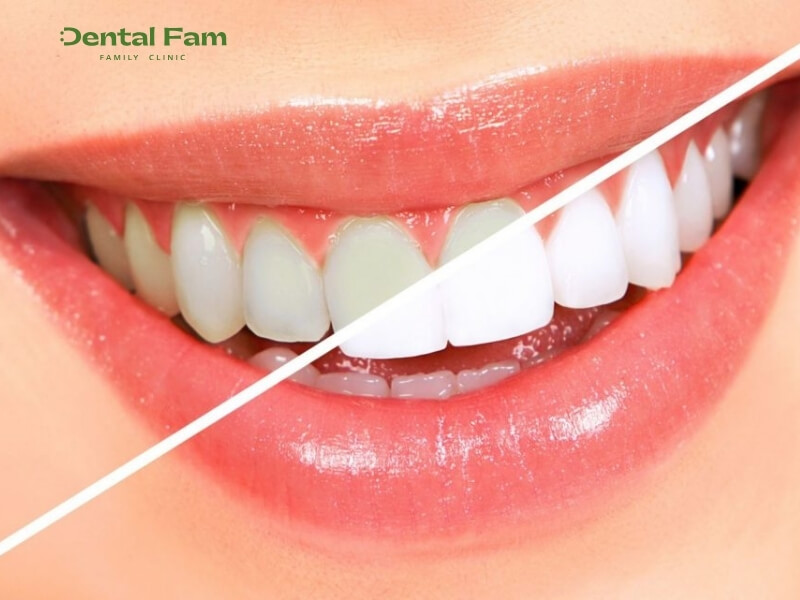
The cause lies in the whitening agent temporarily demineralising the enamel and dentine layers, causing the dentinal tubules to open slightly wider than usual for a short period. During this time, the nerves inside the tooth pulp become more sensitive to temperature or acidic foods — which is why some people experience mild discomfort when eating something very hot or very cold immediately after whitening.
This is simply a temporary state of the enamel and dentine, not a permanent injury. If this sensation continues beyond 48 hours without improving, that is a sign you should return for a follow-up appointment. For the vast majority of cases carried out correctly, sensitivity is just a brief phase that passes quickly.
So when is there actually cause for concern?
When Does Teeth Whitening Truly Cause Permanent Enamel Damage?
Tooth enamel is only permanently eroded when high-concentration whitening agents are used continuously and without control — most commonly seen when people purchase unregulated products or misuse at-home whitening kits.
The key difference lies in the level of control. When whitening is performed at a dental clinic, the dentist examines your oral health beforehand, selects the appropriate concentration for your individual needs, and monitors you throughout the entire process. By contrast, when whitening at home with unregulated products, users typically have no idea of the exact concentration of active ingredients they are applying, and there is no one to make adjustments if the teeth react abnormally. Prolonged, uncontrolled exposure to unknown concentrations is precisely what causes genuine enamel erosion — and this is damage that cannot heal on its own.
| Criteria | In-clinic whitening | At-home whitening (unregulated products) |
| Active ingredient concentration | Controlled by the dentist based on individual needs | Cannot be precisely determined |
| Monitoring during the process | Supervised by a dentist | None |
| Response if teeth react abnormally | Adjusted immediately | No one to make adjustments |
| Risk of enamel erosion from overuse | Low | High if used continuously or at the wrong dose |
Why Correctly Performed Whitening Does Not Damage Enamel Structure
Whitening agents work through oxidation — breaking apart the chains of colour molecules (chromogens) within the dentine without affecting the crystalline structure of the enamel.
Chromogens are colour molecules that accumulate in the dentine over time, and they are the reason teeth become yellowed or discoloured. The oxidation process targets only these molecules, without altering the shape or hardness of the teeth.
According to the American Dental Association (ADA), hydrogen peroxide — the primary oxidising agent in whitening products — is considered safe when used at concentrations not exceeding 3.5% for over-the-counter products; higher concentrations require supervision by a dentist. This is exactly the control threshold referred to in the section above.
A 2018 Cochrane review of at-home whitening products found that tooth sensitivity and oral mucosal irritation were the most common side effects, occurring more frequently at higher concentrations but rated as mild and temporary. A further 2022 systematic review also concluded that hydrogen peroxide-based whitening products showed no carcinogenic effects on oral mucosa.
In other words, the vast majority of concerns people have about teeth whitening have been studied scientifically and assessed as mild and temporary when the procedure is carried out correctly. So who should be extra cautious before undergoing any whitening treatment?
Who Should Not Have Teeth Whitening (Contraindications)
Children under 16, pregnant or breastfeeding women, people with untreated oral health conditions, and those with a history of allergy to whitening ingredients are groups who should exercise caution or delay treatment.
- Children under 16 years old: the enamel and tooth pulp are not yet fully developed at this age.
- Women who are pregnant or breastfeeding: exposure to whitening agents should be avoided during this period to ensure safety.
- People with untreated oral health conditions such as tooth decay, periodontal disease, or gum inflammation: these issues must be fully resolved first, as whitening on already-damaged teeth can worsen the condition.
- People with a history of allergy to whitening ingredients: a thorough assessment by a dentist is required before any consideration of treatment.
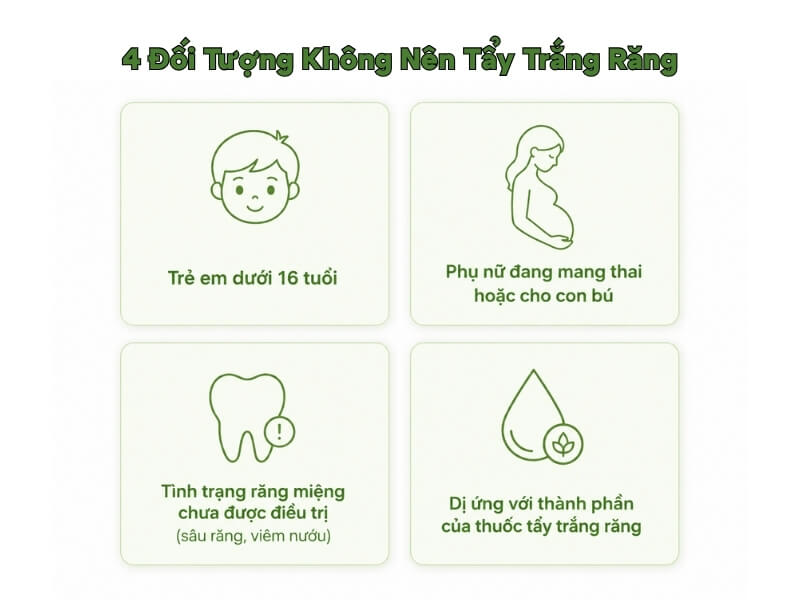
If you fall into one of the above groups, the right step is not to rule out whitening entirely, but to come in for a check-up so your dentist can assess your specific situation before making any decision. Beyond the question of safety, another common question is which whitening method to choose.
Common Teeth Whitening Methods Today
There are currently three main groups of methods: in-clinic whitening with a specialised light, at-home whitening with dentist-prescribed trays, and over-the-counter whitening strips or kits.
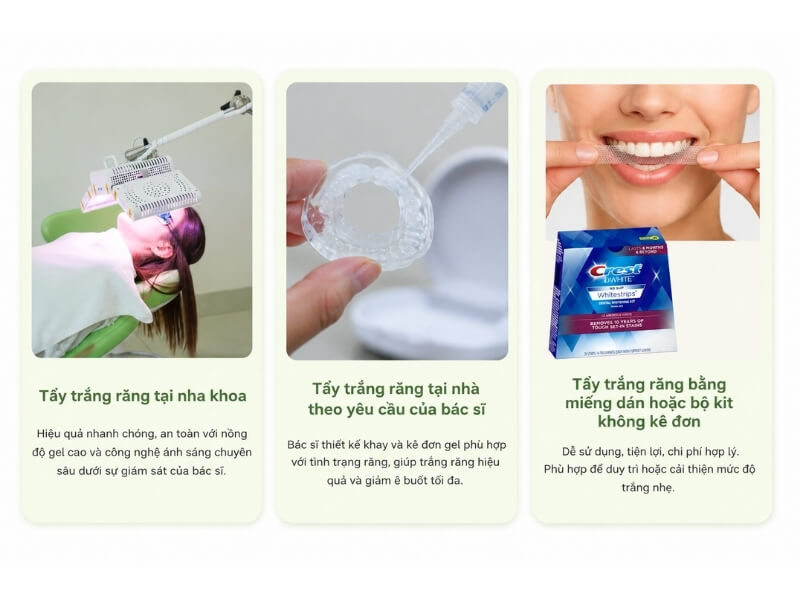
Each method offers a different level of control and effectiveness. Over-the-counter strips or kits typically contain lower concentrations of active ingredients and are convenient for gently maintaining tooth colour, but it is important to choose products from clearly identified sources and avoid the unbranded, unregulated products mentioned earlier. You can find out more about [teeth whitening methods at the clinic, at home, and with over-the-counter kits] to make a detailed comparison before deciding.
Crystal LED Light Technology at Dental Fam Reduces Sensitivity During Whitening
Dental Fam uses the LED Teeth Whitening System Crystal — a cold LED light technology that generates no significant heat, activating the whitening gel more effectively while reducing discomfort for patients.
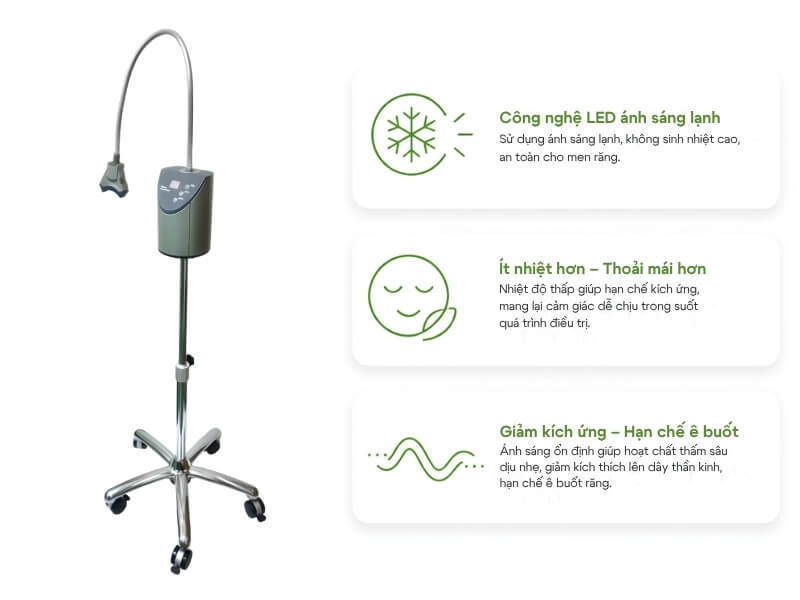
This is a direct practical application of the principle discussed above: the better the concentration and conditions are controlled, the less sensitivity you experience. Find out more about the teeth whitening service at Dental Fam for details on the process and pricing.
After whitening, proper aftercare also plays an important role in shortening the duration of any sensitivity.
How to Care for Your Teeth After Whitening to Avoid Prolonged Sensitivity
In the first 24 to 48 hours after whitening, avoid foods and drinks that are very hot or very cold, as well as deeply coloured beverages. Use a toothpaste designed for sensitive teeth to help your teeth recover more quickly.
For full details on aftercare and how to maintain your whiter smile long-term, you can read more in [our post-whitening dental care guide].
Frequently Asked Questions
How long does sensitivity last after teeth whitening?
In most cases, sensitivity resolves within 24 to 48 hours after whitening without any additional intervention beyond avoiding very hot or very cold foods and drinks.
Does teeth whitening weaken your teeth?
No, not when carried out correctly at a reputable clinic. Enamel is only affected when unregulated products are misused or treatments are applied at the wrong dose or frequency.
How often should you whiten your teeth?
The recommended frequency is generally 1 to 2 times per year, depending on the condition of your teeth and your individual needs [note: to be confirmed by a Dental Fam dentist before publishing].
Teeth whitening performed with the correct indication and technique at a reputable clinic does not harm tooth enamel. Sensitivity is a temporary reaction that resolves on its own within 24 to 48 hours, while permanent enamel damage only occurs when unregulated products are used without professional guidance or when treatments are overused in terms of concentration and frequency.
With the support of cold LED light technology and a transparent consultation process covering both indications and contraindications, Dental Fam always prioritises helping you fully understand the condition of your teeth before making any decision — not pushing you into a service.
Dental Fam - Family Dental Clinic
- Address: NOTT 28, 29, 30 Phước Long A, Nha Trang, Khanh Hoa
- Phone/Hotline: +84 582 582 345
- Website: dentalfam.vn
- Email: info@dentalfam.vn