
DOES TEETH WHITENING FADE BACK TO YELLOW OVER TIME?
Yes, and this happens with every teeth whitening method, not something specific to your case. No whitening method, whether at-home strips or in-office light-based technology, can keep teeth perfectly white forever. Whitening removes the pigment present on and inside your teeth at the time of treatment, it doesn't "lock" your teeth into one fixed shade for life.
So why does this happen? This is the most important part to understand the root of the issue.
Why do teeth turn yellow again after whitening?
There are two groups of causes: one comes from the tooth itself, the other from your daily habits. Understanding both helps you tell apart what's natural and unavoidable from what you can actively control.
Teeth gradually return to their natural base shade over time
Every tooth has its own natural "base shade," determined by your tooth structure and age. Whitening brightens the pigment present at the time, but over time teeth tend to drift back closer to their natural base shade, similar to how dyed hair eventually grows back to its original color at the roots. This isn't a technical flaw, it's a slow process, and how fast it happens varies from person to person.

Everyday eating and lifestyle habits cause new staining
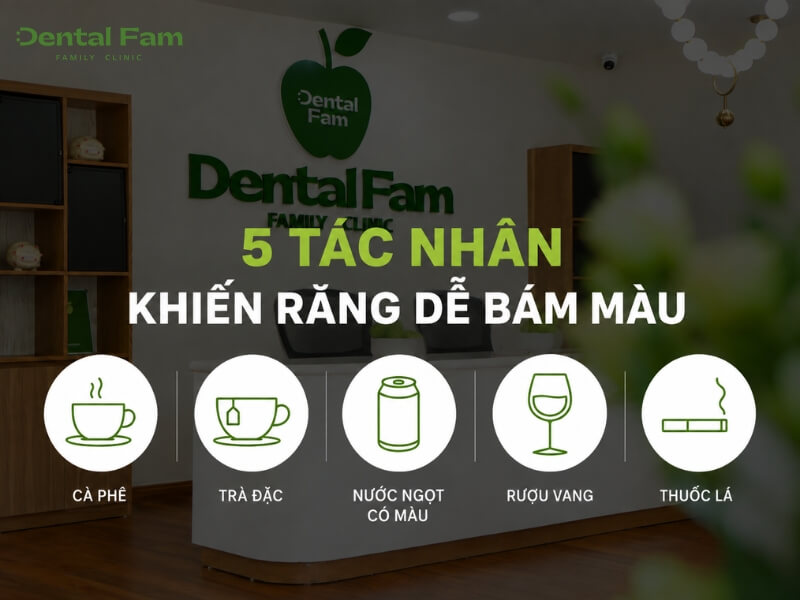
This is the group of causes you can actively change. Coffee, strong tea, dark sodas, red wine, and especially cigarettes all contain pigments that easily stick to your teeth over time. Keeping up these habits at a high frequency right after whitening makes teeth stain faster. Poor oral hygiene, letting plaque build up over time, also speeds up this process.
So between these two groups of causes, how long does whitening actually last on average?
How long does teeth whitening last?
How long your teeth stay white depends on the method you choose and how you care for them afterward, in-office whitening methods generally hold color more stable than at-home methods.
The important thing to remember here isn't the exact number of months or years, but that having a shelf life for your whitening result doesn't mean once you pass that point your teeth are "ruined" or the whitening "didn't work." It simply means your teeth have started to naturally pick up color again, as explained above.
But if turning yellow again is normal, how do you tell it apart from a case where something actually went wrong with the whitening?
Is turning yellow again a sign that whitening failed?
No, these are two completely different things. Turning yellow again over time is a normal physiological process that happens with every whitening method. If you experience prolonged sensitivity, uneven color right after whitening, or signs of enamel damage, that's a different technical issue that needs a dentist's evaluation, it's unrelated to teeth naturally picking up color again over time.
So if turning yellow again is unavoidable, what can you do to slow this process down?
How to care for your teeth after whitening to slow down yellowing
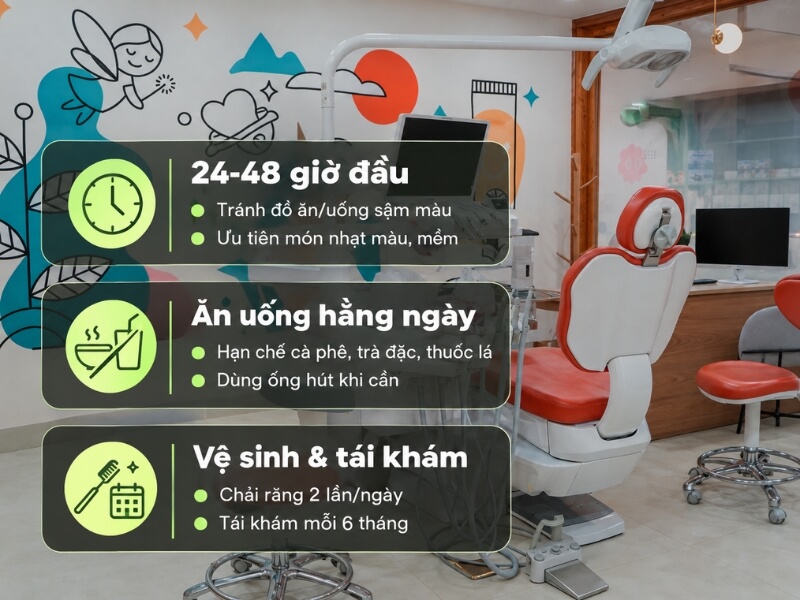
There are three things you should do: proper care in the first 24 to 48 hours, adjusting your daily eating habits, and keeping up oral hygiene and regular checkups. This is the part you can genuinely take control of, and it matters most in how long your white result lasts.
In the first 24 to 48 hours after whitening
This is when your enamel (the tooth's protective outer layer) is more sensitive than usual and stains more easily than in the days after. During this window, avoid dark-colored food and drinks entirely, such as coffee, tea, soy sauce, and red wine. Stick to light-colored, soft foods, and avoid very hot or very cold food since your teeth are also more sensitive to temperature during this period.
Eating habits to keep and to avoid
After the initial sensitive period, keeping your white result long-term depends heavily on your daily eating habits. Cutting back on coffee, strong tea, cigarettes, and other dark-colored drinks is the simplest way to slow staining down. If you can't avoid them entirely, use a straw when drinking staining beverages, and rinse your mouth with water afterward.
Oral hygiene and regular checkups
Brush at least twice a day, use dental floss to clean between teeth, and add mouthwash to remove any remaining plaque. Regular dental checkups, typically recommended every six months, let your dentist track your tooth color over time and catch any unusual signs early.
So when do you actually need to go back to the dentist, instead of judging it yourself at home?
When should you go back to the dentist for a check-up or a touch-up whitening?
When you notice your teeth have clearly turned more yellow compared to right after whitening, that's the time to go back to the dentist for a check-up, rather than trying unverified home remedies. Some folk methods can wear down enamel if used incorrectly or too often.
At Dental Fam, every time you come back, our dentist evaluates your specific tooth condition before making any recommendation, so you know clearly whether you need a touch-up whitening or just an adjustment to your daily care routine. This transparent consultation lets you make your own decision, instead of feeling pushed to pay for a service you may not actually need.
Frequently asked questions
Here are two related questions that come up often, beyond the main content of this article.
Does in-office or at-home whitening last longer?
Each method has its own pros and cons in terms of how fast you see results and how long the color lasts. You can see a detailed comparison in our article How Long Do Teeth Whitening Results Last to choose the method that fits your needs.
Do teeth stained by antibiotics or fluorosis turn yellow again the same way as normal teeth?
For teeth discolored by Tetracycline (an antibiotic that can discolor teeth if taken while they're still forming) or by fluorosis (excess fluoride during enamel formation), the discoloration happens deep inside the tooth structure from the start, so whitening results tend to be more limited compared to ordinary yellowing from age or diet. If this applies to you, we recommend speaking directly with a dentist for the right approach.
Teeth turning yellow again after whitening is a normal physiological process, not a sign of poor service or choosing the wrong provider. It comes from the tooth's own natural characteristics and daily eating habits, not a technical flaw.
You can extend how long your white result lasts by taking proper care in the first few days, adjusting your diet, and keeping up with regular checkups. When it's time to reassess your teeth, the team at Dental Fam always gives you a transparent consultation before recommending anything, so you can make your own decision instead of worrying alone.
Dental Fam - Family Clinic
- Address: NOTT 28, 29, 30 Phuoc Long A, Nha Trang, Khanh Hoa
- Phone/Hotline: +84 582 582 345 / +84 983 001 768
- Website: dentalfam.vn
- Email: info@dentalfam.vn