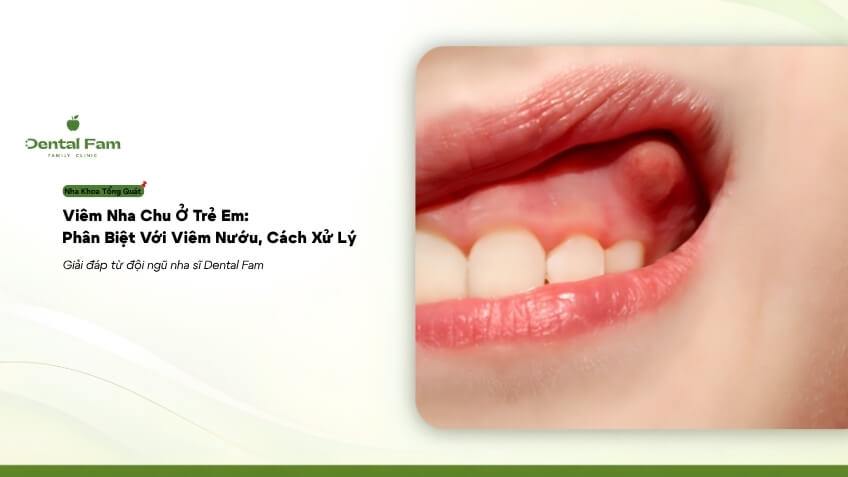
How are gingivitis and periodontitis different in children?
Gingivitis is confined to the gum tissue and can be completely reversible if detected early, while periodontitis has spread to the ligaments and alveolar bone. In children, gingivitis is much more common, while periodontitis is actually less frequent and is usually mentioned in older children or teenagers.
| Criteria | Gingivitis | Periodontitis |
| Area of Damage | Only in Gum Tissue | Extends Down to Ligaments and Alveolar Bone |
| Recovery Potential | Complete Recovery Possible if Detected Early | Damaged Tissue and Bone Often Do Not Recover Completely; The goal is to maintain stability. |
| Frequency in children | Much more common | Less common |
| Treatment approach | Plaque control, hygiene guidance, professional cleaning | Doctor's assessment and possible specialized treatment |
A detailed comparison table for all ages can be found in the article ""How gingivitis and periodontitis differ."" For children, the next question parents often ask is why their child's gums are so prone to swelling and redness.
Why are children's gums prone to swelling and redness?
Children's gums are often swollen and red due to bacterial plaque (the film of bacteria that adheres to the teeth) that hasn't been thoroughly cleaned, and puberty can make gums more sensitive. It's understandable that young children don't brush their teeth very well at the gum line, and this isn't the fault of either the parents or the child. During puberty, hormonal changes cause the gums to react more strongly to plaque, but the main cause remains plaque.
Knowing the cause will help you recognize when your child's condition needs a doctor's checkup.
When should you take your child to the doctor?
You should take your child to the doctor if their gums are swollen, red, bleeding, or have persistent bad breath, or if their teeth are unusually loose, the gums are receding, or there is pus between the teeth and gums. You don't need to wait for your child to complain of pain, as mild gingivitis is usually less painful. Loose baby teeth during the teething process are normal; the doctor will help you differentiate this from loose teeth caused by underlying medical conditions. Only a doctor, after examination and X-rays if necessary, can determine whether it is gingivitis or periodontitis.
A complete list of signs can be found in the article on signs of periodontitis. After examination, the treatment will depend on the diagnosis.
How to treat gingivitis and periodontitis in children
Treatment in children mainly involves plaque control; intensive treatment is only for cases of true periodontitis, and surgery is only indicated by a doctor. This section has two branches: treating gingivitis, which is more common, and treating periodontitis when there is damage to the supporting tissues of the teeth.
How is gingivitis in children treated?
Gingivitis in children is mainly treated by plaque control, guidance on hygiene, and professional cleaning. The doctor will instruct on age-appropriate brushing techniques, parents will assist the child in brushing at home, and professional cleaning will be performed when needed. When plaque is controlled, gingivitis can be completely reversible if detected early.
How is periodontitis treated in older children and teenagers?
When there is damage to the supporting tissues of the teeth in older children or teenagers, the dentist may perform intensive periodontal treatment. The specific procedures and methods are determined by the dentist based on the actual condition of each tooth. Surgery is not a routine treatment in children, but is only considered when specifically indicated. Many parents are concerned about this, so you can ask your dentist about every step before starting.
The cost of treatment for children is advised individually based on the child's specific condition. The children's dental check-up package (4 to 10 years old, 1,000,000 VND per year) does not include periodontal treatment; this is priced separately. To support your child after treatment, please see the home care instructions below.
How can parents support their child's gum care at home?
Parents should accompany their child every day in brushing their teeth and observing their gums, as plaque control is the most important part of home care. You can brush with your child, check for unusual redness or bleeding gums, and ask your dentist about appropriate brushing techniques, flossing, or products suitable for your child's age.
Home care helps maintain results but does not replace regular checkups; for general guidelines, see the article on how to care for periodontal disease at home.
Frequently Asked Questions about Periodontal Disease in Children
This section answers eight short questions from parents: 2-year-old with periodontal disease, 5-year-old with bleeding gums, puberty, how long does swelling and bleeding last, follow-up appointments, children with braces, surgery, and children's dental checkup packages.**
Is it worrying if a 2-year-old has periodontitis?
In a 2-year-old, swollen and red gums are usually gingivitis due to plaque buildup, rarely true periodontitis, and you don't need to panic. True periodontitis is rare in children and is usually mentioned in older children or teenagers. However, you should still take your child to the doctor for accurate diagnosis, especially if the gum swelling persists, there is pus, or the teeth are unusually loose.
Is bleeding gums in a 5-year-old a sign of periodontitis?
Bleeding gums when brushing teeth in a 5-year-old are usually related to gingivitis due to plaque that hasn't been thoroughly cleaned. You should instruct your child to brush evenly and gently along the gum line, and take them to the doctor if the bleeding persists for examination.
Are swollen and red gums in teenagers a sign of periodontitis?
Not necessarily; Puberty hormones can make gums more sensitive, but the main cause is still plaque.** Doctors will assess the condition through examination and X-rays to differentiate gingivitis from periodontitis.
My child has gingivitis, how long will it take for the swelling and bleeding to go away?
Gums usually improve when plaque is regularly controlled, but the time varies from child to child, so this article doesn't specify a number of days. If the condition hasn't improved despite regular cleaning, you should take your child for a follow-up examination by a doctor.
My child has been examined and it's only gingivitis, do they need regular follow-up appointments?
Yes, you should have regular follow-up appointments to monitor your child's gums. Many professional guidelines recommend follow-up appointments every few months; the specific schedule is determined by the Dental Fam doctor based on each individual's condition.
How is plaque and gingivitis management different for children undergoing orthodontic treatment?
Orthodontic appliances make plaque harder to clean, so children need more thorough cleaning. The dentist will guide you on the appropriate tools and cleaning methods for your child, and parents should assist by checking the gums regularly.
Does periodontitis in children require surgery?
No, surgery is not a routine treatment for children and is only considered when indicated by a dentist. Most cases in children are managed with plaque control, professional hygiene guidance, and cleaning.
Does the children's dental care package include periodontitis treatment?
No, the children's dental care package (ages 4 to 10, 1,000,000 VND per year) does not include periodontitis treatment. Periodontitis treatment is priced separately based on the actual condition and will be discussed with the dentist before treatment.
In children, swollen, red gums are often plaque-induced gingivitis, which is much more common than periodontitis. Treatment primarily involves plaque control, professional hygiene instruction, and professional cleaning; true periodontitis is rare, and surgery is only indicated by a doctor.
If your child has swollen, red, bleeding gums, persistent bad breath, or unusually loose teeth, schedule an appointment at Dental Fam for evaluation and advice; don't wait until your child complains of pain.
Dental Fam - Family Clinic
- Address: NOTT 28, 29, 30, Phuoc Long A Urban Area, Nha Trang, Khanh Hoa
- Hotline: +84 582 582 345 / +84 983 001 768
- Email: info@dentalfam.vn