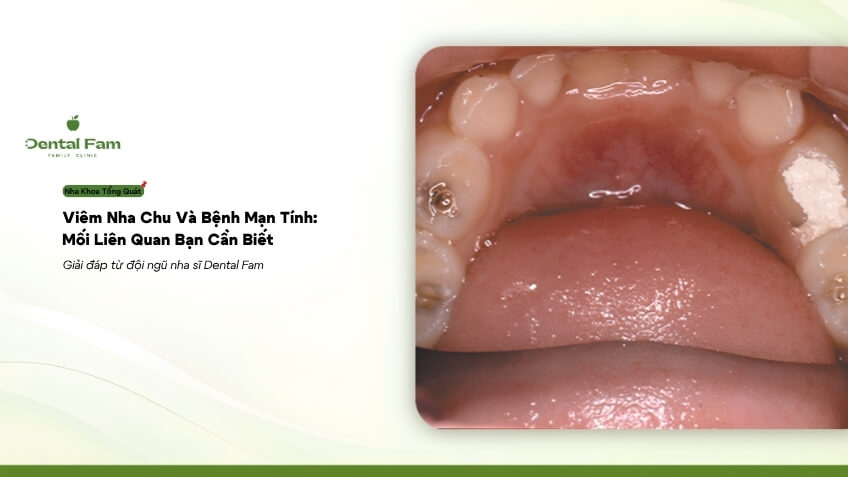
Is Periodontitis Related to Chronic Disease?
Yes, periodontitis is associated with several chronic diseases, but ""related"" doesn't mean ""causes."" Periodontitis is an infection and inflammation of the tissues supporting the teeth caused by bacterial plaque.
When we say two diseases are related, studies show they often occur together or influence each other, but this isn't enough to conclude that gum disease directly causes systemic disease. Understanding this correctly helps you avoid unnecessary worry and focus on what you can do.
The following section will address each disease individually, starting with diabetes.
How is Diabetes Related to Periodontitis?
Poorly controlled diabetes is a risk factor that makes periodontitis more likely to develop or worsen. A risk factor is a condition that increases the likelihood of developing or worsening the disease, although it doesn't always directly cause it.
Therefore, people with diabetes should pay attention to regular gum and dental checkups, and conversely, those with periodontal disease should inform their doctor about their blood sugar levels. After diabetes, another disease often mentioned is cardiovascular disease.
How is cardiovascular disease related to periodontal disease?
Periodontal disease is related to cardiovascular disease, but current evidence does not allow us to say that gum disease directly causes cardiovascular disease. What can be said is that the two diseases are related, and controlling gum inflammation is part of holistic healthcare. If you have cardiovascular disease, inform your dentist so that a suitable examination and treatment plan can be considered.
This is also why you shouldn't make assumptions about the cause from articles but should discuss it with your doctor. Besides the systemic connection, periodontal disease also clearly impacts daily life.
How Does Periodontitis Affect Chewing and Quality of Life?
Periodontitis affects chewing when gums are painful, teeth are loose, or teeth are lost, thus impacting quality of life. As teeth gradually lose their anchorage in the jawbone, chewing food becomes more uncomfortable, and bad breath or receding gums can affect self-confidence in social interactions.
What Should You Do About Periodontitis If You Have Underlying Conditions?
Inform your dentist about your underlying medical history and manage both conditions simultaneously. This article does not provide guidance on treating underlying conditions; that is up to your doctor, and you should not change your medication yourself. The three common scenarios below include the severity of the underlying condition, whether or not periodontal treatment needs to be stopped, and the frequency of regular check-ups.
Does having underlying conditions make periodontal disease more severe?
Having underlying conditions like poorly controlled diabetes often makes periodontal disease more difficult to manage, and gum health needs to be considered in conjunction with the underlying condition. There is a relationship between the two conditions; one condition doesn't cause the other. Therefore, regular gum care and managing the underlying condition as directed by your dentist are both important.
If I'm undergoing periodontal treatment and suspect I have diabetes or heart disease, should I stop treatment?
You shouldn't stop treatment or make a decision on your own. Inform your dentist and your underlying condition monitor. The dentist will assess your condition and choose the appropriate time and method of treatment.
How often should people with underlying conditions have periodontal checkups?
Many professional guidelines recommend scheduled checkups every few months; the specific schedule will be determined by the Dental Clinic based on each individual's condition. Patients with underlying conditions may be scheduled for appointments more frequently depending on the doctor's assessment.
For oral health, the doctor will examine and assess the severity of periodontal inflammation and advise on a suitable treatment plan based on your overall condition. At Dental Fam, periodontal treatment costs from 500,000 VND per tooth, including examination and consultation, and the doctor will clearly explain the cost before treatment. After treatment, you still need maintenance care and follow-up appointments because the disease is at risk of recurrence if plaque and risk factors are not well controlled.
Periodontal inflammation is associated with diabetes and cardiovascular disease, but it should not be understood as causing them. Poorly controlled diabetes is a risk factor, and gum disease also affects chewing and quality of life.
If you have underlying conditions, please inform your dentist and manage both conditions as directed by your doctor. If you experience bleeding gums, persistent bad breath, or loose teeth, schedule an appointment at Dental Fam.
Dental Fam - Family Clinic
- Address: NOTT 28, 29, 30, Phuoc Long A Urban Area, Nha Trang, Khanh Hoa
- Hotline: +84 582 582 345 / +84 983 001 768
- Email: info@dentalfam.vn