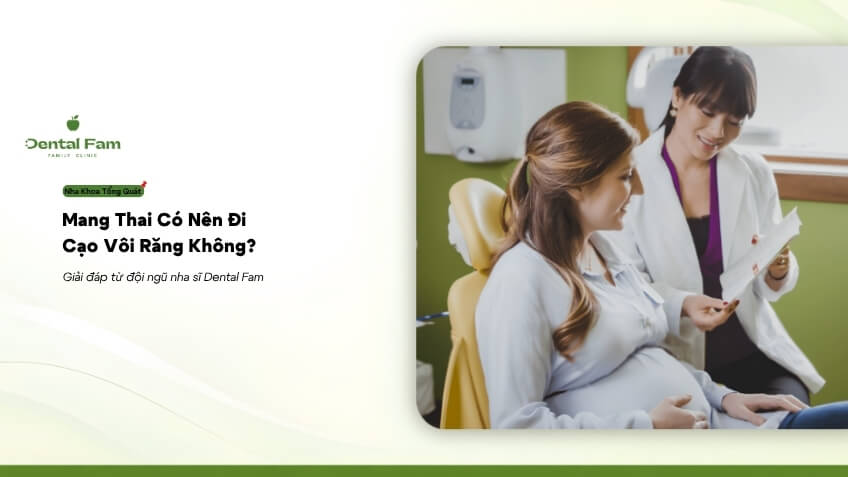
Should Pregnant Women Get a Dental Scaling Treatment?
Yes. According to the American Dental Association (ADA), dental scaling is recognized as safe throughout pregnancy, at any stage.
This answer is based on official recommendations, not just anecdotal evidence. The ADA affirms that preventative, diagnostic, and restorative dental procedures, including scaling, are safe to perform at any time during pregnancy, without waiting for a specific stage.
This aligns with the practice at Dental Fam: pregnant women can have regular dental scaling as long as they feel comfortable at the dentist, except for a few cases requiring special precautions, which will be discussed later.
Why Should Pregnant Women Pay Even More Attention to Regular Dental Scaling?
Because uncontrolled gingivitis and periodontitis are associated with an increased risk of premature birth and low birth weight babies.
According to the ADA, studies show a link between periodontal disease and premature birth and low birth weight, although the agency notes that more research is needed to clearly determine the causal relationship between these two issues.
In addition, hormonal changes during pregnancy make the gums of expectant mothers more sensitive than usual, more prone to inflammation and bleeding if plaque and tartar are not cleaned regularly. Therefore, delaying scaling due to unnecessary concerns can sometimes worsen gingivitis throughout pregnancy.
Because the gums are more sensitive, many pregnant women worry that scaling will cause more bleeding than usual. In reality, if there is any bleeding, it will only be slightly less than in non-pregnant individuals; this is not an abnormal sign and does not affect the safety of the procedure.
Regarding frequency, pregnant women do not need to have scaling done significantly more often than the usual recommendation of every six months. The difference is that if, during pregnancy, the doctor notices that the gums are showing signs of inflammation progressing faster than expected, they may recommend shortening the follow-up time for early control, instead of applying a fixed timeframe for all pregnant women.
Which Stage of Pregnancy Is Best for Teeth Cleaning?
It can be done at any stage as recommended by the ADA, but if given the choice, the second trimester (months 4 to 6) is usually the time when pregnant women feel most comfortable.
This is not a medical requirement but a practical choice for comfort. In the first trimester, many pregnant women experience significant morning sickness and find it uncomfortable to sit in the dental chair for extended periods, while in the third trimester, the belly is larger, making lying on your back for a long time during the procedure inconvenient. The second trimester is therefore usually the most comfortable time to schedule appointments, but if you feel comfortable at other stages of pregnancy, you can certainly do so without waiting until this particular period.
In Which Cases Should Pregnant Women Be Cautious and Consult Their Obstetrician?
You should be cautious and discuss this with your obstetrician beforehand if you are overly sensitive, prone to nausea, or have a pregnancy-related medical condition that requires strict monitoring.
Besides these two cases, close monitoring of oral health throughout pregnancy is essential to avoid dental problems that could affect your overall health. The most important principle is that you feel comfortable at the dentist's office. If you have any concerns about your specific pregnancy, you should consult both your obstetrician and your dentist before proceeding.
From a dental perspective, pregnant women should proactively inform their dentist about their pregnancy and their gestational week before starting a teeth cleaning. This information helps the dentist adjust the sitting position and procedure time accordingly, and allows for closer monitoring if the pregnant woman experiences any discomfort during the procedure, instead of relying on visual observation.
Frequently Asked Questions
Is teeth cleaning during pregnancy painful or uncomfortable?
No, the sensation is similar to that of a non-pregnant person; it's usually not painful, only slightly uncomfortable depending on individual sensitivity and the amount of tartar buildup. Pregnancy doesn't make this procedure significantly more uncomfortable because it's essentially a surface treatment, not invasive to the deeper tissues.
Is anesthesia needed for teeth cleaning during pregnancy?
Usually, it's not needed, as it's a simple, non-invasive procedure. Anesthesia is usually only used when there is a lot of tartar buildup and the pregnant woman experiences significant pain; in such cases, the dentist will carefully consider the situation before prescribing it.
What additional care should pregnant women take after tartar removal?
Post-scaling care for pregnant women is similar to that for non-pregnant individuals; there are no specific differences.
Pregnancy is not a reason to delay tartar removal; according to the ADA, it is a safe procedure at any stage of pregnancy. Conversely, uncontrolled gingivitis and periodontitis are associated with an increased risk of premature birth and low birth weight, so pregnant women should maintain a regular tartar removal routine.
If given the choice, the second trimester is usually the most comfortable time to schedule an appointment, but the most important thing is that the pregnant woman feels comfortable at the dentist and discusses any pregnancy-related conditions that require special attention with the dentist. At Dental Fam, our team always provides personalized advice tailored to each stage of pregnancy before any procedure is performed.