Periodontitis is an infection and inflammation of the tissues that support the teeth, including the gums, the periodontal ligament and the alveolar bone. It is caused by bacterial plaque and usually develops from untreated gingivitis.
The disease can be brought under stable control with the right treatment plan, but bone that has already been lost usually does not fully recover. Dental Fam is a family dental clinic in Nha Trang, certified to ISO 13485:2016 and ISO 9001:2015, that treats periodontitis in 3 categories (non-surgical, LASER, surgical) from 500.000đ per tooth, examination and consultation included.
This page covers the causes, the signs that you should see a dentist, home care versus clinic treatment, costs, the procedure, how to tell the disease is under control, and the supporting technology.
What is periodontitis?
Periodontitis is the stage at which inflammation has moved beyond the gums, so the tooth gradually loses its attachment in the jawbone. When inflammation persists, the periodontal ligament and alveolar bone are gradually destroyed, leading to gum recession, loose teeth and possible tooth loss without treatment. This section covers the difference between gingivitis and periodontitis, the levels of the disease and how serious it is.
How does periodontitis differ from gingivitis?
Gingivitis affects only the gum tissue, while periodontitis has spread to the ligament and alveolar bone. Gingivitis involves no loss of periodontal attachment or disease-related bone loss, and it can be fully reversed if detected early and its cause is controlled. Periodontitis needs a more intensive treatment plan. See the detailed comparison table in the article How gingivitis and periodontitis differ.
The levels of periodontitis
Dentists classify periodontitis by Stage (I to IV) and Grade (rate of progression, A to C), not just as mild or severe. The familiar terms are mild, moderate and severe, along with two forms based on how the disease develops: chronic (common, progresses slowly) and acute (flares up quickly, possibly with an abscess). During the examination, the dentist looks at attachment loss, bone loss on X-rays, teeth lost to periodontal disease and the complexity of the case, so you cannot determine your stage from a single number or by looking at home.
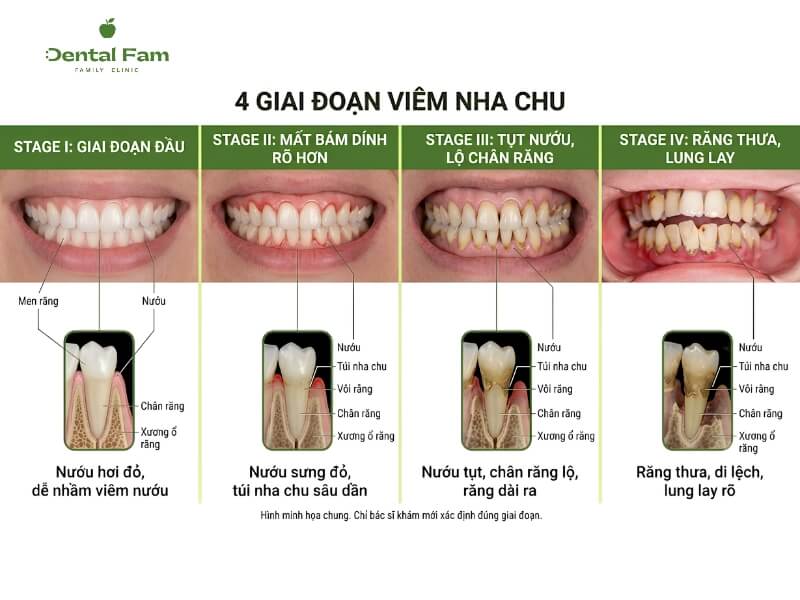
Read more in the article Mild, severe, chronic and acute periodontitis.
Is periodontitis dangerous?
Yes, if it is not treated and controlled. Persistent inflammation can lead to attachment loss, bone loss, loose teeth and tooth loss, and it affects chewing. Periodontitis is associated with diabetes and cardiovascular disease, but current evidence does not allow us to say it directly causes them. Early detection helps limit progression. To understand why the disease can progress so silently, the next section explains its causes.
Causes of periodontitis
The main cause of periodontitis is bacterial plaque building up around the gums. When the microbial community in plaque becomes unbalanced, the body's prolonged inflammatory response gradually destroys the tissues that support the teeth. Tartar is not a direct cause, but it gives plaque a surface to cling to, which makes cleaning at home less effective.
Smoking, poorly controlled diabetes, inadequate oral hygiene, hormonal changes, older age, conditions that affect immunity and genetic factors can make the disease more likely to appear or progress more severely, although they do not always cause it directly. See details in the article Causes of periodontitis. Once you know the causes, you can recognise the disease earlier through the signs below.
Which signs mean you should see a dentist?
You should arrange an examination if you notice one or more of the following signs:
- Red, swollen gums that bleed easily when brushing.
- Persistent bad breath despite regular cleaning.
- Receding gums, exposed tooth roots, teeth that feel longer.
- Teeth that are loose or gradually spreading apart due to alveolar bone loss.
- Pus between the tooth and gum when pressed, a possible sign of a periodontal abscess that a dentist should check early.
The most serious complication is tooth loss due to the loss of supporting tissue and bone, so an early check-up gives you more treatment options. Read more in the article Signs of periodontitis. Once you have recognised the signs, the next question is usually whether you can deal with it at home.
Treating periodontitis at home or at the clinic?
Home care helps maintain results, but only clinic treatment can address the cause. There are just two approaches, and they play different roles; one does not replace the other.
| Criterion | At home | At the clinic |
|---|---|---|
| Role | Support and maintaining results | Treating the cause as indicated |
| What it includes | Correct brushing technique, dental floss or a water flosser, antibacterial mouthwash as prescribed, no smoking | Examination, diagnosis, cleaning below the gums, root surface treatment, treatment in the indicated category |
| Limitations | Once periodontal pockets and bone damage have formed, it can only support or slow progression | Maintenance and regular check-ups are still needed after treatment |
For example, careful daily brushing keeps the gums clean after treatment, but it cannot clean periodontal pockets that have already formed. That is why home care maintains results rather than creating them. See specific guidance in the article How to treat periodontitis at home.
As for medication, there is no single oral medicine that suits every patient. The foundation of treatment is plaque control and mechanical treatment below the gums, while systemic antibiotics are considered only in selected cases, so you should not buy antibiotics on your own. Toothpastes and mouthwashes sold in shops only help control plaque. Read more in the article Which medication to take for periodontitis. If home care is not enough, the cost of clinic treatment is what many people want to know next.
How much does periodontitis treatment cost at Dental Fam?
Periodontitis treatment at Dental Fam costs from 500.000đ per tooth, examination and consultation included. The three categories are indicated independently based on the actual condition of each tooth:
| Category | Price | Unit |
|---|---|---|
| Non-surgical periodontitis treatment | 500.000đ | /Tooth |
| Periodontitis treatment with LASER | 1.000.000đ | /Tooth |
| Surgical periodontitis treatment | 2.000.000đ | /Tooth |
Services priced per tooth apply only to that tooth, while services priced per arch apply to the whole arch. Non-surgical treatment already includes cleaning below the gums and root surface treatment on the indicated tooth.
LASER and non-surgical treatment are intended for the same level of disease; the difference is the technology. LASER is an additional technology option, not a mandatory upgrade, and it does not mean the disease is more severe. If a tooth needs surgery from the start, the dentist will recommend surgery, and non-surgical treatment is not required first.
The total cost is calculated with the following formula:
Total cost = number of teeth x category price + scaling (per session, both arches) + any additional items the dentist recommends when needed.
The dentist assesses the whole mouth, and there is usually an additional scaling step, because people with periodontal disease often have a lot of tartar. The two examples below only illustrate how the cost is calculated and are not quotes:
| Example | Calculation | Total |
|---|---|---|
| 4 teeth with non-surgical treatment, ultrasonic scaling 300.000đ/session | 4 x 500.000đ + 300.000đ | 2.300.000đ |
| 4 teeth treated with LASER, ultrasonic scaling 300.000đ/session | 4 x 1.000.000đ + 300.000đ | 4.300.000đ |
X-rays needed for treatment are taken free of charge; a fee from the price list applies only if you want to take the images home. Treatment on people cannot be predicted in every detail in advance, so, with the principle of doing what is right and doing it fully, Dental Fam only proposes what is necessary for your actual condition, never recommends treatment to increase costs, and explains the costs clearly before treatment. See all accompanying items in the article Periodontitis treatment price list. After costs, the next section describes how each step of treatment works.
The periodontitis treatment procedure at Dental Fam
The procedure has 4 steps: examination and diagnosis, a personalised plan, treatment in the indicated category, then maintenance and check-ups.
- Examination and diagnosis: the dentist examines the gums, measures periodontal pocket depth, assesses attachment loss, checks for bleeding on probing, tooth mobility and furcation involvement (where the root divides) if present. You will have an X-ray to assess the extent and pattern of bone loss.
- Personalised plan: the dentist combines the examination results with your medical history and risk factors to determine the severity of the disease, choose the appropriate category and advise you on costs.
- Treatment: carried out in the indicated category: non-surgical, LASER or surgical.
- Maintenance and check-ups: maintenance care and check-ups on the schedule set by the dentist to reduce the risk of recurrence.
Each treatment session usually lasts about 30 minutes; it can take longer depending on the individual, but stays within 2 hours. The number of sessions is not the same for everyone: usually 1 to 4 sessions of active treatment depending on the treatment plan, and complex cases may need more. See details in the article How long periodontitis takes to heal.
With severe periodontitis, the dentist also assesses whether each tooth can be saved. Teeth that can be saved may need intensive periodontal treatment, while teeth that are too badly damaged may be recommended for extraction, with a restoration plan. Read more in the article Treating severe periodontitis. Finishing treatment does not mean it is over, so the next section explains what it means for the disease to be under control.
What does it mean to "cure" periodontitis for good?
"For good" in periodontitis means the disease is under stable control and has stopped progressing, not that the lost tissue has been fully restored. After active treatment, you still need maintenance care and check-ups, because periodontitis can come back if plaque and risk factors are not well controlled. This section sets out the 4 indicators dentists use for monitoring, the signs you can recognise at home and the reasons the disease can return.
| Indicator | What the dentist checks | What it shows |
|---|---|---|
| BOP (bleeding on probing) | Whether the gums bleed when the probe is inserted into the periodontal pocket | Whether inflammation is still present or has subsided |
| PPD (periodontal pocket depth) | The depth of the pocket between the tooth and gum | Whether the pocket is shallow or deep |
| CAL (clinical attachment loss) | The degree of attachment loss of the tooth | Whether it is still increasing or has stopped |
| X-ray | Alveolar bone density | Whether bone is still being lost or has stabilised |
At home, positive signs include no more gum bleeding, gums changing from red and swollen to pink, firm and snug around the neck of the tooth, no more pus, fresher breath and teeth that are no looser than before. See the full explanation in the article Criteria for assessing stable periodontitis.
Why does the disease come back for some people after treatment?
The disease usually comes back because the area below the gums was not thoroughly cleaned, maintenance care was irregular, or risk factors were not controlled. This is fairly common and can be dealt with. During treatment, the dentist re-measures the indicators above to know your exact current condition, rather than relying only on how things feel. Read more in the article Can periodontitis be completely cured. To carry out and monitor these steps, Dental Fam uses a number of specialised devices.
Technology supporting periodontitis treatment at Dental Fam
Dental Fam uses 4 main devices to diagnose and support periodontal treatment.
| Device | Function according to the manufacturer | Role |
|---|---|---|
| BIOLASE Epic X | LASER system for periodontal treatment that helps disinfect, promotes healing and reduces the risk of infection after treatment | Treatment |
| ATP38 | Helps reduce pain, inflammation and swelling and promotes healing | Supportive treatment |
| AquaCare Twin | Air and water spray that cleans tooth surfaces and removes biofilm and plaque | Cleaning |
| Planmeca ProMax 3D Plus | Cone Beam CT (3D tomography) for diagnosis and planning, not direct treatment | Diagnosis |
See the function of each device and when it is used in the article Periodontitis treatment equipment at Dental Fam. From the points above, the reasons to choose treatment at Dental Fam can be summed up as follows.
Why treat periodontitis at Dental Fam?
Dental Fam makes every step of periodontitis treatment clear and predictable.
- Diagnosis is based on measurements and X-rays, so the treatment plan is grounded in evidence for each tooth.
- Costs are published per tooth, with a formula for the total and a clear explanation before treatment.
- Equipment is named along with its specific function.
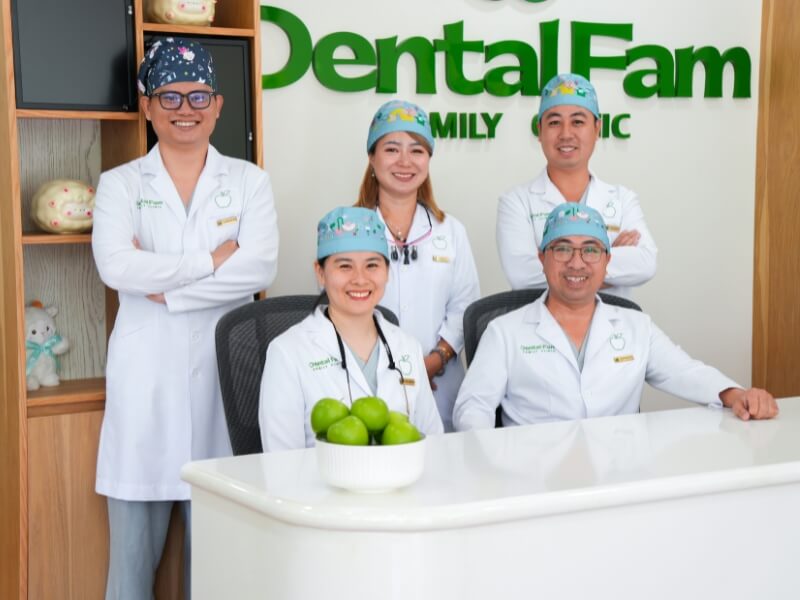
- A family dental clinic certified to ISO 13485:2016 and ISO 9001:2015, where the whole family can be seen in one place.
If you still have concerns, the frequently asked questions below help you check quickly before booking.
Frequently asked questions about periodontitis treatment
This section answers 9 short questions: how dangerous it is, treatment time, whether it can be fully cured, medication, whether it is contagious, pain, pregnancy, children and braces.
Is periodontitis dangerous?
Yes, if it is not treated and controlled. The disease can progress to bone loss, loose teeth and tooth loss, while early detection helps limit progression. Read more in the article Signs of periodontitis.
How long does periodontitis take to heal?
Usually 1 to 4 sessions of active treatment depending on the treatment plan, more for complex cases, each session about 30 minutes. "Healed" means the disease is under stable control, after which maintenance and check-ups are still needed. Read more in the article How long periodontitis takes to heal.
Can periodontitis be completely cured?
The disease can be kept under stable control for the long term, but damaged supporting tissue, especially bone, usually does not recover 100%. In some cases partial regeneration is possible, depending on the severity and the treatment method. Read more in the article Can periodontitis be completely cured.
Which medication should I take for periodontitis?
There is no single oral medicine that suits every patient, and you should not take antibiotics on your own before a dentist has examined you. Medicines or local products only help when the dentist prescribes them. Read more in the article Which medication to take for periodontitis.
Is periodontitis contagious?
Periodontitis is not directly contagious like ordinary infectious diseases. However, the bacteria that cause it can be passed on through saliva when sharing personal hygiene items or kissing, so you can reduce the risk by not sharing toothbrushes. Read more in the article Is periodontitis contagious.
Does periodontitis treatment hurt?
Dental Fam carries out each step to keep you as comfortable as possible. The dentist will explain everything clearly before starting so you feel in control throughout treatment.
Can pregnant women be treated for periodontitis?
Yes, periodontitis can still be treated during pregnancy when indicated. Non-surgical methods can be performed during pregnancy, the dentist chooses the method and medication according to the pregnancy, and you should not take painkillers or antibiotics on your own. Read more in the article Periodontitis during pregnancy.
Can children get periodontitis?
They can, but plaque-induced gingivitis is far more common than periodontitis in children. Most cases are managed with plaque control, hygiene instruction and professional cleaning; surgery is only considered when there is a specific indication. Read more in the article Periodontitis in children.
Can I get braces if I have periodontitis?
Periodontal disease needs to be treated and stabilised before braces. The forces applied while inflammation is uncontrolled can make the damage worse; with mild periodontal disease and healthy supporting tissue, braces can be considered once inflammation is controlled, while with significant bone loss the dentist may not recommend orthodontic treatment. Read more in the article Can you get braces with periodontitis. Finally, the summary below sums up the key points to remember.
Periodontitis is an inflammation that gradually makes teeth lose their attachment, and only clinic treatment can address the cause. Home care helps maintain results, while the dentist monitors the disease with measurable indicators. At Dental Fam, treatment costs from 500.000đ per tooth, examination and consultation included, and each session usually takes about 30 minutes. If you notice red, swollen or bleeding gums, persistent bad breath or loose teeth, book an examination so the dentist can assess the severity and advise you on the right option.
Dental Fam - Family Clinic
- Address: NƠTT 28, 29, 30, Phước Long A urban area, Nha Trang, Khánh Hòa
- Hotline: +84 582 582 345 / +84 983 001 768
- Email: contact@dentalfam.vn