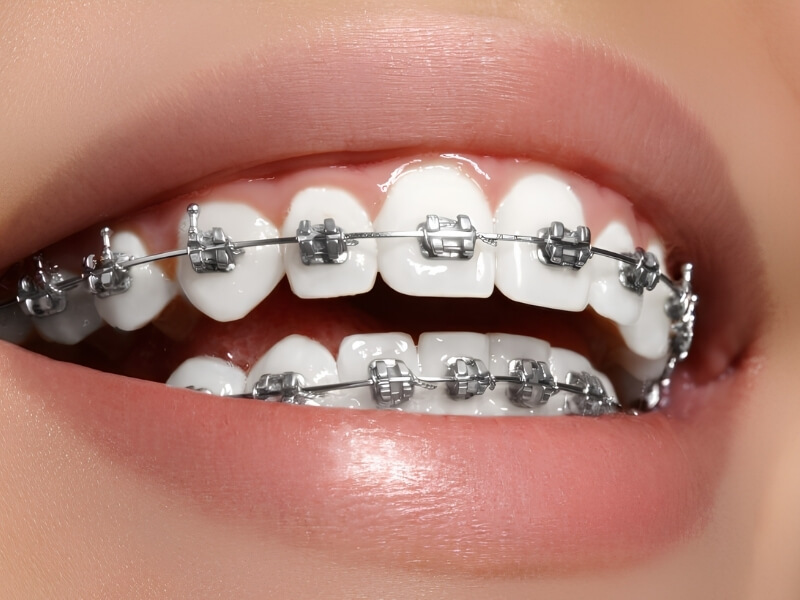
Orthodontic treatment with braces uses appliances, either brackets or clear aligners, to apply force to the teeth and move them into the correct position along the dental arch. It corrects protruding teeth, underbites, gaps, crooked teeth and malocclusion. There is no fixed age for braces: an 8-year-old may need early intervention, while a 45-year-old can still start if their teeth and gums are healthy enough.
The real issue is not age but a question few people ask themselves before looking into it: how do you know the right time for your own situation? The answer does not come from a general rule, but from understanding the definition, the indications and the actual procedure at Dental Fam, which is what this article covers step by step.
What is orthodontic treatment with braces?
Orthodontic treatment is a process that uses continuous, controlled mechanical force to move teeth gradually within the alveolar bone; it is not finished once the appliance is fitted. The technical essence lies in two words, "continuous" and "controlled": the alveolar bone gradually remodels in response to the force applied, and the process always needs a specific treatment plan closely monitored by the dentist, rather than an appliance that is fixed in place and left to "do the work" on its own.
Brackets create mechanical force directly through the archwire. Clear aligners, a series of removable clear plastic trays, apply force that is pre-programmed for each stage, with each tray moving the teeth a little.
So the next question is almost certain to come up: if everyone has slightly misaligned teeth, when is the misalignment bad enough to need braces, and when is it not yet necessary?
Should you get braces? When are braces needed?
Any misalignment of the teeth or bite is a reason to consider braces, and there is no fixed age that applies to everyone. The decision depends on each person's actual condition, which is also why regular dental check-ups matter more than guessing "at what age should I get braces".
That said, not everyone who wants braces can start right away. Some conditions need to be treated first:
- Untreated tooth decay.
- Active, uncontrolled gingivitis or periodontal disease.
- Poor oral hygiene, without the ability yet to keep up good hygiene throughout treatment.
- Certain dental, bone or general health conditions that need to be dealt with first.
- Patients who are uncooperative or cannot commit to wearing the appliance, attending check-ups and cleaning their teeth.
In other words, "should I get braces" is not only about the mouth; it also depends on whether the person is ready to commit to a long course of treatment. This leads to a difference many people overlook: it is all called "braces", but who is being treated makes a big difference to the treatment approach.
Who can get braces?
Children, adults and older people can all get braces, but the treatment goals differ between these three groups: for children the aim is to guide the developing jawbone, for adults the only option is to move the teeth within a bone structure that is already fixed, and for older people the health of the gums and supporting bone must also be assessed before starting.
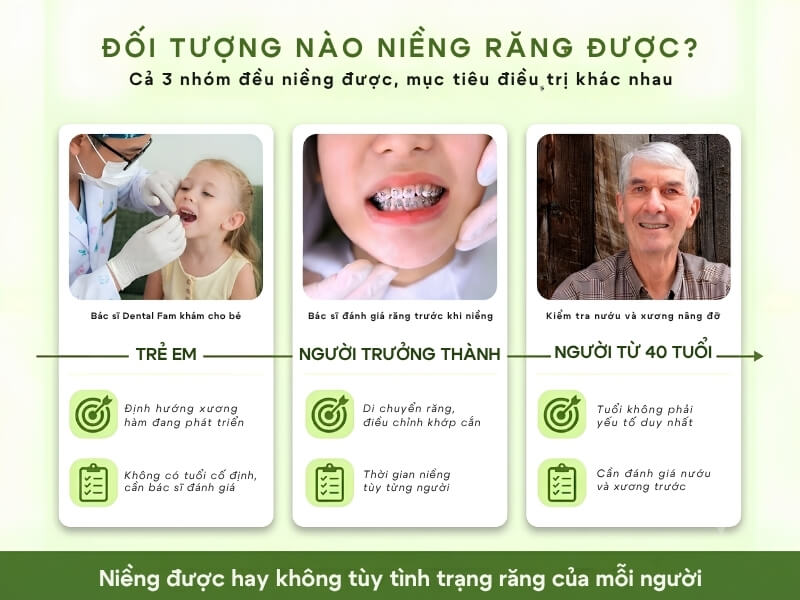
1. At what age can children get braces?
Growth-guidance orthodontics and conventional braces or clear aligners are two different interventions, even though many parents use the same word, "braces", for both. Growth-guidance orthodontics is for children who are still growing and may not yet have all their permanent teeth, with the aim of guiding the development of the jaws and teeth from an early stage. Brackets or clear aligners are usually chosen once the teeth and jaws have developed sufficiently.
There is no fixed age that applies to every child; the dentist needs to examine and assess the stage of tooth replacement, jaw development and the actual condition of the teeth to determine the right timing. For the specific age for your child, a dentist at Dental Fam needs to examine them in person to advise you!
2. Can older people (40+) get braces?
Yes, people aged 40 and over can still get braces, because age is not the only deciding factor. What matters more is assessing the condition of the teeth, gums, supporting bone and overall oral health before treatment, together with the patient's real needs.
3. How do braces for adults differ from braces for children?
The biggest difference lies in the treatment goal, not in whether it can be done. Adults no longer have the bone growth phase that children have (as mentioned above), so growth-guidance orthodontics does not apply; treatment focuses entirely on moving the teeth and correcting the bite. One point needs to be made clear: treatment time depends on each person's condition, and it cannot be said that adults always need braces for longer than children.
But whether for children or adults, the question "can I get braces" ultimately comes back to one thing: what is that person's specific dental condition?
Which dental conditions need braces?
Protruding teeth, gaps between teeth, underbite, crooked teeth, and the malocclusion/partial braces group are the most common conditions that orthodontics can treat, but the extent of the intervention and whether other methods need to be combined vary between groups.
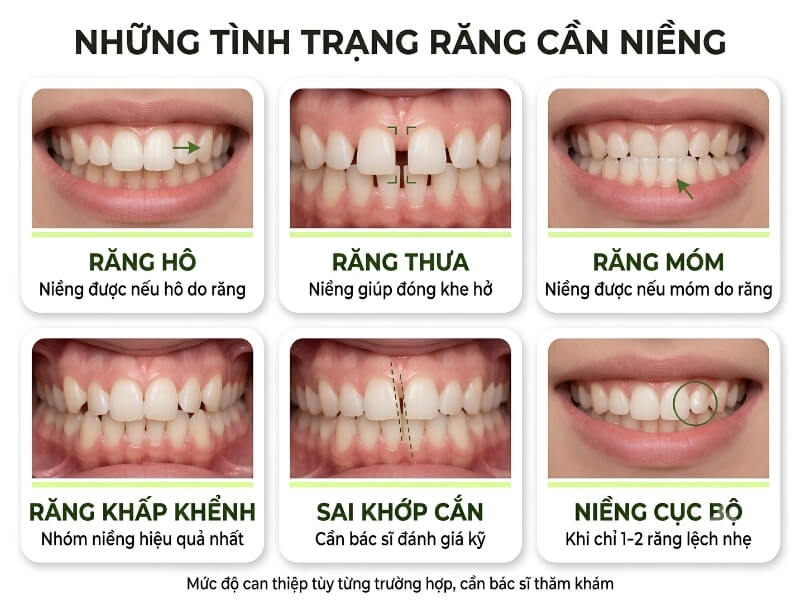
1. Protruding teeth
Protruding teeth, where the upper teeth or jaw stick out in front of the lower jaw, can be corrected with orthodontics if the cause is mainly the teeth. If the protrusion is caused by the structure of the jawbone and is severe, a different treatment or combined jaw surgery may be needed, since orthodontics alone cannot address the root of the problem.
2. Gaps between teeth
Gaps between teeth, where there are spaces between the teeth, can in many cases be closed with orthodontics. If the gaps are due to tooth shape, missing teeth or other causes, restorative treatment may also need to be combined.
One point worth noting: small gaps between the front teeth, especially the upper front teeth, can be treated with no-prep veneers (thin porcelain shells, with no grinding of the teeth). If there are small gaps in the upper teeth with slight protrusion, minimally invasive veneers (with only light reduction of the outer tooth surface) are also an alternative worth discussing with the dentist.
3. Underbite
Underbite, where the lower jaw sits forward of the upper jaw, can be corrected with orthodontics if the underbite is mainly caused by the teeth. If the cause lies in the jawbone, especially in adults and in severe cases, jaw surgery needs to be combined.
4. Crooked, crowded and misaligned teeth
This is the most common group of conditions, and also the group that orthodontics treats most effectively. Depending on severity, it may be necessary to create space, extract teeth or use additional supporting appliances to achieve the result.
5. Malocclusion, chin deviation and partial braces
Malocclusion and chin deviation are a more complex group, as they may involve the teeth, the jawbone, or functional factors such as the jaw muscles, tongue and movement habits. Orthodontics works well where the cause is mainly the teeth and bite; if the jawbone or facial structure is heavily involved, the dentist needs to assess the case carefully, sometimes in coordination with other specialties.
At the opposite extreme, when the problem is only 1-2 slightly misaligned teeth, one slightly rotated or tilted tooth, small gaps between a few teeth, or teeth that have shifted after braces were removed, partial braces can be considered instead of full braces. The essential condition is that the overall bite must be stable, and correcting a few teeth must not affect the relationship between the two jaws. Not every case with only a few misaligned teeth is suitable for partial braces; this decision requires an in-person examination by the dentist.
Knowing which group you belong to is one thing. Choosing a method to treat it is another question, and this is often the step people hesitate over longest, because the differences between the options are not just about price.
Braces methods at Dental Fam
Dental Fam currently offers five braces methods, with prices ranging from 30 million to 150 million VND. This range is not random; it directly reflects differences in materials, treatment time and the complexity of each case.
| Method | Material/Features | Price |
|---|---|---|
| Metal brackets | Traditional brackets, using elastic ties to hold the archwire | 30.000.000 - 60.000.000đ |
| Self-ligating metal brackets | Built-in self-closing clip, no elastic ties needed to hold the archwire; power chains/inter-arch elastics are still needed to close spaces and interlock the cusps | 40.000.000 - 70.000.000đ |
| Ceramic brackets | Clear/tooth-coloured, more aesthetic than metal brackets | 50.000.000 - 80.000.000đ |
| SMILER clear aligners | Clear, removable plastic; a European brand, manufactured directly in France | 90.000.000 - 130.000.000đ |
| Invisalign clear aligners | Clear, removable plastic; a global brand, made by Align Technology in Mexico, Poland and China | 150.000.000đ (full package, regardless of difficulty) |
One detail worth noting: SMILER uses ATP38 technology (a technology that helps speed up tooth movement) to shorten treatment time compared with clear aligners in general.
This is a genuine technical difference, not just a difference in brand: in terms of materials and process, SMILER and Invisalign do not differ much apart from their origin and media presence. SMILER comes from France and focuses on the European market. Invisalign comes from the USA and has stronger global recognition.
Choosing the right method depends on several factors at once, not a single criterion: the condition of the teeth and bite, and the complexity of the case; age and the condition of the jawbone; aesthetic needs and convenience; compliance (especially important with clear aligners, because results depend on wearing them for enough hours each day); cost and treatment time; overall oral health.
Some cases of severe misalignment cannot be treated with clear aligners, which is why an in-person consultation with the dentist always matters more than choosing a method based on personal preference.
Once you have chosen a method, a more practical question comes up: how will the process go, and how long does it take from the first examination to the day the brackets come off?
How does the braces procedure at Dental Fam work?
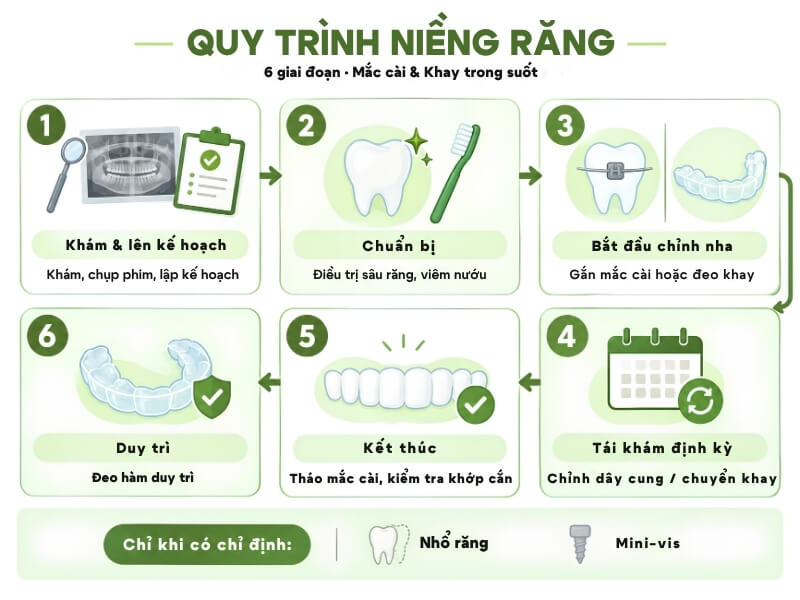
The orthodontic procedure at Dental Fam, whether with brackets or clear aligners, goes through six stages: examination and planning, pre-treatment preparation, start of orthodontic treatment, check-ups and adjustments, completion of treatment, and retention.
- Examination and planning. The dentist examines the teeth, gums and bite; takes Panorama (panoramic) and Cephalometric (lateral skull) X-rays; scans the teeth if clear aligners are chosen; then analyses the results and draws up a specific treatment plan.
- Pre-treatment preparation. Any tooth decay, gingivitis or other oral conditions are treated first. The patient is also shown how to clean their teeth properly.
- Start of orthodontic treatment. With brackets: the brackets are bonded to the teeth, the archwire is placed and the force adjusted. With clear aligners: the teeth are scanned, the set of aligners is designed, and each aligner is worn in turn according to the plan.
- Check-ups and adjustments. With brackets, the archwire needs to be changed or adjusted regularly, along with the elastics or other supporting appliances. With clear aligners, progress is checked, the patient moves on to the next aligner, and the plan is adjusted if needed.
- Completion of treatment. The brackets are removed or the set of aligners is completed, then the bite and the overall result are checked.
- Retention. A retainer is made and worn as instructed to stop the teeth from moving back to their old position.
During this process, two procedures are often mentioned but are not needed in every case: tooth extraction and mini-screw placement.
When do teeth need to be extracted before braces?
Not every orthodontic case requires extractions. Extraction is usually indicated when teeth are severely crowded, when space needs to be created, or when the relationship between the teeth needs correcting in cases of protrusion. The teeth usually chosen for extraction are the first or second premolars (teeth 4 or 5), but the exact position always depends on the treatment plan for each case.
When are mini-screws needed with braces?
Mini-screws (tiny anchorage screws) are used when a strong enough anchorage point is needed, helping the dentist precisely control the direction of tooth movement without unintentionally moving other teeth. Typical examples: retracting the front teeth, closing large spaces, or controlling teeth that are over-erupted or need intrusion. Mini-screws are placed only when the treatment plan specifically calls for them; they are not a default step in every case.
Knowing the steps is one thing, but the question that makes most people hesitate before deciding on braces is: how long does it take, and does it hurt as much as people say?
How long do braces take? Do they hurt?
Orthodontic treatment usually takes around 24-36 months, and difficult cases can take up to 45-48 months. Throughout this time, check-ups are usually every 2-4 weeks.
As for pain: with brackets, soreness, pressure or mild pain usually appears in the first few days after the brackets are fitted, and recurs more mildly after each adjustment. With clear aligners, a feeling of tightness, pressure or soreness usually appears when you start wearing a new aligner; it is usually mild and eases after a few days. The level of discomfort varies from person to person, and there is no common "standard of pain".
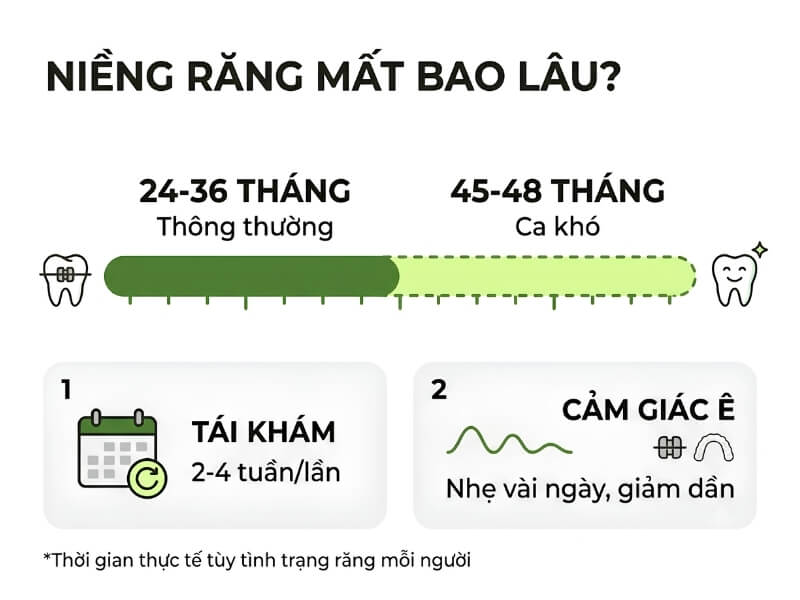
Not everyone needs painkillers during treatment with braces. If the soreness is significant, the dentist can advise you on suitable painkillers; this is not a mandatory default step.
The most uncomfortable period is usually the first few days after the brackets are fitted or you start wearing aligners, and after each regular adjustment. If the treatment involves jaw expansion, mini-screws or other auxiliary appliances, the level of discomfort at these stages may differ from a typical case.
The duration and level of pain are now clear, but for most people the question that really decides "braces or no braces" is another number: the one on the bill.
How much do braces cost at Dental Fam?
Braces at Dental Fam cost from 30 million to 150 million VND, depending on the method chosen (see the detailed price table in the braces methods section). This range directly reflects differences in materials, treatment time and the complexity of each case, and is specifically affected by:
- The orthodontic method: metal brackets, aesthetic brackets or clear aligners.
- The degree of misalignment and malocclusion: more complex cases usually need more time and technique.
- Treatment time: the number of months of treatment and the number of check-ups.
- The type of appliance and materials used.
- Whether extractions, jaw expansion, mini-screws or supporting appliances are needed.
- Whether oral conditions need to be treated before orthodontic treatment.
- The retainer after treatment is completed.
An important point to make clear: the price of a braces treatment at Dental Fam already includes the consultation and all X-rays needed for treatment (Panorama, Cephalometric, CT Conebeam 3D, that is, 3D computed tomography) throughout the process, including regular check-up X-rays, not just the first ones. There is a charge for X-rays only when the patient asks for the images to be sent by email or Zalo for personal records. The treatment price also includes regular check-ups and the retainer after the brackets/aligners are removed, unless the patient later wants an extra or replacement retainer.
Some additional costs are mandatory if the dentist recommends them during treatment, to ensure a good result:
| Situation | Service | Price | Notes |
|---|---|---|---|
| Additional anchorage needed | Mini-screw placement | 2.000.000đ/screw | Mandatory if indicated |
| Space needs to be created before braces | Wisdom tooth extraction | 1.000.000 - 4.500.000đ depending on difficulty | Charged; other teeth in simple cases are covered |
| Early orthodontics needed for a child who still has baby teeth | Growth-guidance orthodontics | 5.000.000đ/arch | A necessary item based on the dentist's assessment for this group, not an unexpected extra charge |
With a course of treatment worth up to hundreds of millions of VND and lasting several years, the financial question inevitably comes up: is there a way to avoid paying the full amount up front?
Can I pay for braces in instalments?
Yes, but only for bracket braces. Clear aligners, both SMILER and Invisalign, must be paid 100% in full, with no instalment option. This is the most easily misunderstood point in the entire payment policy for this service, so it needs to be made clear from the outset to avoid patients choosing clear aligners and only then finding out they must pay the full amount.
For brackets, Dental Fam offers an in-house instalment plan, arranged directly at the clinic, without any bank or third party. This policy applies to all types of brackets regardless of cost: metal, self-ligating and ceramic all use the same arrangement, with no interest and no additional fees. In essence, it simply divides the remaining total cost evenly over the expected treatment time, after the patient pays an initial deposit of 30% of the total cost.
Example calculation (for reference only; the actual amounts depend on the treatment plan agreed with the dentist and the finance team): for a metal brackets case with a total cost of 40 million VND, the 30% deposit is 12 million VND. The remaining 28 million VND is divided evenly over the expected treatment time; if treatment lasts 24 months, the patient pays about 1.17 million VND per month.
The instalment process has four steps:
- The dentist advises on and agrees the treatment plan and a clear total cost.
- The financial advisory team discusses a suitable payment method with the patient.
- Both parties agree on the number of instalments and the amount of each, and sign to confirm the plan.
- Treatment proceeds according to the signed plan.
The payment plan is clearly agreed in writing before treatment begins, with no costs outside the signed agreement. This is a commitment to transparency made from the very first step, not a clause added after the patient has started treatment (see also: braces instalment policy).
Costs and payment policy are one thing, but with a course of treatment lasting several years, the person who carries it out for you matters just as much as the money you spend.
Dental Fam - A trusted orthodontic braces clinic in Nha Trang
Not every dentist at Dental Fam provides orthodontic treatment; it is an advanced specialty that requires its own experience and in-depth training, unlike other general dental services.
When patients come for an examination, any dentist at Dental Fam can give basic advice on the condition of their teeth and the direction of treatment. But when it comes to the actual orthodontic work, planning and treatment are handled by an experienced dentist, or discussed at a case conference with other dentists in complex cases, such as severe protrusion/underbite caused by the jawbone where combined surgery needs to be considered (as mentioned in the section on dental conditions that need braces). This division of roles ensures that every treatment plan is built by someone with the right expertise, rather than letting any dentist take on orthodontic cases.
For diagnostic technology, Dental Fam uses the Planmeca ProMax 3D Plus system, which takes Panorama, Cephalometric and CT Conebeam 3D X-rays to accurately analyse the structure of the teeth, jawbone and bite before planning treatment; this is also the foundation for the transparent price list set out in the cost section.
By now, the main part of this article has answered the core questions: what braces are, who can get them, how much they cost and where to get them done reliably. For those who have decided on braces or are already in treatment, there is another group of questions, smaller but with a direct effect on everyday life over the next few years.
Oral care while wearing braces
Care during treatment involves three main groups of issues: dealing with appliance problems, suitable cleaning tools, and adjusting eating habits.
1. What to do when a bracket comes off, a wire slips or the archwire pokes your cheek
The most important rule when an appliance problem occurs is not to remove or adjust anything yourself. The archwire is changed or adjusted at each stage of treatment, usually every 4-8 weeks depending on the plan. Orthodontic elastics are changed by the patient as instructed by the dentist, usually every day or as specifically directed.
If a bracket comes off, a wire slips or the archwire pokes your cheek, you can use orthodontic wax to temporarily cover the end of the wire that is causing discomfort, then contact the clinic as soon as possible to have it fixed properly.
2. Oral hygiene tools while wearing braces
An orthodontic toothbrush, an interdental brush, and dental floss or a water flosser are the most important tools during treatment. Orthodontic wax is used when brackets or archwires rub and scratch the lips or cheeks. There is no requirement to use any particular type or brand; you can buy them elsewhere if you prefer, and this is not a condition attached to the treatment.
3. What should and shouldn't you eat with braces?
Limit three groups of food while wearing braces: hard foods (ice, bones, hard nuts), chewy foods (tough meat, dried squid), and sticky foods (chewing gum, caramel). Very hard foods should be cut into small pieces before eating, and avoid biting directly into hard food with your front teeth, as this habit can easily dislodge brackets or bend the archwire unintentionally.
Proper care is mostly about prevention. But even when you follow every instruction, some risks can still occur, and anyone considering braces should know about them in advance rather than be surprised when they happen.
Do braces have any complications or risks?
Soreness, pain and pressure on the teeth are the most common reactions, appearing after braces are first fitted or after each adjustment, and they usually ease over time; this is a normal physiological reaction, not a sign that something is wrong.
Some other risks to be aware of:
- Gingivitis, bleeding gums: likely to occur if oral hygiene is poor.
- Tooth decay, white spots on the enamel: caused by plaque building up around the brackets.
- Root resorption: the tooth roots may shorten to some extent as the teeth move; this is mostly mild but needs monitoring by the dentist.
- Gum recession: can occur in some cases with thin gum tissue or incorrect brushing.
- Enamel damage: usually related to poor hygiene, which creates conditions for tooth decay or enamel demineralisation.
- Teeth moving back to their old position: happens if the retainer is not worn as instructed after the braces are removed.
- Pain or injury to the soft tissues of the mouth: caused by brackets and archwires rubbing against the lips, cheeks or tongue; usually managed with orthodontic wax or by adjusting the appliance.
- Results not as expected: may be due to the complexity of the case, each person's biological response, or the patient not keeping to the check-up schedule and instructions.
The general way to prevent most of these risks is fairly consistent: a proper examination and treatment plan from the start, thorough oral hygiene throughout, check-ups on schedule, and following the dentist's instructions.
As for a common worry, whether braces cause sunken cheeks or change the shape of the face: sunken cheeks are not a typical complication of braces. Braces can change the facial profile to some extent as the teeth and bite change position, but the shape of the face also depends heavily on each person's bone structure, tooth position, soft tissue and amount of fat tissue.
As for whether braces weaken the teeth: in essence, braces do not specifically weaken the teeth. The teeth are moved within the bone by controlled orthodontic force. However, with poor hygiene or inappropriate force, the risk of tooth decay, gingivitis or root resorption may increase, making the teeth more sensitive and prone to soreness.
By now, most of the questions that come up during treatment have been answered. But there is one stage that many people overlook, because they think the journey ends as soon as the brackets come off.
What should you know after your braces come off?
Wearing a retainer after orthodontic treatment is mandatory, not an optional suggestion, because it is the only way to keep the teeth in their new position and limit them from moving back. If you skip this step, all the effort and cost of the previous treatment risk being wasted.
How long you need to wear a retainer depends on the individual case. At first you usually need to wear it for more hours a day, and then the wearing time can be reduced gradually as the dentist advises. In the long term, you should keep wearing it regularly, because teeth can still shift over time even after treatment has been completed.
As for cost, the retainer is already included in the initial orthodontic treatment price, unless the patient later wants an extra or replacement retainer, in which case the cost is 3.000.000đ for 2 arches.
If you do not wear your retainer as instructed, your teeth will almost certainly shift away from the position achieved; how much they change varies from person to person, but it is not a rare risk.
Frequently asked questions about orthodontic braces
Are X-rays during braces treatment charged?
No, if they are taken for treatment purposes, including regular check-up X-rays. A charge applies only when the patient asks for the images to be sent by email or Zalo for their own records.
Is each check-up charged separately?
No. Regular check-ups throughout treatment are included in the initial treatment price.
Does Dental Fam offer lingual braces (brackets attached to the back of the teeth)?
No. Dental Fam currently offers only the five methods listed in the braces methods section: metal brackets, self-ligating metal brackets, ceramic brackets, SMILER clear aligners and Invisalign.
Orthodontic braces are suitable for most cases of misaligned teeth, limited not by age but by the actual condition of the mouth and the ability to follow treatment. Dental Fam offers five braces methods from 30 to 150 million VND, a clear 6-step procedure, a transparent price list that includes X-rays and check-ups, and an interest-free in-house instalment plan for bracket braces.
A team of dentists specialising in orthodontics and the Planmeca ProMax 3D Plus diagnostic system are the two factors that help build every treatment plan around each patient's actual condition.